

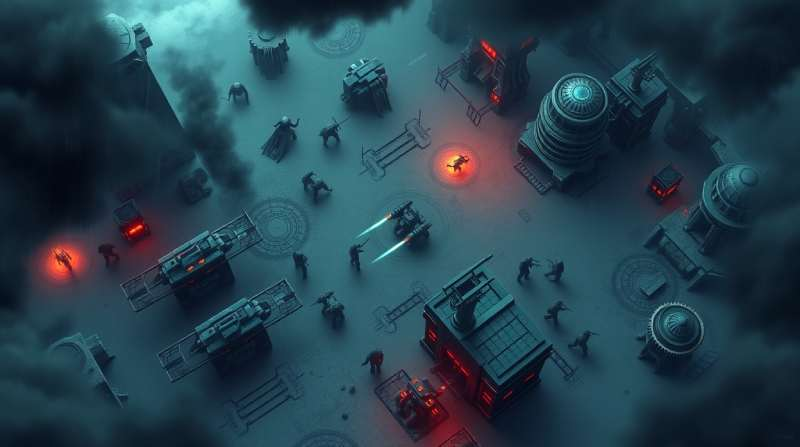
In this article, I will be talking about the best on-chain strategy games that combine blockchain technology and strategic gameplay. These games provide a unique experience through management of resources, tactical battles, expansion of territories, intelligent contracts, and owning virtual assets. I’ll also discuss their blockchain networks, on-chain features, gameplay mechanics, pros and cons to help you pick the right game.
What Is On-Chain Strategy Games?
On-chain strategy games are blockchain-based games that record or execute critical gameplay events, strategic choices, resources, and game-state modifications on blockchain networks and smart contract systems.
These games combine elements of traditional strategy games such as resource management, territory expansion, tactical battles and empire building with decentralized technology. Players can validate selected game actions, own digital resources (e.g. NFTs) and engage in player-driven economies depending on their architecture.
Some games are almost entirely powered by smart contract technology, while others use hybrid systems that combine blockchain-based ownership with off-chain gameplay.
Key Points
| Game | Genre | On-Chain Features | Key Highlight |
|---|---|---|---|
| Dark Forest | MMO Real-Time Strategy | Widely recognized as a fully on-chain RTS built on Ethereum with zkSNARK technology. | Players expand space empires while navigating cryptographic fog-of-war mechanics. |
| Influence | Space Strategy MMO | Fully on-chain strategy MMO launched on Starknet. | Features mining, manufacturing, trading, diplomacy, and player-driven economies. |
| Sky Strife | Real-Time Strategy | Fully on-chain RTS built with MUD and deployed on Redstone. | Fast-paced island warfare focused on resource control and tactical combat. |
| Realms: Eternum | Grand Strategy / 4X MMO | Fully on-chain civilization and economic strategy game on Starknet. | Players manage realms, alliances, trade routes, and territorial expansion. |
| Realms: Blitz | Real-Time Strategy | On-chain RTS designed for human and AI-agent competition. | One-hour tactical matches with fully verifiable gameplay on Starknet. |
| Primodium | Space Empire Builder | Fully on-chain factory-building and empire strategy game. | Players mine resources, build infrastructure, form alliances, and wage wars. |
| Axie Infinity: Origins | Tactical Card Strategy | Strategy gameplay combined with on-chain collectible ownership through Ronin. | One of the most established blockchain strategy games. |
| Parallel TCG | Strategy Trading Card Game | Built around Web3 card ownership on Ethereum and Base. | Deep deck-building strategy and competitive ranked gameplay. |
| Colony: Survival (Parallel Universe) | Colony Strategy Simulator | Strategy-focused settlement management within the Parallel ecosystem. | Players rebuild colonies, manage resources, and guide AI-powered settlers. |
| Pirate Nation | Strategy RPG | Designed as a fully on-chain RPG with all game logic and history recorded on blockchains. | Featured resource management, crafting, exploration, and strategic progression. |
1. Dark Forest
Strategy and Game Play: Dark Forest is a decentralized multiplayer space-conquest game where players explore planets, collect resources, grow territories and attack opponents. Its fog-of-war system adds exploration and intelligence as important strategic elements.

Blockchain Network: formerly xDai, now Gnosis Chain. Smart Contract Usage: Smart agreements are used to enforce game rules and player actions, as well as to store important game-state records. Zero-knowledge proofs are used to validate moves without revealing hidden information.
Transaction Costs Players need network gas for on-chain actions and fees vary based on network conditions. Unique Feature: The combination of hidden information, cryptographic verification and strategic exploration is different from traditional strategy games.
Dark Forest Features
- Gameplay Fully On-Chain: The intelligent contracts handle all the main game logic, player movements, exploration, and significant actions on the blockchain.- Zero-Knowledge Proofs: Cryptographic proofs to verify player movement while keeping unexplored planets or other hidden information secret.
- Blockchain Game State: The ownership of planets and the development of resources and strategy moves can be validated on the blockchain.
- Decentralized Game Mechanics: Its open architecture allows developers to create alternative interfaces and extensions around the underlying game protocol.
- Actionable Strategic Goals: Players can explore , expand territories and compete with rules enforced by intelligent contracts instead of relying fully on centralized servers .
Dark Forest Pros & Cons
| Pros | Cons |
|---|---|
| Fully on-chain gameplay offers transparent strategic interactions. | Blockchain interactions can create transaction costs. |
| Zero-knowledge proofs protect hidden game information. | Complex mechanics may challenge beginners. |
| Planet exploration encourages tactical decision-making. | Understanding cryptographic systems requires technical knowledge. |
| Decentralized architecture supports community experimentation. | Gameplay can feel less accessible than traditional strategy games. |
| Territory expansion creates competitive depth. | Network activity can affect transaction experience. |
2. Influence
Influence is a space-colonization strategy MMO where players explore asteroids, build settlements, manage crews, mine resources, construct buildings and participate in a player-driven economy. Blockchain Network: It runs on Starknet and connects Ethereum-based assets.
Smart Contract Usage: It’s Player Owned Game Assets (POGAs) are on-chain game assets and use decentralized contracts for ownership and game actions.
Transaction Costs: Some actions need network transactions and credits so costs differ based on the activity and network conditions. Unique Feature: The asteroid economy, resource specialization, player-controlled markets and long-term space expansion add depth of strategy.
Influence Features
- On-Chain Asset Ownership: Game assets such as asteroids, ships, equipment, and other supported assets are represented by blockchain-based digital ownership.
- Starknet Integration: Leverages Starknet infrastructure for scalable blockchain interactions and game asset management.
- Smart Contract Infrastructure: Contracts enable asset ownership, transfers, and crucial economic interactions within the game ecosystem.
- Player-Driven Economy: Players mine, build, trade and manage resources through an interconnected digital economy.- **Tradeable Digital Assets: ** Supports blockchain based assets with token standards like ERC-20, ERC-721 and ERC-1155 for different ownership and trading models.
Influence Pros & Cons
| Pros | Cons |
|---|---|
| Deep space-colonization and economic gameplay. | Complex systems require considerable learning time. |
| Player-owned digital assets support ownership. | Blockchain interactions may involve transaction fees. |
| Resource extraction creates strategic opportunities. | Progression can require long-term planning. |
| Starknet infrastructure supports blockchain scalability. | Wallet setup may create onboarding friction. |
| Player-driven markets encourage economic competition. | Market activity can influence resource availability and value. |
3. Sky Strife
Strategy & Game Play: Sky Strife is a multiplayer real-time strategy game from the developers at Lattice. Players engage in tactical combat, commanding units, managing limited resources, and making choices to outsmart their opponents.
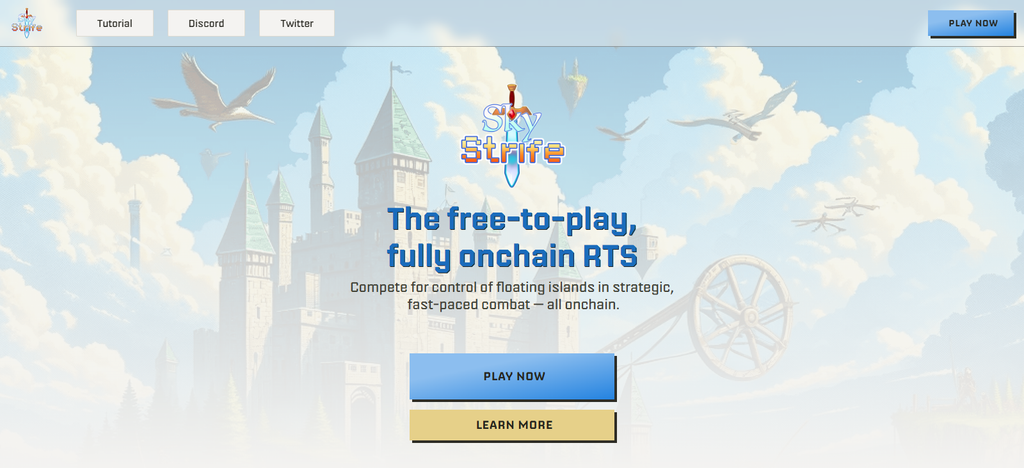
The game’s gameplay is based on positioning, timing and coordinated attacks, and not just on collecting assets. Blockchain Network: The game connects to Redstone, a gaming network built on OP Stack. Use of standard Smart agreements can be used to create matches, game rules and mechanics related to resources.
Transaction Costs: Blockchain interactions may require orbs and network gas. Actual costs depend on current deployment. What makes it stand out: It’s a competitive RTS built around sessions, bringing verifiable blockchain mechanics to multiplayer strategy gameplay.
Sky Strife Features
- Fully On-Chain Game Logic: The game state and core rules are in an open blockchain, and gameplay actions are processed by the game protocol.
- Match Generation Through Blockchain Contracts: Blockchain contracts control match generation, game rules and important competitive interactions.
- Verifiable game outcomes: On-chain game-state records offer transparency into the match progression and relevant player actions.
Game Access Permissionless Its open protocol architecture allows developers to create alternative interfaces and interact with the underlying game system. - RTS Powered by Blockchain: Real-time strategy game, tactical unit management, resource decisions, blockchain game execution.
Sky Strife Pros & Cons
| Pros | Cons |
|---|---|
| Real-time strategy gameplay encourages tactical thinking. | Competitive matches can be challenging for beginners. |
| On-chain mechanics provide verifiable game interactions. | Blockchain transactions can introduce gameplay friction. |
| Multiplayer battles create competitive experiences. | Finding active matches may depend on community activity. |
| Open architecture supports community development. | Technical blockchain knowledge can be useful. |
| Resource management adds strategic depth. | Real-time decisions may overwhelm inexperienced players. |
4. Realms: Eternum
Strategy & Game Play: Realms: Eternum is a large-scale empire-building strategy game where players build settlements, gather resources, expand territories, build armies, trade and establish diplomatic relations.
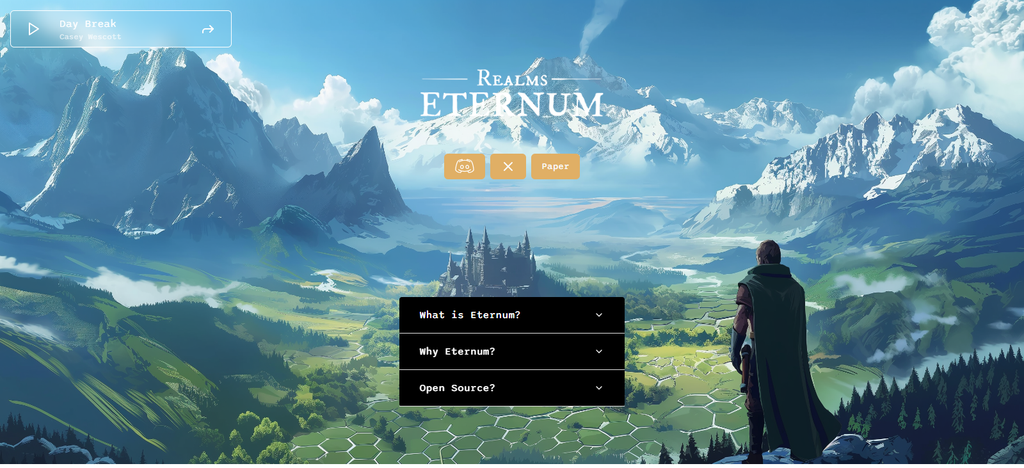
Players battle for control of valuable sites and powerful Hyperstructures. Blockchain Network: Uses Starknet, with Ethereum providing underlying security. Standard Handling: Intelligent contracts handle actions, production of resources, trading, ownership and major world-state changes.
Transaction Fees: Transaction fees may be applied to gameplay transactions, depending on the action and available transaction infrastructure. Unique Feature: Long term planning is central to gameplay with sustainable player driven economy, territorial growth and verifiable strategic decisions.
Realms: Eternum Features
- Fully On-Chain Gameplay: The goal is to have all meaningful player actions, decisions, and game outcomes be performed and verified on-chain.
- Starknet Infrastructure: Leverages Starknet for scalable game transactions, with the added benefit of Ethereum-based security.
- Smart Contract Resource Management: Contracts govern the generation of resources, construction, army control, trading, and territorial interaction.
- Player Driven Economy: Supply, demand, resource availability and market activity are influenced by players’ economic decisions.
- Realms, Resources and Strategic Interactions in the World Integrated into a Persistent Blockchain-Based Game World: Actual Land Ownership on the Chain
Realms: Eternum Pros & Cons
| Pros | Cons |
|---|---|
| Persistent world supports long-term empire building. | Gameplay requires significant time investment. |
| On-chain resource systems improve transparency. | Blockchain transactions may involve network fees. |
| Player-driven economy creates trading opportunities. | Resource competition can make progression challenging. |
| Territory expansion offers strategic depth. | Complex mechanics create a learning curve. |
| Starknet integration supports blockchain-based gameplay. | Network dependency can affect transaction experience. |
5. Realms: Blitz
Strategy & Tactics: Realms: Blitz is a competitive, fast-paced mode that exists inside of the Realms ecosystem. Blitz is different from the longer empire-building sessions in that it gives players a limited competition of 60 minutes to develop resources, expand their position, manage military decisions and compete against other players.
Blockchain Network: Powered by Starknet-based Realms ecosystem. Smart Contract Use: On-chain contracts are used to enforce gameplay rules, resource systems, competitions and verifiable outcomes.
Transaction Fees: Players may incur network fees for any transaction on the blockchain. Competition entry and reward criteria are based on active events. Unique Feature: Fast-paced competition rewards players who can make quick decisions, manage resources and expand strategically.
Realms: Blitz Features
- On-Chain Game Physics: The rules of its gameplay are immutable and enforced by blockchain, for movement, combat, resources and other strategic actions.
- 60-Minute Competitive Matches: Blitz games are set within a one-hour limit, stressing fast-paced play and timely strategic choices.
- Hex-Based World Records: It has a procedurally generated world map that allows you to explore territory, move your army and strategically position yourself.
- Smart Contract Competition: The rules of the game, the course of the match, and the scoring of the competition are supported by blockchain contracts.
- Strategic Measurable Outcomes: Objectives such as Hyperstructures, camps and exploration points are competed for by players, with rules shared on-chain.
Realms: Blitz Pros & Cons
| Pros | Cons |
|---|---|
| 60-minute matches offer fast-paced competition. | Short matches leave limited time for experimentation. |
| On-chain rules provide verifiable gameplay mechanics. | Blockchain interactions may introduce transaction friction. |
| Resource management rewards strategic planning. | Beginners may struggle with fast decision-making. |
| Competitive objectives encourage tactical expansion. | Match outcomes can depend heavily on early decisions. |
| Hex-based maps create interesting positioning strategies. | Competitive gameplay may feel demanding for casual players. |
6. Primodium
Strategy & Gameplay: Primodium is a strategy game where you build factories in space. Players mine resources from asteroids, build production facilities, upgrade factories, build fleets and protect their bases. Players can raid rivals, form alliances and compete for valuable resources in strategic expansion.
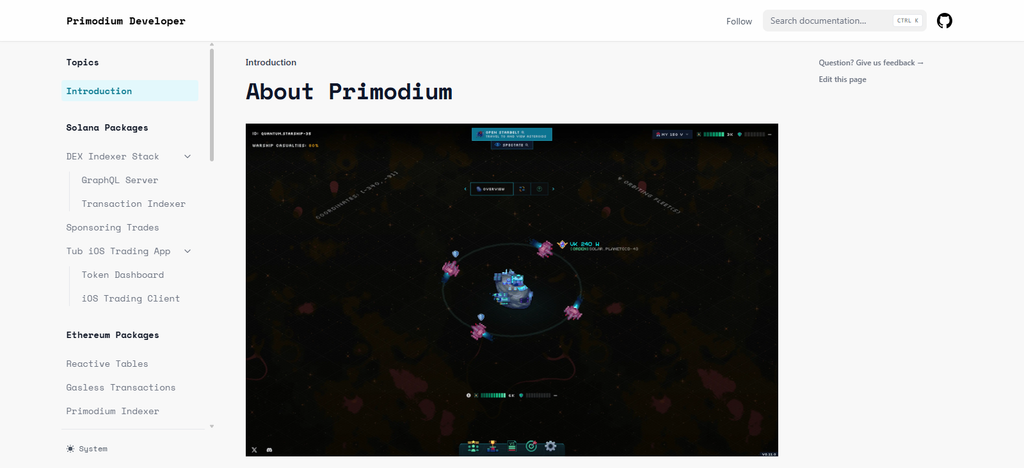
Blockchain Network: Previous deployments included Base, but deployment details might differ between game versions. Smart Contract Usage: Its contracts manage game-state, resource production, building systems and player interactions, built on top of the MUD framework.
Cost of transactions: Actions on-chain may incur gas depending on how it is deployed and the way transactions are handled. What makes it unique: Industrial production, space combat, resource management and player alliances.
Primodium Features
- MUD Framework Integration: Utilizes the MUD framework to organize game data and smart contract-based gameplay systems.
- On-chain resource management: Enable blockchain based game mechanics for resource collection, production, building and upgrades.
- Smart Contract Game Logic: The contracts handle core game state elements and player-game world interactions.
- Player-Driven Development: Players build out bases, create factories, improve infrastructure, and manage resources via interconnected gameplay mechanics.- Game Architecture Composable: The on-chain framework offers opportunities for developers to build more interfaces, tools and applications around the game world.
Primodium Pros & Cons
| Pros | Cons |
|---|---|
| Factory-building mechanics provide strategic depth. | Production systems can become complicated. |
| Resource management encourages efficient planning. | Progression may require considerable time. |
| MUD framework supports composable game development. | Blockchain interactions may create technical barriers. |
| Space exploration adds competitive opportunities. | Gameplay accessibility depends on wallet and network setup. |
| Base development and fleet management offer varied activities. | Network activity can affect transaction experience. |
7. Axie Infinity: Origins
Strategy & Gameplay: Axie Infinity: Origins is a tactical card-battling game where players build teams of Axies, choose ability cards, manage energy and make turn-based combat decisions. Different Axie classes, abilities and team combinations allow for strategic deck building.
Blockchain Network: Its ecosystem utilizes Ronin, an Ethereum compatible gaming network, as its main network. Smart contract usage: The blockchain infrastructure is used for ownership of Axie-related digital assets as well as marketplace activity and token transactions.
However, normal Origins battles are not recorded as individual on-chain transactions. Transaction Costs: The buying, selling or transferring of assets can be associated with Marketplace and network costs. Key Feature: Accessible tactical combat with collectible creatures and blockchain-based asset ownership.
Axie Infinity: Origin Features
- Ronin Blockchain Integration: Utilizes the Ronin ecosystem for digital asset ownership and blockchain transactions.
- ** Axie Ownership ( NFT Based )** Players can own supported Axie NFTs and use eligible creatures within the wider gaming ecosystem.
- Blockchain Asset Transfers: Supported Axies and collectible assets can be traded or transferred through compatible ecosystem marketplaces.
- Collectibles: Rune, Charm They have progression systems where you can use runes , charms and crafting . The blockchain stuff depends on the asset .
- Off-Chain Battle Processing: Standard Origin battles are not stored as individual blockchain transactions; the game has its own gameplay infrastructure.
Axie Infinity: Origins Pros & Cons
| Pros | Cons |
|---|---|
| Turn-based battles offer accessible strategy gameplay. | Competitive deck building can require experience. |
| Different Axie classes support team customization. | Building competitive teams may require investment. |
| Card combinations create tactical opportunities. | Gameplay balance can change with updates. |
| Ronin supports blockchain-based asset ownership. | Not every battle action is recorded on-chain. |
| Beginner-friendly combat provides an approachable introduction. | Advanced competitive play requires knowledge of game mechanics. |
8. Parallel TCG
Strategy & Gameplay: Parallel TCG is a science fiction trading card game in which players build decks, choose cards based on factions and engage in tactical card battles. You can choose between five different factions – Earthen, Marcolian, Kathari, Augencore and The Shroud – each with their own strategic options and deck-building opportunities.
Blockchain Network: The collectible cards are ERC-1155 digital collectibles on Ethereum. Smart Contract Usage – Smart agreements are used for collectible ownership and transfers and not to record every ordinary match action.
Transaction Fees: Marketplace transaction fees or fees for moving collectible cards on the Ethereum network may be charged. Unique Feature: It mixes competitive card strategy, collectible ownership, faction identities and a science-fiction universe.
Parallel TCG Features
- NFT Card Ownership: Collectible cards that are supported can be owned by players as digital resources on the blockchain.
- Tradable Digital Collectibles: Compatible marketplace infrastructure allows players to trade supported cards and other collectibles.
- – Card battles Off-Chain: Standard competitive matches are not single recorded on Ethereum, the blockchain is used mainly for collectible ownership and transfer.
Parallel TCG Pros & Cons
| Pros | Cons |
|---|---|
| Strategic card battles encourage thoughtful deck building. | Competitive play requires learning card combinations. |
| Five factions offer different gameplay strategies. | Collecting specific cards may involve marketplace spending. |
| Science-fiction setting provides a distinctive identity. | New players may need time to understand faction mechanics. |
| Blockchain collectibles support digital asset ownership. | Ordinary card battles are not individually recorded on-chain. |
| Collectible cards create trading opportunities. | Competitive balance can change with new card releases. |
9. Colony: Survival (Parallel Universe)
Strategy & Gameplay: Strategy & Gameplay Colony: Survival is a sci-fi strategy game about building a colony, by Parallel Studios. Players build settlements, recruit colonists, gather resources, craft equipment, upgrade buildings, and defend their colonies in strategic combat.
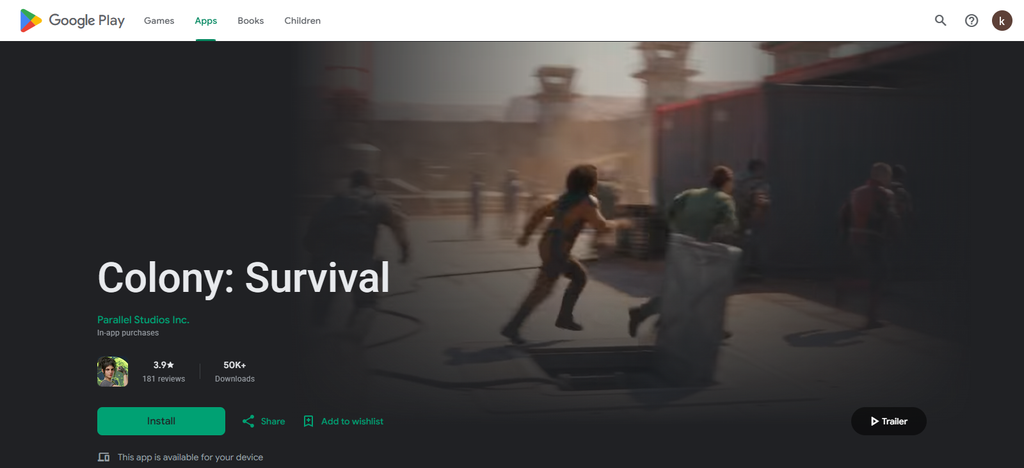
Blockchain Network: Its mobile gameplay is currently known to work on iOS and Android and there is no confirmed core gameplay blockchain deployment. Smart Contract Usage: The official game description does not set up intelligent contracts to record common gameplay actions.
Transaction Costs: The game is free to download and play, with optional in-game purchases. Unique Feature: What separates it from typical colony-building games are the AI-powered colonists, natural-language interactions, and generative equipment creation.
Colony: Survival (Parallel Universe) Features
- Digital Game Asset Integration: Its current mobile gameplay should not be confused with a proven fully on-chain game economy.
- AI Colonists: Adds AI-based colonist interactions for dynamic elements in colony management and player decisions.
- Generative Equipment Systems Generative equipment concepts in its gameplay contribute to customization and progression.
- Traditional Game Infrastructure: No blockchain was used to record transactions for core settlement development, resource collection, and gameplay actions.
- No Verified Smart Contract Playability: There is no public confirmation that intelligent contracts run regular colony activities, or store permanent on-chain game-state records.
Colony: Survival (Parallel Universe) Pros & Cons
| Pros | Cons |
|---|---|
| Colony-building mechanics encourage resource management. | Not a verified fully on-chain strategy game. |
| AI-powered colonists add interactive gameplay elements. | Blockchain-based ownership is not established for core gameplay. |
| Generative equipment concepts support customization. | AI features may require time to understand. |
| Settlement development offers progression opportunities. | Gameplay may appeal less to players seeking competitive PvP. |
| Mobile accessibility makes it easier to explore. | Blockchain transaction transparency is not a core confirmed feature. |
10. Pirate Nation
Gameplay & Strategy: Pirate Nation is a blockchain-based pirate adventure game where players collect pirates, send them on adventures, gather resources, craft items, find treasures and develop their characters. Its progression and resource management systems add a strategic element to the development of your crew and the planning of their activities.
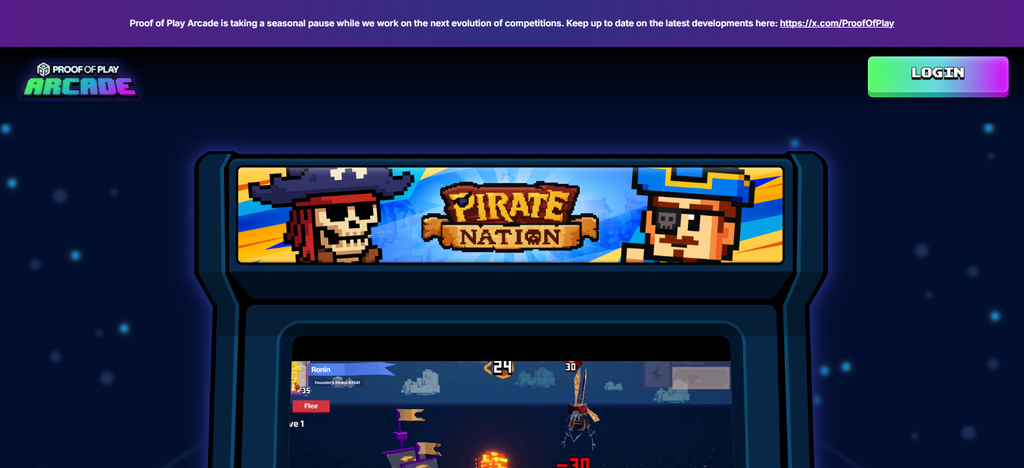
Blockchain Network: Leverages Proof of Play’s multichain infrastructure with its Apex and Boss gaming chains. Smart Contract Usage: Core game logic, player actions, items and achievements are defined using intelligent contracts.
Transaction Costs: Its gas sponsoring infrastructure and game wallet can enable gasless gameplay interactions. Unique Feature: It has a full on-chain architecture, multichain infrastructure, and persistent player-owned game assets, unlike traditional pirate adventure games.
Pirate Nation Features
- Full On-Chain Game Architecture: Leveraging the blockchain infrastructure to support critical game mechanics, player interactions, and persistent game-state aspects.
- Proof of Play Infrastructure: Built on the Proof of Play Blockchain gaming ecosystem with its dedicated gaming-chain infrastructure.
- **Assets on Smart Contracts: ** Supported pirates, items and game related assets have blockchain based ownership and contract functionality.
- Support for Gasless Gameplay: Gas-sponsoring infrastructure can reduce the burden on players to manage individual transaction fees for supported actions.
- Multi-chain support: Its ecosystem utilizes multiple blockchain networks to drive game operations and digital asset interactions.
Pirate Nation Pros & Cons
| Pros | Cons |
|---|---|
| On-chain architecture supports verifiable game mechanics. | Blockchain concepts may confuse first-time players. |
| Pirate collection adds progression opportunities. | Advanced progression can require time and resource management. |
| Smart contracts support digital asset ownership. | Some blockchain interactions depend on network infrastructure. |
| Gasless transactions simplify supported gameplay activities. | Gasless functionality depends on supported actions and infrastructure. |
| Proof of Play infrastructure supports blockchain gaming development. | Multichain systems can introduce additional technical complexity. |
Conclusion
On-chain strategy games are transforming blockchain gaming with tactical gameplay, transparent mechanisms, digital asset ownership and player-driven economies. There are games like Dark Forest, Influence, Sky Strife, Realms: Eternum and Primodium that offer different strategic experiences with exploration, empire building, resource management and competitive battles.
Meanwhile, Axie Infinity: Origins and Parallel TCG mix strategy with blockchain-based collectible ownership. Before choosing a game, players should familiarize themselves with the blockchain network, smart contract features, transaction fees, game complexity, and the asset ownership model. Knowing the difference between fully on-chain and hybrid games will help players find the right experience in 2026.
FAQ
What Are On-Chain Strategy Games?
On-chain strategy games are blockchain-based games where important gameplay actions, game rules, resources, or player decisions are recorded or executed through blockchain networks and smart contracts.
Which Are the Best On-Chain Strategy Games in 2026?
Some notable options include Dark Forest, Influence, Sky Strife, Realms: Eternum, Realms: Blitz, Primodium, Axie Infinity: Origins, Parallel TCG, Colony: Survival, and Pirate Nation.
How Does Blockchain Work in Strategy Games?
Blockchain records selected game activities, verifies transactions, manages digital asset ownership, and executes smart contract rules. The exact functionality depends on each game’s architecture.