

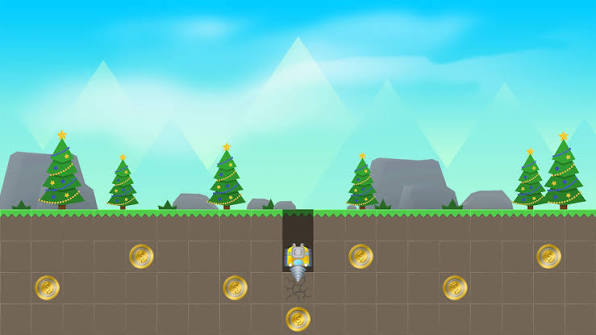
This article will talk about the Best Blockchain Games With Real-Time On-Chain Multiplayer which brings players together in competitive battles, shared virtual worlds, and decentralized gameplay. We’ll break down their unique features, blockchain networks, multiplayer modes, smart contract functionality, transaction systems and digital asset ownership to help you understand which games offer the most engaging blockchain-powered gaming experiences in 2026.
Why Use Blockchain Games With Real-Time On-Chain Multiplayer
Clear Gameplay Records: Game activities, transactions and outcomes are documented on the blockchain, so players can verify supported interactions.
Multiplayer Live Interaction: Players can challenge adversaries, join team battles and interact in shared gaming environments.
Decentralized Game Economies: Blockchain-based marketplaces allow players to trade supported digital resources and engage in player-driven economic activities.
Cross-Platform Asset Potential: Blockchain-based assets can potentially allow for interoperability across compatible games and platforms depending on technical standards and developer support.
Community Participation: Some blockchain games offer governance systems that allow eligible token holders to participate in certain development and ecosystem decisions.
Game Outcomes Verifiable: Cryptographic proofs and on-chain records enable players to independently verify important competitive outcomes and game events.
Persistent Virtual Worlds: Blockchain supported game states can retain key player assets, achievements, and world information beyond game sessions.
Player-Driven Experiences: With decentralized gaming infrastructure, communities and developers will have more chances to build, customize, and expand gaming experiences.
Key Points
| Game Name | Blockchain Network | Game Genre | Multiplayer Type | Key Highlight |
|---|---|---|---|---|
| Xaya Ships | Xaya | Naval Strategy | Competitive Multiplayer | Game Channels and verifiable player interactions |
| Rebirth Rumble | Solana | PvP Action | 5v5 Team Battles | Character-based competitive gameplay |
| Axie Infinity | Ronin | Creature Battler | Turn-Based PvP | Collectible Axies and strategic battles |
| Tug of War (Solana) | Solana | Team-Based Game | Team Competition | Solana Pay and shared game-state updates |
| Realms: Eternum | Starknet | Strategy / MMO | Persistent Multiplayer | On-chain world and player-driven economy |
| Influence | Starknet | Space Strategy MMO | Economic Multiplayer | Asteroid exploration and resource management |
| Illuvium | Immutable Ecosystem | RPG / Autobattler | Competitive Gameplay | Illuvial collection and digital ownership |
| Pirate Nation | Apex | Pirate RPG | Competitive / Shared Progression | Fully on-chain game mechanics |
| Dark Forest | Gnosis Chain (original deployment) | Strategy | Decentralized Multiplayer | Zero-knowledge proofs and fog-of-war |
| Sky Strife | Blockchain-based game protocol | Real-Time Strategy | Competitive Multiplayer | On-chain strategy game logic |
1. Xaya Ships
Xaya Ships is a naval combat game in the classic Battleship format where players face each other trying to find and sink their opponents ships. Its multiplayer experience showcases Xaya’s Game Channels technology, which allows near-real-time moves using signed off-chain messages with on-chain settlement and dispute resolution.
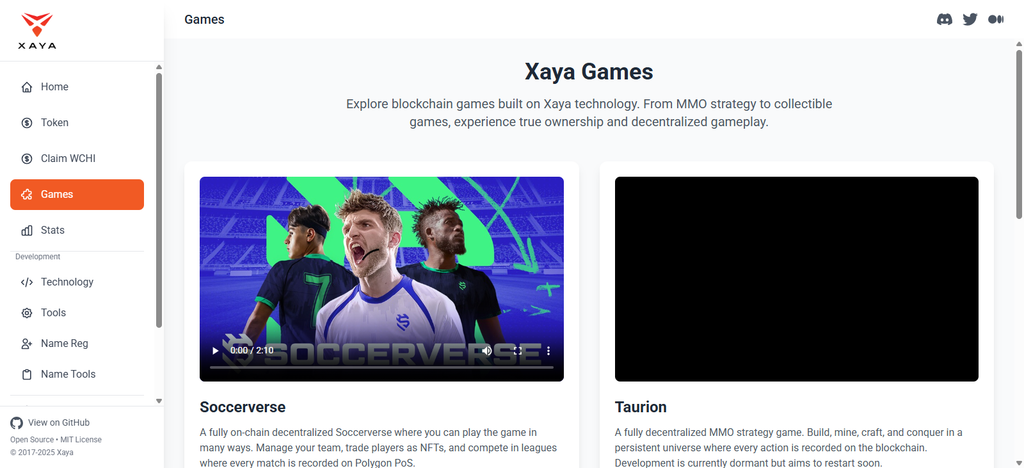
It’s built on Xaya’s gaming infrastructure with Game State Processors and blockchain backed player identities. Intelligent contracts and blockchain records assist in verifying the game, and the responsiveness of the game mostly depends on network latency.
Players need to have a compatible Xaya identity and setup. It’s not a free-to-play commercial product in the traditional sense, it’s a technology demo.
Xaya Ships Features
- Space Battles in Real Time: Game Channels technology enables players to engage in competitive space combat with responsive multiplayer interactions.
- Game Channels Technology: Faster interactions using signed off-chain game play messages with on-chain settlements.
- Decentralized gameplay: Leverages Xaya gaming infrastructure to manage game-state and player interactions on a blockchain.
- Fleet Ownership: Player-owned space fleets, blockchain-verified digital asset ownership
- Game Results Proven: Disputed game state information verified on blockchain and agreed upon by signed results.
| Pros | Cons |
|---|---|
| Demonstrates near-real-time blockchain multiplayer through Game Channels. | Limited gameplay variety compared with established multiplayer games. |
| Supports signed off-chain messages for responsive player interactions. | Requires understanding of Xaya’s gaming infrastructure. |
| Provides blockchain-backed game-state verification. | Smaller gaming community and ecosystem. |
| Supports player ownership of in-game fleets. | Not a large-scale commercial gaming experience. |
| Offers an open-source foundation for decentralized gaming. | Limited mainstream player adoption. |
2. The Rumble Reborn
Rebirth Rumble needs to be verified before it can be called a real-time on-chain multiplayer blockchain game. From the existing documentation, the existing blockchain network, multiplayer features, smart contract setup, pace of transaction confirmation, and wallet needs are not reliably ascertainable.

To provide a meaningful comparison, the article should clarify whether players engage in live PvP, co-op, or asynchronous gameplay, and whether match results are genuinely recorded on-chain. It’s also important to verify its current playable status, entry costs, NFT requirements, and free-to-play availability instead of assuming these features.
Rumble of the Rebirth Features
- 5v5 PvP Battles: Allows for player versus player battles in teams of five.
- Character selection: Before entering competitive multiplayer battles, players can choose different characters.
- Solana Integration: Utilizes Solana blockchain infrastructure and Anchor for its game development architecture.
- Unity Game Client: Offers an interactive gaming experience via a Unity-based frontend.
- Competitive Gameplay: Focus on team coordination and player vs player combat.
| Pros | Cons |
|---|---|
| Offers a team-based 5v5 PvP gaming concept. | Still documented as under development. |
| Supports different playable character selections. | Limited verified information about its current availability. |
| Uses Solana blockchain development technology. | Depends on wallet-based blockchain interactions. |
| Combines Unity frontend with Anchor backend. | Limited publicly documented gameplay modes. |
| Provides an example of blockchain-powered competitive gaming. | Not yet an established commercial gaming ecosystem. |
3. Axie Infinity
Axie Infinity is a blockchain gaming ecosystem with collectible creatures called Axies, competitive battles, and player-owned digital resources. In Axie Infinity: Origins you can compete against others in strategic battles with creatures, but it’s not a real-time battle – it’s turn-based.
The ecosystem uses Ronin blockchain for ownership and transactions of assets and smart contract technology to facilitate NFTs and marketplace interactions. Ronin was created to have faster confirmations and cheaper transaction fees than ethereum mainnet.
Players can start Origins without buying NFTs, using free starter Axies. A Ronin account is useful if you want to use the blockchain features, though not required. This makes it accessible for newcomers.
Axie Infinity Features
- Creature-Based Battles: Players gather Axies with unique skills and engage in tactical competitive fights.
- Arena PvP Mode: User versus user competitions where users can challenge opponents and compete for leaderboard positions.
- Free Starter Axies: New players can try out the game without an upfront NFT purchase with three free non-NFT starter Axies.
- Runes and Charms: Customize with in-game items that can change Axie abilities and battle strategies.
- Ronin Blockchain: Using Ronin infrastructure to own digital properties and transact on the blockchain.
| Pros | Cons |
|---|---|
| Offers strategic creature-based competitive battles. | Battles are turn-based rather than continuous real-time combat. |
| Provides free starter Axies for new players. | Some collectible features require NFT ownership. |
| Supports blockchain-based digital asset ownership. | Competitive progression can require considerable effort. |
| Includes Arena PvP and leaderboard competition. | Advanced gameplay systems can challenge beginners. |
| Benefits from the Ronin gaming ecosystem. | Not every gameplay action is processed on-chain. |
4. Tug of War (Solana)
Tug of War is a multiplayer blockchain game demo featured in Solana’s developer docs. Players join rival teams with Solana Pay QR codes and add actions to drag a virtual rope to their side.
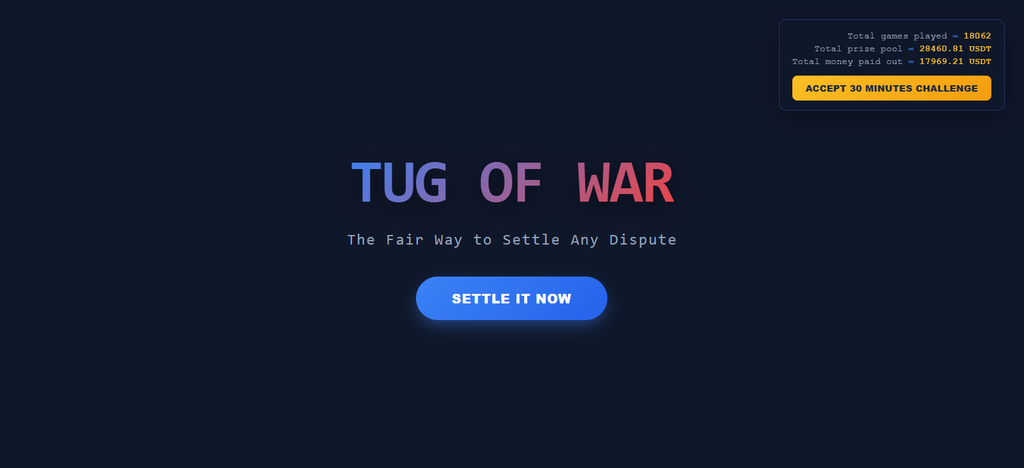
The account updates update the shared game state. The backend is built in Anchor, the frontend in React and Next.js. Its blockchain integration shows how multiple participants can interact with a common game state using Solana transactions.
Players must have a compatible Solana wallet to authorize participation and transactions. It’s documented as a Devnet experience, so I wouldn’t call it an established commercial gaming release.
Tug-of-War (Solan) Features
- Multiplayer Team: Several players can team up against each other and fight to pull a virtual rope to their side.
- Solana Pay: Players can join with their supported mobile wallets using QR codes.
- Shared Game State: Progress in gameplay is updated by writing to a shared Solana account.
- Anchor Framework: Anchor is used as the blockchain backend and game interaction logic.
- Team Work Rewards: Displays the rewards granted to the team that manages to pull the rope to one side.
| Pros | Cons |
|---|---|
| Provides simple team-based multiplayer interaction. | Limited gameplay depth compared with commercial games. |
| Demonstrates Solana Pay integration. | Primarily a developer demonstration. |
| Uses shared blockchain account updates. | Documented as a Devnet example. |
| Supports participation through QR-code wallet interactions. | Requires compatible wallet authorization. |
| Demonstrates blockchain-based team competition. | Limited progression and long-term gaming features. |
5. Realms: Eternum
Realms: Eternum is a fully on-chain strategy game where players create settlements, gather resources, build armies, expand territories and battle for control of valuable Hyperstructures. Its multiplayer world is one of territorial competition, economic interactions, alliances, and making strategic choices within a shared persistent world.
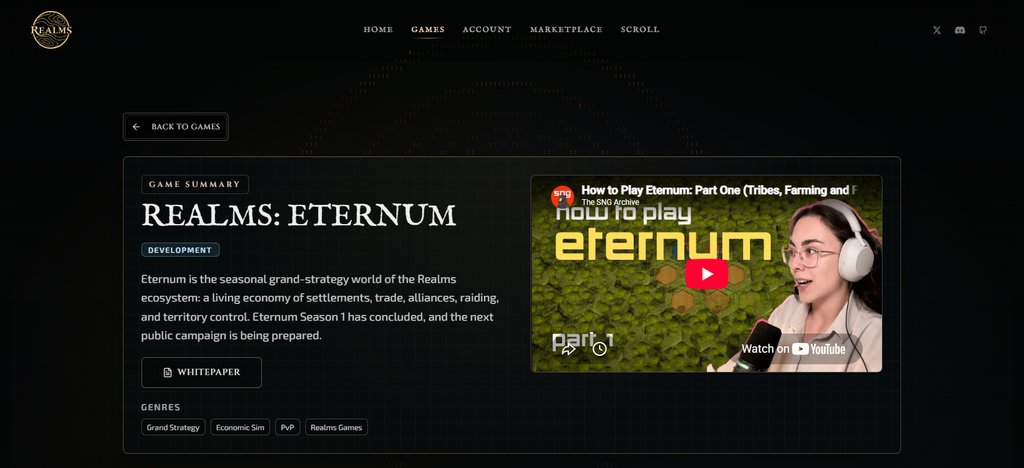
Starknet for the game, Ethereum for the underlying security. Its game actions and results are meant to be transparently executed and verifiable on-chain via smart contract technology.
Players can choose to use the Cartridge Controller which has session keys for transactionless interactions in game play. This reduces wallet friction, though optional assets and currencies may require additional wallet actions.
Realms: Eternum Features
- Persistent Strategy World: A common virtual world in which players build settlements and vie for resources.
- Territory Expansion: Players can expand their influence, control territories, and chase strategic objectives.
- Resource Management: This covers gathering resources, building up an economy and infrastructure mechanics.- On-Chain Game Logic: Uses Starknet smart contract technology to enable critical game-state changes and decentralized interactions.
- Player-Driven Economy: Fosters competition and cooperation in resource management, trading, and shared-world activities.
| Pros | Cons |
|---|---|
| Offers a persistent, fully on-chain strategy environment. | Complex mechanics can overwhelm beginners. |
| Supports territory expansion and resource management. | Strategic progression requires time and planning. |
| Provides player-driven economic interactions. | Blockchain transactions can introduce interaction friction. |
| Uses Starknet for scalable game execution. | Requires understanding of its economic systems. |
| Supports competitive and cooperative gameplay. | Long-term strategy may not suit casual players. |
6. Influence
Influence is a persistent space-strategy MMO in which players explore asteroids, gather resources, craft equipment, build settlements and expand trading networks.
The multiplayer experience revolves around a common economy, player-driven markets, resource competition and a cooperative spirit among the space explorers. The game runs on Starknet, an Ethereum Layer 2 network and the core game systems are on blockchain infrastructures.
Smart agreements enable persistent assets, player actions and economic interactions. Users can create a Starknet account with supported wallet options or by signing up with their email.
Influence Features
- Space Exploration: Lets players explore the Adalian asteroid belt and build their own space operations.
- Asteroid mining: Players mine for valuable resources, which are used to support industrial production.
- Player-Driven Economy: Allows trading, manufacturing, logistics and economic cooperation between participants.
- Shared Multiplayer World: Offers a shared world where player actions generate a connected economic world.
- Starknet Integration: Integrates Starknet blockchain infrastructure to support persistent game systems and player-owned assets.
| Pros | Cons |
|---|---|
| Provides a persistent shared multiplayer universe. | Complex economic mechanics require learning. |
| Supports mining, manufacturing, and player trading. | Actions can take significant real-world time. |
| Offers a player-driven economic environment. | Requires desktop or laptop browser access. |
| Supports blockchain-based asset ownership. | Starter packs and ongoing operations can involve costs. |
| Encourages cooperation through trading and logistics. | Combat and technology research are not currently playable. |
6. Illuvium
Illuvium is a blockchain gaming ecosystem that merges creature collection, exploration, role-playing, and competitive autobattler experiences. Players explore environments, capture Illuvials, collect digital resources, and employ creatures in strategic battles. Its ecosystem is built on Immutable X, an Ethereum Layer 2 scaling solution that enables gas-free NFT interactions.
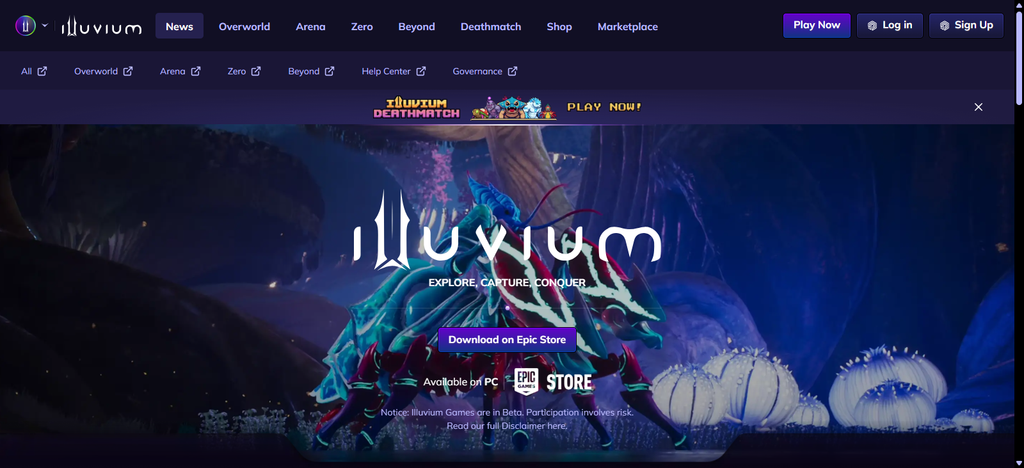
The gameplay itself is not fully processed on-chain, but intelligent contracts are used to enable asset ownership and marketplace transactions.
But its competitive game experiences provide multiplayer competition and players shouldn’t confuse this with continuous real-time on-chain combat. External wallets are not required to begin with the game. And the free-to-play model means players can also join without any mandatory purchases.
Illuvium Features
- Illuvial Collection: Players can find, catch and collect creatures called Illuvials.
Open-World Exploration: Explore a wide variety of environments and regions, all focused on gameplay. - Competitive Autobattler: Features strategic creature battles where players build teams and utilize various abilities.
- Digital Asset Ownership: Enables blockchain ownership of eligible in-game assets and collectibles.
- Immutable Ecosystem: Incorporates Ethereum Layer 2 gaming infrastructure for supported blockchain assets and marketplace interaction.
| Pros | Cons |
|---|---|
| Offers visually detailed creature-based gameplay. | Some features and assets require purchases. |
| Combines exploration and competitive autobattler experiences. | Different game modes have separate gameplay systems. |
| Supports collectible Illuvial progression. | Blockchain ownership does not cover every gameplay action. |
| Provides blockchain-supported digital asset ownership. | Hardware requirements may limit accessibility. |
| Offers multiple gaming experiences within one ecosystem. | Not primarily a fully on-chain multiplayer game. |
8. Pirate Nation
Pirate Nation is an entirely on-chain pirate-themed RPG where players will collect pirates, build ships, explore islands, gather resources, do adventures and develop their crews. The multiplayer ecosystem includes competitive leaderboards, player progression, and shared economic activities on the blockchain.
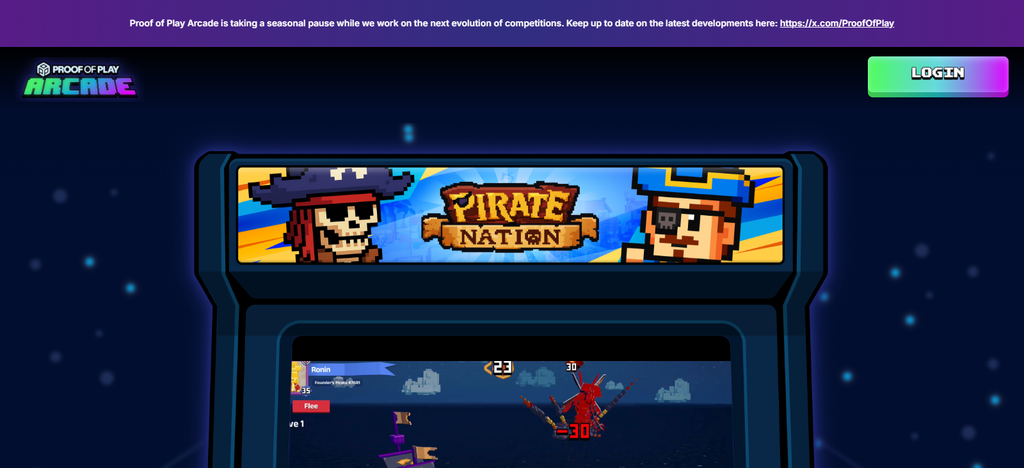
The game is built on Proof of Play’s Apex blockchain, and features multichain infrastructure, including Boss. Instead of relying on centralized game servers, intelligent contracts handle its game logic, items, currencies, and player activities.
The game’s persistent data is stored on the blockchain infrastructure while the dedicated gaming network provides the processing power to allow for game play. Players can interact with blockchain assets and can be onboarded to the game through account-based onboarding.
Nation of Pirates Features
- Pirate Crew Collection: Players can form crews and develop characters for various adventures.
- Ship Development: Includes ship progression and pirate exploration mechanics.
- Resource Gathering: Players earn materials, treasures and other resources through adventures.
- Fully On-Chain Architecture: Leverages intelligent contracts for game features, player interactions, and digital resources.
- Leaderboard Competitions: Offer competitive progression via player achievements and leaderboard activities.
| Pros | Cons |
|---|---|
| Uses fully on-chain game logic and smart contracts. | Blockchain architecture can introduce onboarding complexity. |
| Offers pirate-themed exploration and progression. | Resource management can require considerable time. |
| Supports collectible pirates and ships. | Not focused entirely on real-time PvP combat. |
| Provides competitive leaderboard activities. | Advanced progression may require additional resources. |
| Uses dedicated gaming blockchain infrastructure. | Multichain architecture can add technical complexity. |
9. The Dark Forest
Dark Forest is a decentralized multiplayer strategy game where players explore an unknown universe, discover planets, expand their territory and battle other players. Its unique feature is a cryptographic fog-of-war technology that employs zero-knowledge proofs to conceal information about undiscovered planets while enabling players to verify interactions within the game.
The original game ran on Ethereum-compatible smart contracts that were deployed on xDAI (now Gnosis Chain).
Intelligent contracts govern game rules and critical state changes, and cryptographic proofs protect secret information. Players need an EVM-compatible wallet and access to the game deployment. The original releases differ from the current community-maintained versions.
The Dark Forest Features
- Planetary Exploration: Players will find planets and extend their reach throughout a mysterious virtual universe.
- Fog-of-War Mechanics: Planetary information is concealed until it is revealed, generating fog-of-war and promoting exploration.
- Zero-Knowledge Proofs: A cryptographic method to prove certain gameplay details while not revealing hidden details.
- Territory Competition: Players expand their territory and compete with other players for control of strategic areas.
- Smart Contract Integration: Allows for key game-state updates and verifiable interactions through blockchain-based game logic.
| Pros | Cons |
|---|---|
| Introduces innovative zero-knowledge fog-of-war mechanics. | Cryptographic concepts create a learning curve. |
| Supports decentralized multiplayer strategy. | Requires strategic planning and patience. |
| Provides hidden-information exploration gameplay. | Original game deployments may not reflect current availability. |
| Supports blockchain-verifiable game interactions. | Community-maintained versions can differ. |
| Offers competitive planetary expansion. | Less accessible to casual gaming audiences. |
10. Sky Battle
Sky Strife is a real time strategy game on the blockchain where players compete through tactical decisions, resource management, unit deployment and territorial control. The main thing that distinguishes it from many turn-based blockchain games is the strategic battles in real time of several players.
Its game state and logic are built to live on an open blockchain, smart contract technology undergirding the underlying game protocol. Players interact through a browser interface and blockchain transactions provide verifiable game-state updates.
Wallet compatibility and transaction requirements vary depending on the active deployment. Its architecture is a case study for how on-chain game logic can provide the basis for competitive strategy experiences, though transaction confirmation and network conditions remain important factors.
Sky Battle Features
- Real-time strategy wars: Concentrates on competitive matches where players decide during active play.
- Resource Management: Players need to manage resources to power their strategic growth and military operations.
- Unit Deployment: Enables players to position and deploy units to fight against opposing forces.
- On-Chain Game Logic: The game protocol governs the state and core logic of the game on an open blockchain.
- Open Game Protocol: A blockchain-based architecture, which could be accessed via alternative interfaces.Let me tell you what happened.
| Pros | Cons |
|---|---|
| Focuses on real-time strategy multiplayer battles. | Blockchain transactions may affect responsiveness. |
| Supports competitive resource management. | Strategy mechanics can challenge beginners. |
| Uses blockchain-based game logic. | Wallet onboarding may create additional friction. |
| Provides tactical unit deployment and combat. | Availability depends on active game deployments. |
| Demonstrates open and composable gaming architecture. | Not every gameplay interaction should be assumed to be instantaneous on-chain. |
Conclusion
Real-time on-chain multiplayer is revolutionizing the player experience for competitive battles, shared worlds, and decentralized gaming economies in blockchain games. Xaya Ships , Realms: Eternum , Influence , Dark Forest , and Sky Strife show different ways of playing multiplayer games on the blockchain.
Axie Infinity , Illuvium , and Pirate Nation give more experiences through digital ownership and strategy games. However, the way they integrate with the blockchain, the transaction requirements, and the multiplayer mechanics are very different.
Players need to compare the gaming experience, network performance, smart contract functionality, wallet requirements, and accessibility before choosing a game to find the most suitable blockchain gaming experience in 2026.
FAQ
What are real-time on-chain multiplayer blockchain games?
Real-time on-chain multiplayer blockchain games allow multiple players to compete, collaborate, or interact in shared gaming environments while using blockchain technology to record, verify, or execute important game actions.
Which blockchain games support real-time multiplayer gameplay?
Sky Strife, Xaya Ships, Realms: Eternum, and Dark Forest demonstrate different approaches to blockchain-based multiplayer experiences. However, their gameplay mechanics and on-chain execution models differ.
What is the difference between on-chain and off-chain multiplayer gaming?
On-chain multiplayer gaming uses blockchain transactions or smart contracts to manage important game states and actions. Off-chain gaming processes most gameplay through centralized or external servers.
Do blockchain multiplayer games require cryptocurrency wallets?
Most blockchain games require compatible wallets for transactions, NFT ownership, or blockchain interactions. However, some offer email-based onboarding, guest access, or account-based gameplay options.