
I’ll talk about The Rise of Decentralized Social Networks in this post and examine how these platforms are changing how people connect online. Decentralized networks offer users control over their data, privacy, and content, in contrast to standard social media.
They are transforming the digital world and ushering in a new era of freedom, transparency, and user empowerment through community-driven governance, censorship resistance, and creative token-based systems.
What Are Decentralized Social Networks?
Decentralized social networks are those in which people share ownership and control instead of being overseen by a single business. Decentralized networks run on blockchain, peer-to-peer, or federated systems, in contrast to traditional social media, where a central authority controls data, algorithms, and moderation.

Users can manage personal data, take part in community-driven decision-making, and own their digital identities thanks to this system. Important technologies that provide security, privacy, and resistance to censorship include distributed ledgers and encrypted connections.
Mastodon, Diaspora, and Bluesky are well-known instances that allow for unrestricted communication. Decentralized social networks alter online connection by granting users transparency and control, promoting independence, authenticity, and trust in the digital realm.
The Rise of Decentralized Social Networks

The increasing adoption of decentralized social networks are attributed to the increasing concern over personal data protection, censorship, and the control of users through centralised networks. The central aspects of focus include:
Control of Personal Data
The danger of control of personal data due to the business model of social networks is eliminated.
Protection of Personal Communication
Communicational data breaches are eliminated by the network system of personal data encryption and communication.
Freedom of Expression
No organisational body has the ability to restrict, block, and limit the users.
Fairness
The equal right to make decisions and participate in the system.
Enhanced User Engagement and New Ways to Earn
User engagement and earning through innovative decentralized Web 3.0 applications and token economy systems.
Frustrations with Centralized Networks
The increasing awareness to the social networks frustration is directed to the more simplified systems of decentralized social networks.
Why the Shift Is Happening
The general discontent with traditional social media platforms is what is driving the shift toward decentralized social networks.
Because centralized platforms frequently gather, profit from, and even abuse personal data, users are becoming more concerned about privacy violations.
In addition to restricting freedom of expression and promoting content that increases interaction over authenticity, censorship and algorithmic manipulation have undermined confidence.
Additionally, people are looking for platforms where they have control over their digital identities due to the increased awareness of data ownership.
Decentralized alternatives provide transparency, security, and resilience in light of the emergence of Web3 technologies, blockchain, and peer-to-peer networks.
When taken as a whole, these elements are encouraging consumers to investigate platforms that put freedom, justice, and empowerment ahead of centralized authority.
Advantages Over Traditional Social Media
Decentralized social networks differ tremendously from traditional social networks such as Facebook and Twitter; some benefits are:
Real Ownership of Data: Social networks are able to provide full ownership of data.
Safer Communication: Data encrypted communication improves security and protects data breaches.
No Censorship: Users cannot be removed by some central authority.
Governance by Community: The community decides, maintaining fairness and transparency.
No Manipulated Feeds: Users can see what they want to see.
Revenue Generation: Users provide direct and token-based monetization.
Improved Security: Decentralized networks are less prone to hacking and downtime.
Major Features of Decentralized Social Networks
Social networks of a decentralized nature exhibit certain special features that add to their novelty with respect to traditional networks.
User-Controlled Data
Users retain total ownership of their data and digital identity.
Privacy and Encryption
Users’ communications and interactions are secured using innovative encryption and peer-to-peer technology.
Censorship Resistance
Moderating content is a community effort so a central authority cannot perform arbitrary take-downs.
Community Governance
Rules, features, and their limitations are determined by users, usually through voting or consensus.
Transparency
Users of open-source networks can determine for themselves the workings of a network and its algorithms.
Tokenized Incentives
User engagement, content creation, and contribution can be rewarded using blockchain tokens on decentralized networks.
Interoperability
Users of federated systems can communicate with others on different networks.
Popular Decentralized Social Platforms
Mastodon
This is like a decentralized version of Twitter. It is a microblogging platform that has community moderation.
Diaspora
This platform allows users the most privacy of the social networks. Users can create their own pods within the social network.
Bluesky
This platform is built to allow users the most control over their content as well as the control of their feed.
Minds
This platform allows users to earn money for social networking activities. This platform is a social networking site that also has a token based reward system.
Peertube
This platform is a decentralized video sharing site that uses a peer to peer system to reduce central server reliance.
Challenges and Limitations
Limited Scalability:
In comparison to central networks, decentralized networks are much slower and have higher complexity when it comes to the technical and architectural issues associated with large user and large content volume.
Low Levels of Adoption
Many potential users and audience members don’t want to switch to a different platform if they have been already using a different platform.
Moderation of Content
Moderation that is driven by the community can be inconsistent and creates a lack of control over dangerous and damaging content.
High Levels of Complexity
Users that are not familiar and comfortable with technology can be intimidated by the technical and architectural complexity associated with the setup of network nodes, key management, and account setup.
Network Effect
As more users move to a decentralized social network, it will make the social network become more appealing, oppose to when just a few users have moved to the social network.
Links that are not Clear
The laws concerning cryptocurrencies, customer rights, and privacy will have a direct influence on the operational framework of the decentralized social networks.
Future Outlook
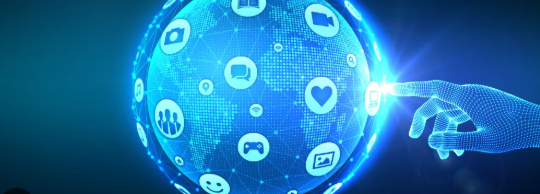
Decentralized social networks appear to have a bright future as user demand for alternatives to existing platforms is driven by growing concerns about data ownership, privacy, and censorship.
Blockchain, Web3, and peer-to-peer technology developments will enhance these networks’ scalability, security, and user experience, opening them up to a wider audience. Integration with digital identity solutions and token-based economies may open up new avenues for community involvement and content monetization.
The social media ecosystem will progressively change toward transparency, empowerment, and user-driven governance as more users, creators, and companies use decentralized platforms as awareness grows. A new era of online contact centered on control, freedom, and trust is heralded by this evolution.
Pros & Cons
| Pros | Cons |
|---|---|
| User Data Ownership: Complete control over personal information and digital identity. | Scalability Issues: Can struggle to handle large user bases efficiently. |
| Enhanced Privacy: Encrypted communication protects data from breaches. | User Adoption: Difficult to attract mainstream users accustomed to traditional platforms. |
| Censorship Resistance: Content cannot be arbitrarily removed by a central authority. | Content Moderation Challenges: Community-driven moderation can be inconsistent. |
| Community Governance: Decisions are made collectively, promoting fairness. | Technical Complexity: Setup and use can be intimidating for non-technical users. |
| Token-Based Incentives: Users can earn rewards for engagement and content creation. | Network Effects: Smaller user base limits social reach compared to giants like Facebook or Twitter. |
| Transparency & Security: Open protocols and decentralized infrastructure reduce risks of manipulation and hacking. | Regulatory Uncertainty: Legal frameworks for decentralized platforms are still evolving. |
Conclusion
People’s online interactions have undergone a dramatic change with the emergence of decentralized social networks. These platforms solve many of the drawbacks of traditional social media by providing users with ownership over their data, improving privacy, and encouraging community-driven governance.
Wider acceptability is being driven by technological advancements and increased understanding of digital rights, even though issues like scalability, moderation, and user adoption still exist.
Decentralized social networks have the potential to transform the digital environment as more users demand transparency, independence, and empowerment. In this future, trust, authenticity, and user control will take precedence over centralized power in online interactions.
FAQ
How is it different from traditional social media?
Unlike centralized platforms like Facebook or Twitter, decentralized networks allow users to own their data, participate in community governance, and reduce reliance on a single company or server.
What is a decentralized social network?
A decentralized social network is a platform where control and data ownership are distributed among users rather than managed by a central authority, giving individuals more privacy, freedom, and control.
How is it different from traditional social media?
Unlike centralized platforms like Facebook or Twitter, decentralized networks allow users to own their data, participate in community governance, and reduce reliance on a single company or server.
Examples of popular decentralized social platforms?
Mastodon, Diaspora, Bluesky, Minds, and Peertube are some widely used decentralized social networks.