


In this article, I will discuss the NFT Bridging Solutions to Transfer, which are vital for the transfer of NFTs between blockchains. These solutions provide cross-chain compatibility for NFTs, ensuring ownership, authenticity, and metadata are retained.
NFT bridges enable collectors and creators to widen the scope of their NFTs and access several marketplaces. Also, they provide faster, safe, and efficient transfers between varied blockchain networks.
What is NFT Bridging Solutions to Transfer?
NFT bridging solutions refer to the specialized technology which lets users transfer non-fungible tokens (NFTs) across different blockchain networks.
NFTs are intrinsically linked to a given blockchain, so transferring them across different blockchains isn’t supported natively. Bridging solutions handle this by locking the NFT on the original chain and minting a counterpart on the target chain, which manages to ensure all claims of ownership and authenticity are adequately preserved.
By enabling the movement of NFTs from one blockchain to another, these bridging solutions increase NFT liquidity and accessibility to various NFT ecosystems and marketplaces.
NFT bridging is required for the integration of NFTs with cross-chain games, various DeFi functionalities, and the general utility expansion of NFTs.
How To Choose NFT Bridging Solutions to Transfer
Security: Look for bridges with good security practices and audits. Also, check their reputation, and ensure they do not lost NFTs.
Supported Chains: Identify bridges which support both the source and destination blockchains.
Transaction Fees: Analyze and compare branching fees, and gas and service charges.
Speed of Transfers: Check the expected transfer speeds.
User Experience: Pick a service which is easy to navigate and provides help.
Liquidity & Compatibility: Check if the bridge is integrated with the NFT marketplaces you wish to use.
Community Trust: Evaluate the bridge’s reputation on Twitter and Track the bridge’s NFT transfer activity.
Key Point & NFT Bridging Solutions to Transfer List
| NFT Bridging Solution | Key Points / Features |
|---|---|
| Celer cBridge | Fast, secure cross-chain transfers; supports multiple blockchains; low fees. |
| Router Protocol | Interoperable bridge for NFTs and tokens; simple UI; widely supported chains. |
| deBridge | Cross-chain NFT & token transfers; decentralized; robust security audits. |
| ChainPort | Multi-chain NFT bridging; supports major chains; easy integration for marketplaces. |
| LayerZero | Omnichain interoperability; fast message delivery; high security; developer-friendly. |
| Wormhole | Popular for NFT and crypto transfers; supports multiple chains; widely trusted. |
| Allbridge | Cross-chain transfers for NFTs and tokens; minimal KYC; smooth user experience. |
| Orbiter Finance | Low-fee NFT bridging; fast settlement; supports popular EVM chains. |
| Across Protocol | Efficient cross-chain transfers; focus on speed and security; compatible with major chains. |
| Synapse Protocol | Multi-chain NFT & token bridge; reliable security; growing ecosystem integration. |
1. Celer cBridge
Celer cBridge stands out as NFT bridging solutions that facilitates the transfer of NFTs across various blockchains. Its main advantages are speed, security, and multi-chain interoperability. Users can transfer NFTs and retain ownership and authenticity at all times.
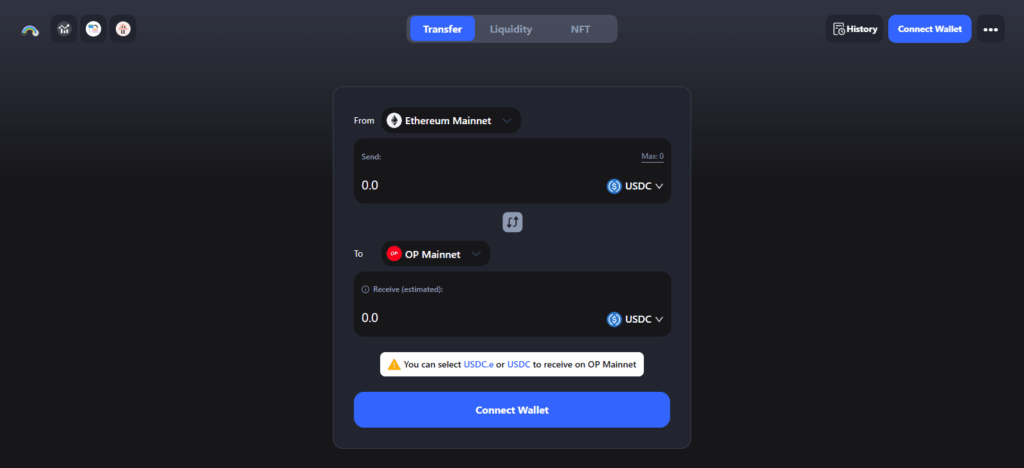
cBridge is not like traditional bridges. It performs all the functions of a bridging solution economically and quickly due to the use of a decentralized network of validators. Its user-friendly design allows even novices to perform cross-chain tasks with ease.
Interoperability fuels liquidity and broad market access, and cBridge works with a vast array of blockchains. It is, therefore, a dependable and effective solution for cross-chain NFT transfers.
Celer cBridge Features
- Multi Chain Support: Enables rapid NFT transfers on Ethereum, BSC, Polygon, and other chains.
- Fee and Speed Optimization: Designed for instant bridging at minimal costs.
- Interface Simplicity: Seamless NFT swaps with no complicated steps.
2. Router Protocol
Router Protocol is a unique NFT bridging solution that allows NFT transfers between various blockchains.
Unlike other solutions, Router Protocol is multiplatform interoperable, meaning NFTs can be transferred between blockchains without losing ownership, metadata, or authenticity. With a streamlined interface, Router Protocol removes the difficulty involved in cross-chain transactions.
It works with most major blockchains, increasing interoperability of NFT marketplace dApps. Combining speed, security, and reliability, Router Protocol offers liquidity and access to NFT holders, designed for users who are looking to seamlessly expand their NFTs across a variety of ecosystems.
Router Protocol Features
- Cross Chain Liquidity: Offers NFT and token bridging and maintains liquidity on different chains.
- Route Customization: Users can select routes for faster or cheaper NFT transfers.
- Security Practices: Safe transfers with multi-sign wallets and smart contract audits.
3. deBridge
deBridge is an adaptable NFT bridging solution that enables users to move NFTs across blockchains efficiently and safely. Its greatest advantage is its decentralized structure, which maintains cross-chain transfers without any loss of ownership, metadata, or authenticity.
deBridge surpasses older NFT bridges by integrating high-end security with massive interoperability, as it spans many of the biggest blockchains and decentralized apps.
Their simplistic interface makes bridging accessible to novice users, and the advanced algorithms that ensure each step of the process is free of fraudulent activities makes it safe. deBridge opens new ecosystems and marketplaces for NFT holders to use, which increases liquidity and cross-chain access.
deBridge Features
- Universal Asset Bridge: Enables cross chain NFT and token transfers.
- Built on Decentralized Governance: Community driven approvals strengthen trust to operate on bridging.
- Metadata Remains Untouched: Keep consistent NFT metadata across chains.
4. ChainPort
ChainPort offers outstanding reliable NFT bridging services when transferring NFTs from one blockchain network to another. Its unique selling proposition is its ability to simplify NFT transfers across chains while maintaining ownership, metadata, and authenticity.
Because it offers support for many major blockchains, ChainPort is very flexible and adaptable for users and NFT marketplaces.
Its user-centric architecture permits novices and experienced users to perform transfers easily while the system’s fraud and loss prevention methods secure bridging. ChainPort improves the liquidity and utility of NFTs across distributed blockchain networks by providing efficient and dependable cross-chain transfers.
ChainPort Features
- NFT and Token Migration: Focused on bridging digital assets, including NFTs, across blockchains.
- Quick Confirmation: No waiting times for bridging.
- User Control: Full ownership and control of NFTs is retained during transfer.
5. LayerZero
LayerZero is an advanced solution for NFT bridging, allowing the transfer of NFTs across several blockchain networks with unprecedented ease. The absolute absence of intermediaries while bridges communicate with one another is LayerZero’s most advanced feature, the omnichain architecture.
The NFTs’ ownership, metadata, and authenticity are preserved, and the traditional bridges’ unnecessary complications relating to errors, delays, and loss of ownership are done away with.
LayerZero’s support for many blockchains, and ease of integration with NFT marketplaces and dApps will most certainly be appreciated by developers. The combination of cross-chain speed, execution, and reliability will for the first time allow NFT holders to broaden the scope of their NFTs across several ecosystems.
LayerZero Features
- Omnichain Interoperability: Transfers NFTs across several chains without wrapping or losing metadata.
- Lightweight Relayers: Low gas costs associated with cross-chain communicaiton.
- Secure Messaging: NFTs sent with cross-chain secure messaging.
6. Wormhole
Wormhole represents a leading NFT bridging solution. It offers secure and efficient NFT transfers across various blockchain networks. One of its most important features is its robust cross-chain protocol which guarantees ownership, metadata, and authenticity during transfers.
It supports a variety of major blockchains, which adds to its versatility appeal to NFT holders and marketplaces seeking interoperability. Its decentralized network of guardians that validate transfers offers additional fraud and loss risk mitigation.
Wormhole is a solution for bridging NFTs and expanding liquidity due to its fast processing times, low fees, scalability, and user-friendly interface. It unlocks cross-chain opportunities for its users.
Wormhole Features
- High-Speed Transfers: Bridges NFTs to Solana, Ethereum, BSC, and other chains in an instant.
- Cross-Chain Tokenization: Converts NFTs to wrapped tokens on target chains in an secure manner.
- Audit-Verified: Extensive auditing minimizes risks of exploits or hacks.
7. Allbridge
Allbridge serves as an NFT bridging solution that makes it easy to move NFTs across different blockchains. Its ease of use is the primary reason its users value it. Allbridge simplifies cross-chain transactions and bridging NFTs.
Allbridge trusts that the NFTs’ ownership, metadata, and authenticity are preserved during the bridging. Allbridge supports multiple blockchains, and users can access a plethora of decentralized applications and NFT marketplaces.
Allbridge also embraces fast transactions, low bridging costs, and dependable cross-chain transactions which helps NFT holders distribute their NFTs across different blockchains. This allows NFTs to become more liquid and useable across multiple chains.
Allbridge Features
- Multi-Chain Access: Transfers NFTs across all major EVM and non-EVM chains.
- Low Fees: Cost-efficient bridging performed on NFTs.
- Metadata Protection: Keeps protected while NFTs cross chains.
8. Orbiter Finance
Orbiter Finance is a focused NFT bridging solution for fast and secure NFT transfers across different blockchains. Optimal low cost and high speed is where Orbiter Finance distinguishes itself.
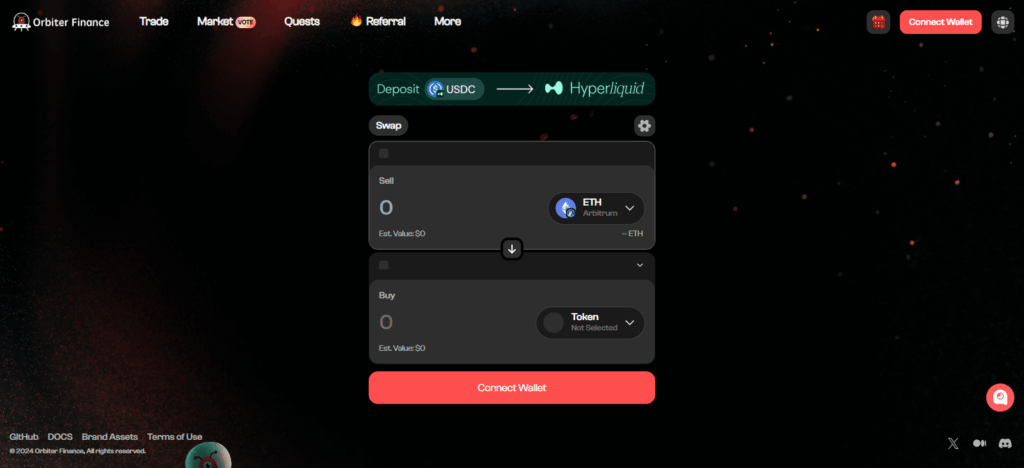
Orbiter Finance bridges NFTs while maintaining ownership, metadata, and authenticity. Users trust Orbiter Finance and rely on secured transfers. Orbiter Finance supports bridges across multiple and prominent blockchains so NFT holders can grow their assets across partnering different ecosystems and NFT marketplaces.
Orbiter Finance is built for the seamless and scalable movement of cross chain NFTs. Orbiter increases the liquidity, interoperability and utility of NFTs by providing seamless infrastructure.
Orbiter Finance Features
- Minimal KYC: Transfers NFTs with low verification requirements.
- Efficient Cross-Chain Swaps: Bridges NFTs and other digital assets with high speed.
- User-Centric Design: Emphasis on an easy to use bridging process.
9. Across Protocol
Across Protocol is a bridging solution for NFTs that allows for transfers of NFTs between different blockchains. Its most notable feature is the secure and efficient manner in which it handles cross-chain transfers NFT ownership, metadata, and authenticity are preserved during the transfers.
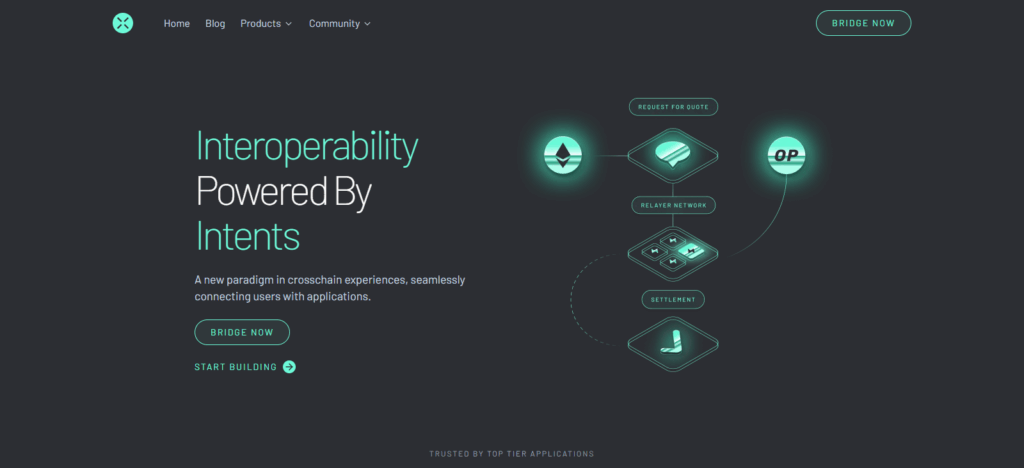
It is built for speed and low transaction costs, which is useful for users and NFT marketplaces. It also supports many blockchains which increases the access and interoperation of different NFT ecosystems.
With the reliable, simple, and scalable design of the Across Protocol, NFT owners can confidently transfer their NFTs while increasing the liquidity and usability. It crosses different blockchains and is different from the NFT ecosystem.
Across Protocol Features
- Layer-2 Focus: Aims to lessen fees by focusing on Layer-2 chains for NFT transfers.
- Secure Transactions: NFT transfers are safe with the use of decentralized vaults.
- Optimized for Speed: NFT bridges are fast while secure- without risking ownership.
10. Synapse Protocol
Synapse Protocol is an adaptable solution for NFT bridging that safely and conveniently transfers NFTs over different blockchains. What sets Synapse Protocol apart is its trifecta of speed, trustworthiness, and protection because NFT ownership, metadata, and authenticity are maintained throughout cross-chain transfers.
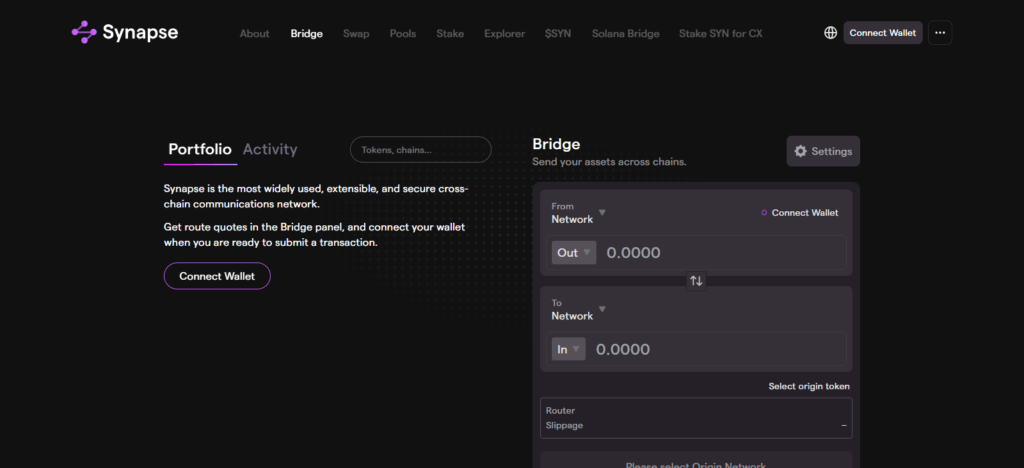
Synapse Protocol offers compatibility with a variety of leading blockchains. Its cross-chain and NFT decentralized application reliance make Synapse Protocol perfect for users interested in multiple NFT markets.
Synapse Protocol operates complex NFT liquidity cross-chain transfers through its efficient transaction streamlining and simplified interface, which broadens digital assets’ market reach and utility among ecosystems.
Synapse Protocol Features
- Universal NFT Bridge: Facilitating NFT transfers across diverse chains.
- Minimal Friction: Fast and inexpensive bridging with few steps required from the user.
- Integrated Security: Advanced cryptography to safeguard NFTs during transfers and eliminate loss.
Pros & Cons
Pros:
- Cross-Chain Interoperability: Different blockchains can beb accessed when cross-chain NFTs are transferred.
- Enhanced Liquidity: The marketplace and ecosystem accessibility increase.
- NFT Ownership & Authenticity: Ownership and metadata of the NFT are transferable without loss.
- Time Efficiency: Many bridges are capable to transfer and prove to be instant.
- User Friendly: Cross-chain transfers can be used by those with no experience.
- Cost Efficiency: Compared to the traditional methods of NFT Bridging Solutions to Transfer, some bridges provide low fees.
Cons:
- Security Risks: Hackers are prone to target unsecure bridges.
- Limited Blockchain Support: If all blockchains are not supported, the transfers are limited.
- Technical Complexity: Cross-chain NFT transfer with no knowledge or guidance can be frustrating.
- Transaction Fees: The bridge and gas prices to cross NFT bridges can be exorbitant.
- Potential Delays: congestion can result in unvalidated delays of transfer.
Conclusion
To sum up, bridging NFTs to different blockchains is important and useful. They keep seamless interoperability and real-time ownership while minimizing the loss of ownership and the NFT’s metadata.
This solution also boosts the NFT’s liquidity by opening access to various marketplaces and ecosystems. Despite the pros of every bridge, like speed, affordable cost, and decentralized security, the user must analyze the chains’ possible and supported options, product reliability, and absolute security.
NFT bridging optimizes the value of digital assets for creators, collectors, and investors by making cross-chain NFT bridging quicker, safer and more user-friendly than ever.
FAQ
Can I lose my NFT while bridging?
The risk exists if using an unreliable or untested bridge. Trusted, audited NFT bridges minimize the chance of loss or fraud.
How long does it take to transfer NFTs via a bridge?
Transfer times vary by bridge and network congestion, ranging from a few minutes to longer periods for high-traffic chains.
What blockchains do NFT bridges support?
Different bridges support various blockchains like Ethereum, Solana, Binance Smart Chain, Polygon, Avalanche, and more. Always check the supported chains before transferring NFTs.