


The Best Card Lifecycle Management Platforms that assist banks, fintech firms, and payment providers in effectively managing the whole card journey will be covered in this article.
These platforms improve security and expedite processes from card issue and activation to transaction monitoring and renewal. Organizations can provide modern customers with faster, safer, and more flexible digital payment experiences by understanding the best options.
Why Choose Card Lifecycle Management Platforms
Complete Card Management
These platforms help you manage a card’s complete journey from unearthed paperwork, new card issuance, and activation, all the way to the end of the card’s cycle, and card deactivation. This minimizes manual efforts, and streamlines operational workflows.
Improved Security & Fraud Protection
Protection of sensitive data with the latest advancements in security measures, such as tokenization, encryption, and real-time fraud detection, reduce risks.
Instant & Real-Time Control
Real-time transaction control and updates help businesses address the needs of their customers in a timely and immediate manner.
Effortless API Integration
Simple and flexible operations can be achieved through API-based Banking, Mobile Apps, and Payment Gateway Integration.
Instant Issuance
Additionally, the convenience and satisfaction of the users can be increased through features such as issuing a card instantly and the use of virtual cards, and coin wallets.
Flexibility and Compliance
Such platforms provide protection and flexibility for businesses against most global financial regulations such as KYC, AML, and Data Protection.
Cost Efficiency
Your business operational costs, margin for error, and business process efficiency will be improved due to a virtual card issuer’s process automation.
Key Point & Best Card Lifecycle Management Platforms
| Platform | Key Points |
|---|---|
| FIS Card Management Suite | End-to-end card lifecycle management, real-time transaction processing, strong fraud & risk controls, supports credit/debit/prepaid cards, widely used by global banks. |
| Fiserv Card Services | Comprehensive card issuing and processing, integrated digital banking tools, advanced analytics and fraud protection, scalable for banks and fintechs, strong global payment network integrations. |
| Marqeta Modern Card Issuing | API-first card issuing platform, real-time spend controls, virtual card creation, strong fintech and embedded finance support, flexible card program management. |
| M2P Fintech Card Lifecycle | Card issuance and lifecycle APIs, BIN sponsorship and regulatory support, designed for fintechs and neobanks, quick integration with payment networks, real-time card controls. |
| Thales D1 Digital Card Suite | Digital-first card management platform, supports tokenization and mobile wallets, strong security and authentication tools, enables instant digital card issuance, built for modern banking. |
| Entrust Card Lifecycle Management | Secure card issuance and lifecycle management, strong identity and authentication integration, supports physical and digital cards, fraud prevention tools, enterprise-grade security infrastructure. |
| Verestro Card Management APIs | API-driven card management system, supports virtual and physical cards, built for fintech and embedded finance apps, easy integration with mobile wallets, developer-friendly architecture. |
| OpenWay Way4 Card Suite | Real-time payment processing platform, supports cards, digital wallets, and BNPL, highly scalable architecture, used by banks and processors globally, flexible product configuration. |
| Comviva Card Lifecycle Platform | Digital card lifecycle management, supports tokenization and mobile payments, integrated loyalty and customer engagement tools, scalable for banks and telecom operators, API-based architecture. |
| Worldline Card Management Suite | End-to-end card issuing and management, supports multi-currency and global schemes, strong compliance and security features, scalable for large financial institutions, integrated payment processing. |
1. FIS Card Management Suite
The FIS Card Management Suite is an all-inclusive platform made to help banks and other financial organizations handle every step of the payment card lifecycle, including issuance, activation, transaction processing, monitoring, and renewal.
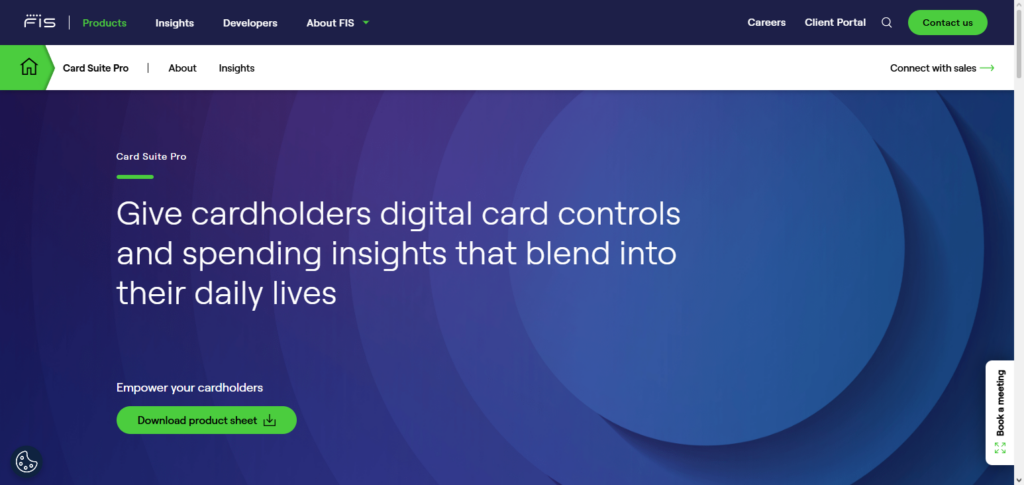
The platform offers real-time authorization, fraud monitoring, and analytics features in addition to supporting debit, credit, and prepaid cards. Additionally, it allows cardholders to manage PINs via digital channels, establish spending limits, track transactions, and freeze or unfreeze cards.
FIS is frequently cited for its strong infrastructure and international banking integrations while debating the Best Card Lifecycle Management Platforms. The platform assists organizations in lowering the risk of fraud, increasing operational effectiveness, and providing cutting-edge digital card experiences.
FIS Card Management Suite Features, Pros & Cons
Features
- The ability to manage every stage of the card life cycle
- Engaging with customers at every stage of the lifecycle
- Customer service for card fraud and risk management
- Integration of multiple systems
- Elasticity of infrastructure
Pros
- Offers a fully secure and reliable service
- Offers service and data to a global market
- Offers service and data to large scale enterprises
- Provides a service that analyzes data on a large scale
- Supports rapid growth of data and service
Cons
- Expensive to implement
- Expensive and complicated to set up
- Provides little assistance for non technical personnel
- Limited assistance for smaller companies
- The time to set up the service is large
2. Fiserv Card Services
Banks, fintechs, and payment companies leverage Fiserv Card Services’ scalable and cloud-enabled card issuing and management ecosystem. With programmable features and digital controls including transaction alerts, spending caps, and card freezing, it enables financial institutions to introduce debit, credit, and prepaid card programs.
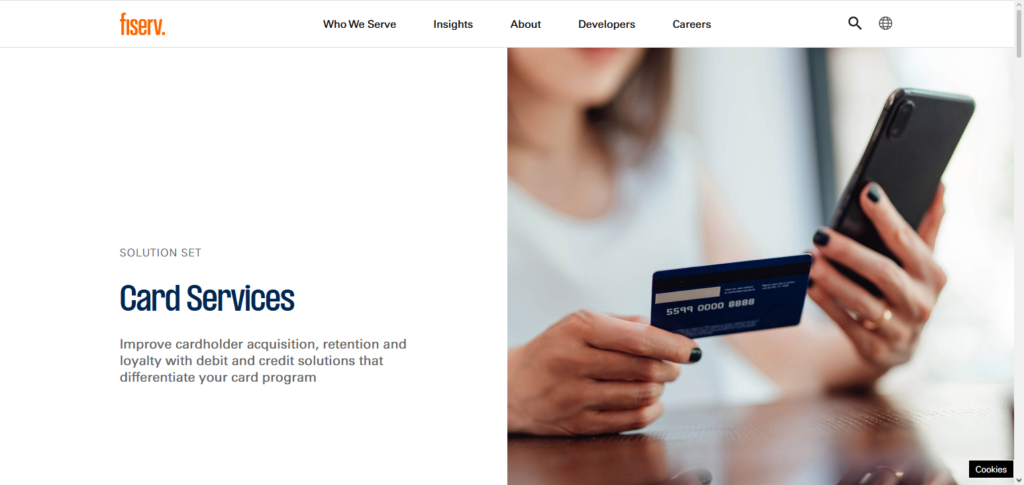
Additionally, the platform ensures regulatory compliance while centralizing customer and account data. Fiserv is well acknowledged for its robust interface with financial systems and card networks when analysts talk about the Best Card Lifecycle Management Platforms.
The platform’s sophisticated analytics, fraud protection features, and adaptable APIs allow organizations to effectively manage card portfolios and develop customized payment products.
Fiserv Card Services Features, Pros & Cons
Features
- The ability to issue cards with integrated systems
- Customer service and data for the prevention of fraud
- Engaging with customers in real time
- Provision of assistance and data integrated into multiple systems
Pros
- Offers a fully secure and reliable service
- Offers service and data to a global market
- Offers service and data to large scale enterprises
- Provides a service that analyzes data on a large scale
- Supports rapid growth of data and service
Cons
- Expensive for companies with a lower level of service
- The ability to customize services is limited
- The time to train personnel is large
- The time to implement changes is large
3. Marqeta Modern Card Issuing
Marqeta Modern Card issuance is an API-first, developer-friendly card issuance platform that enables businesses to swiftly construct personalized payment card programs. Companies can apply dynamic spending rules based on merchant, location, or transaction type, issue virtual and physical cards, and incorporate them into digital wallets.
For more accurate payment control, the platform also offers Just-in-Time funding and real-time transaction authorization. Marqeta stands out in discussions of the Best Card Lifecycle Management Platforms due to its programmable infrastructure and open APIs, which enable digital banking solutions, gig economy payouts, and embedded finance.
Fintechs and international brands may provide highly personalized card experiences with better fraud management and scalability because to this flexibility.
Marqeta Modern Card Issuing Features, Pros & Cons
Features
- Cards issued based on API
- Controls and tokenization on the fly
- Cards can be virtual
- Tools for management of expenditure
- Infrastructural development-friendliness
Pros
- Flexibility of APIs is high
- Quick deployment
- Great for Te FinTech Startups
- Customization in real time
- Strong focus on innovation
Cons
- Features of the banking system are lacking
- Reliance on APIs
- Rapidly scaling costs
- Required integrations
- Not great for old systems
4. M2P Fintech Card Lifecycle
M2P Fintech offers a cutting-edge card lifecycle infrastructure that is mainly intended for digital banks, financial service providers, and fintech startups. The platform enables businesses to swiftly introduce card products by providing APIs for card issuance, transaction processing, BIN sponsorship, and program management.
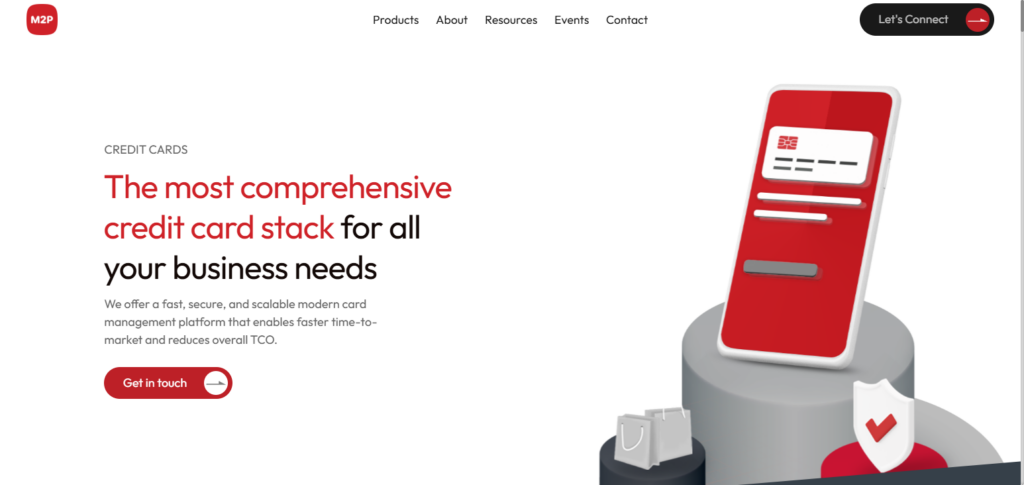
To guarantee compliance, it also interfaces with regulatory frameworks and payment networks. M2P’s fintech-focused architecture and quick deployment capabilities are frequently cited in discussions about the best card lifecycle management platforms.
Businesses can effectively monitor card usage and handle lifecycle events including activation, blocking, replacement, and renewal thanks to the system’s support for real-time card controls, digital wallets, and analytics dashboards.
M2P Fintech Card Lifecycle Features, Pros & Cons
Features
- Complete stack for card issuance
- Support in BIN sponsorship
- API-based
- Transactions in real time
- Embedded finance
Pros
- Solutions for fintech
- Go-to-market time is short
- Scaling is easy
- Strong partner network
Cons
- Limited to specific regions
- Reliance on compliance
- FinTech expertise required
- Usage pays the price
- Little reach globally
5. Thales D1 Digital Card Suite
Designed to facilitate safe card issuance and digital payment experiences, Thales D1 Digital Card Suite is a digital-first card lifecycle platform. It makes it possible for banks and fintechs to offer tokenized payment credentials, instant digital cards, and smooth mobile wallet integration. To safeguard cardholder data, the platform also uses encryption and robust authentication technologies.
Thales is frequently acknowledged for fusing card issuance with cutting-edge cybersecurity capabilities when professionals assess the Best Card Lifecycle Management Platforms. The solution supports safe contactless payments, tokenization, and regulatory compliance in many regions while enabling financial institutions to manage both physical and digital cards during their whole lifecycle.
Thales D1 Digital Card Suite Features, Pros & Cons
Features
- Digital cards are issued with security
- Tokenization + encryption,
- Integration of mobile wallets
- Deployment based on the cloud
- Management of the card lifecycle
Pros
- High security
- Global brand
- Support for compliance
- Digital infrastructure is strong
- Seamless experience
Cons
- Solution is costly
- Deployment is complex
- Low levels of customization
- Technical set-up required
- Enterprise focused
6. Entrust Card Lifecycle Management
Secure technologies for issuing, overseeing, and maintaining credit cards are offered by Entrust Card Lifecycle Management. To guarantee safe card issuance and transaction processing, the platform incorporates identity verification, authentication technology, and encryption services.
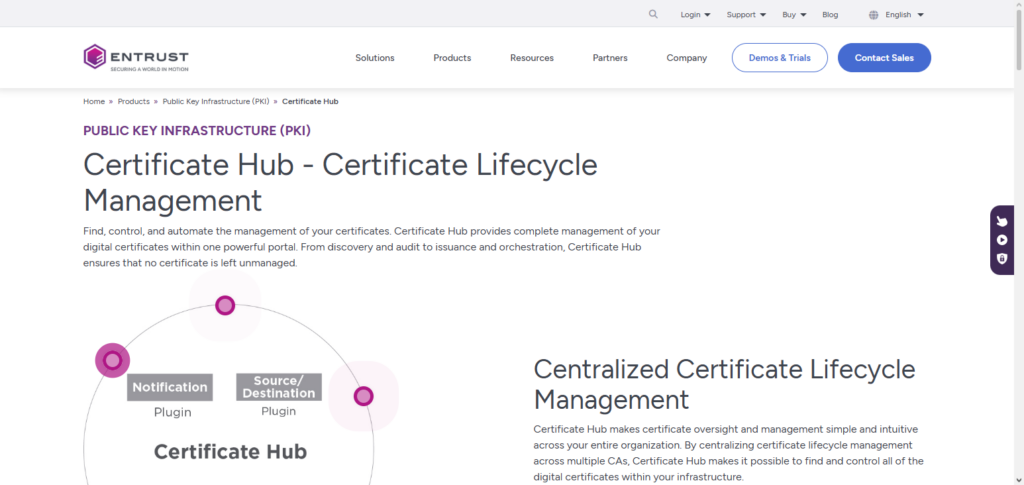
It allows organizations to automate procedures like activation, replacement, and expiration management while supporting both physical and digital cards. Because of its significant emphasis on digital identification and security, Entrust is often listed in industry rankings of the Best Card Lifecycle Management Platforms.
The technology assists financial institutions in upholding regulatory compliance, lowering fraud risks, and providing smooth cardholder experiences via digital payment ecosystems and mobile banking apps.
Entrust Card Lifecycle Management Features, Pros & Cons
Features
- Issuance and personalization of cards
- Identity + access management
- Handling of secure data
- Lifecycle tracking
- Multi-channel card delivery
Pros
- Advanced identity protection
- Performance is consistent
- Possibility for future expansions
- Assists with compliance
- Excellent compatibility with prior systems
Cons
- Costly
- Long and complicated setup
- Employees need to be trained
- Features and ideas take longer to develop
- Focus on business larger than SMEs
7. Verestro Card Management APIs
Fintech firms and digital banks may easily develop card programs with the help of Verestro Card Management APIs, which offer a customizable architecture. Through user-friendly APIs, the platform enables developers to manage cardholder accounts, issue virtual and physical cards, and combine cards with digital wallets.
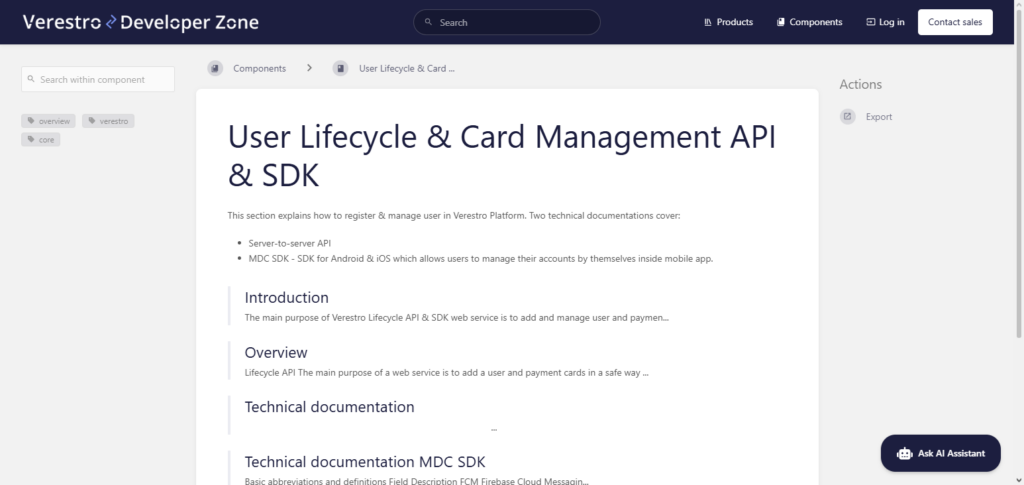
Tokenization, real-time card restrictions, and transaction monitoring are also supported. Verestro is regarded as one of the Best Card Lifecycle Management Platforms because of its developer-centric architecture, which makes it easier to integrate with financial institutions and mobile apps.
Activation, blocking, and reissuance are examples of card lifecycle activities that businesses can automate while still adhering to security regulations and worldwide payment network standards.
Verestro Card Management APIs Features, Pros & Cons
Features
- Card issuing via APIs
- Primary focus on mobile
- Transactions monitored in real-time
- Digital wallets can be integrated
- Card controls can be customized
Pros
- Favored by developers
- Easy to implement
- Possibility for customization on a large scale
- Affordable by startups
- Applications for fintech are supported
Cons
- Few features for large enterprises
- High-dependency on APIs
- Limited to small ecosystems
- International fame lacking
- High-level computer knowledge needed
8. OpenWay Way4 Card Suite
Banks, processors, and fintech companies employ OpenWay Way4 Card Suite, a potent digital payment platform, to handle card issuance, merchant acquisition, and transaction processing.
It offers great scalability and real-time processing capabilities while supporting several card schemes, including Visa, Mastercard, and UnionPay. On a single installation, the platform can handle hundreds of millions of cards and perform millions of transactions every day.
Way4’s modular architecture and adaptability to different business models make it stand out in conversations about the best card lifecycle management platforms. It unifies wallet services, loyalty programs, e-commerce gateways, and digital banking on a single platform.
OpenWay Way4 Card Suite Features, Pros & Cons
Features
- Real-time processing engine
- Unified payment and card services
- Support for multiple products
- Open APIs
- Powerful analytics
Pros
- High-level flexibility for customization
- High level of scalability
- Real-time processing available
- Support for global sales
Cons
- Demanding for a lot of time
- Large teams required
- Large up-front investment
- Long and difficult implementation
- Costly to maintain
9. Comviva Card Lifecycle Platform
The Comviva Card Lifecycle Platform is intended to improve client experiences while assisting financial institutions in managing digital payment cards throughout their whole lifecycle. Tokenization, mobile wallet integration, fast card issuance, and sophisticated transaction monitoring are all made possible by the platform.
Additionally, it contains customer engagement features like targeted offers and loyalty programs. Comviva is well known for fusing digital engagement solutions with payment technology inside the ecosystem of the Best Card Lifecycle Management Platforms.
The technology may be used by banks and telecom companies to develop customized card programs, track spending trends, and automate lifecycle management processes including renewal, activation, and replacement.
Comviva Card Lifecycle Platform Features, Pros & Cons
Features
- Digital card issuance
- Card management via mobile
- Integrated fraud management
- Real-time analytics
- Cloud-native infrastructure
Pros
- Strong mobile focus
- Cost-effective solution* Scalable architecture
- Fast implementation
- Suitable for developing countries
Cons
- Basic features
- More limited ecosystem
- Less customization
- Variable support
- Less presence worldwide
10. Worldline Card Management Suite
Banks and payment providers may handle card issuance, authorization, settlement, and lifecycle management from a single system with Worldline Card Management Suite, an enterprise-grade platform.
It is appropriate for international card programs since it supports a variety of payment methods, currencies, and regional compliance needs. Additionally, the platform offers analytics capabilities to enhance card program performance, fraud detection, and real-time transaction monitoring.
Because of its robust regulatory compliance features and scalable architecture, Worldline is often included among the Best Card Lifecycle Management Platforms by experts. The technology offers safe and easy digital payment experiences while enabling institutions to manage millions of cards.
Worldline Card Management Suite Features, Pros & Cons
Features
- Card processing from start to finish
- Handling transactions securely
- Support for multiple channels
- Management of compliance
- Analytics of data
Pros
- Presence in Europe
- High levels of security
- Strong infrastructure
- Compliance with regulations
- Secure
Cons
- High cost of implementation
- Less adaptable
- Difficult integration
- Slower to modernize
- Focused on large businesses
Conclusion
For banks, fintech firms, and payment providers looking to offer safe, adaptable, and scalable card services, selecting the best card lifecycle management platforms is crucial. Organizations can handle every phase of a card’s lifecycle—from issue and activation to transaction monitoring, renewal, and replacement—while maintaining robust security and compliance thanks to contemporary solutions like FIS Card Management Suite, Fiserv Card Services, and Marqeta Modern Card Issuing.
Tokenization, identity-driven security, and digital-first card management are the main focuses of solutions like M2P Fintech Card Lifecycle, Thales D1 Digital Card Suite, and Entrust Card Lifecycle Management, which assist organizations in providing smooth payment experiences.
Flexible APIs, real-time processing, and scalable infrastructure are offered by platforms like OpenWay Way4 Card Suite, Comviva Card Lifecycle Platform, Verestro Card Management APIs, and Worldline Card Management Suite, which are appropriate for both conventional financial institutions and contemporary fintech ecosystems.
Scalability, integration potential, security features, and support for tokenization and digital wallets are all important considerations when choosing a platform. In today’s quickly changing digital payments world, companies may increase fraud protection, expedite card operations, and provide customers with faster, more customized payment experiences by implementing one of the Best Card Lifecycle Management Platforms.
FAQ
What are Card Lifecycle Management Platforms?
Card Lifecycle Management Platforms are software solutions that help banks, fintech companies, and payment providers manage the entire lifecycle of payment cards—from issuance and activation to monitoring, renewal, and cancellation. These platforms automate processes such as PIN generation, card blocking, transaction monitoring, and replacement. The goal is to streamline operations, improve security, and deliver a seamless cardholder experience.
Why are Card Lifecycle Management Platforms important for financial institutions?
These platforms are essential because they automate complex card management tasks and reduce manual intervention. They improve operational efficiency, enable real-time card controls, and enhance fraud detection and compliance. Financial institutions can also manage large card portfolios, support digital wallets, and provide customers with self-service tools to manage their cards securely.
What features should the Best Card Lifecycle Management Platforms include?
The best platforms typically include card issuance and activation, PIN and authentication management, fraud detection tools, transaction monitoring, and automated renewal or replacement processes. They also provide API integrations with banking systems, mobile apps, ATMs, and payment networks. Many modern solutions support virtual cards, tokenization, and real-time analytics to improve decision-making.