

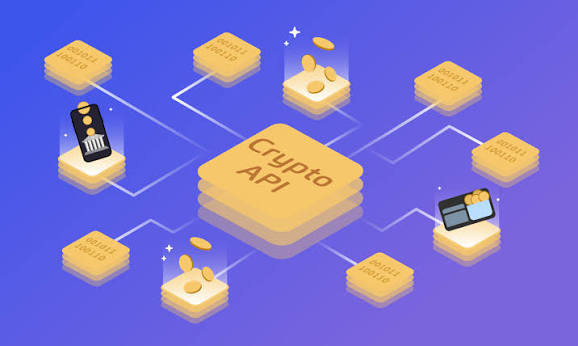
In this article, I will examine the top APIs for Crypto Portfolios. APIs for Crypto Portfolios allow users to track digital assets, analyze portfolio performance, and obtain real-time cryptocurrency information.
Modern APIs for Crypto Portfolio Management simplify the management of cryptocurrency portfolios for developers and other users via features such as wallet tracking, transaction tracking, multi-chain support and market insights.
What is Crypto Portfolio APIs?
Crypto Portfolio APIs give developers and businesses the ability to track and manage data of crypto portfolios on different wallets and exchanges.
Examples of the data these APIs provide are the price of different tokens, transaction histories, balances, and portfolio performance and analysis. These APIs are used by developers to create tracking apps for crypto, investment platforms, and financial tools. They are used to integrate the data provided by blockchains and to create automation of the data.
Why Use Crypto Portfolio APIs?
Instant View of Crypto Portfolio Balances: Rapidly assess and monitor crypto balances, prices, and portfolio changes across various wallets and exchanges.
Streamlined Data Processing: Eliminate the need for continuous manual updates by systematically updating and tracking your crypto investments.
Combines Blockchain Wallets: View and process the data of varying assets located across multiple wallets.
Clearer View on Investments: Get your historical portfolios and actionable analytics on the performance of your portfolios to aid in investment decisions.
Reduced Development Time: APIs aid developers to create customized financial apps and trackers for crypto portfolios and trading in less time.
Assets Across Blockchains: Portfolios of varying assets across blockchain networks can be tracked (e.g. Bitcoin, Ethereum, and other DeFi networks).
Dashboards for Crypto Portfolios: Crypto portfolio views with varying levels of detail are made user-friendly.
Evaluates Potential Losses: Portfolio segregation and market analysis cite factors that may negatively affect your investment portfolio.
Connects Crypto Trading Platforms: All crypto trading platforms can be integrated for balance and trading synchronization.
Reliable Blockchain Tech Financial Products: APIs help businesses create scalable blockchain financial products.
Are Crypto Portfolio APIs free?
Multiple Crypto Portfolio APIs have free plans covering a basic set of features, limited API requests, and elementary cryptocurrency data. Free plans fit small projects or individual developer attempts and personal tracking of portfolios.
When it comes to advanced features (e.g. higher API limits, advanced data, real-time data, more analytics, better support), subscription plans will be required. Pricing will rely on the provider, how you want to use the API, and the data access level you need.
Key Features Of Crypto Portfolio APIs
| Feature | Description |
|---|---|
| Multi-Wallet Tracking | Track multiple cryptocurrency wallets and view combined portfolio balances in one place. |
| Exchange Integration | Connect with different crypto exchanges to automatically sync trading data and assets. |
| Real-Time Price Data | Provides live cryptocurrency prices, market values, and portfolio updates. |
| Transaction History | Records deposits, withdrawals, trades, and blockchain transactions for analysis. |
| Portfolio Analytics | Offers profit/loss reports, asset allocation, and performance insights. |
| Multi-Chain Support | Supports various blockchain networks for tracking diverse digital assets. |
| DeFi Tracking | Monitors DeFi positions, liquidity pools, staking, and decentralized investments. |
| NFT Portfolio Support | Tracks NFT ownership, values, and transaction activities on supported networks. |
| API Documentation | Provides developer resources for smooth application integration and customization. |
| Security Features | Uses secure authentication methods and encrypted connections to protect user data. |
| Historical Data Access | Provides past price trends and portfolio performance information for analysis. |
| Custom Alerts | Enables notifications for price changes, transactions, and portfolio movements. |
Best Crypto Portfolio APIs List
- Zerion API
- CoinStats API
- Kubera API
- Altrady API
- Bitsgap API
- CoinTracking API
- Nomics Portfolio API
- Kaiko Portfolio API
- CoinGecko Portfolio API
- Zapper API
10 Best Crypto Portfolio APIs
1. Zerion API
The Zerion API streamlines access to DeFi portfolio data. It consolidates data from multiple DeFi wallets to view balances, transaction history, and analytics. The Zerion API endpoints can support dApps by populating dashboards in real time.
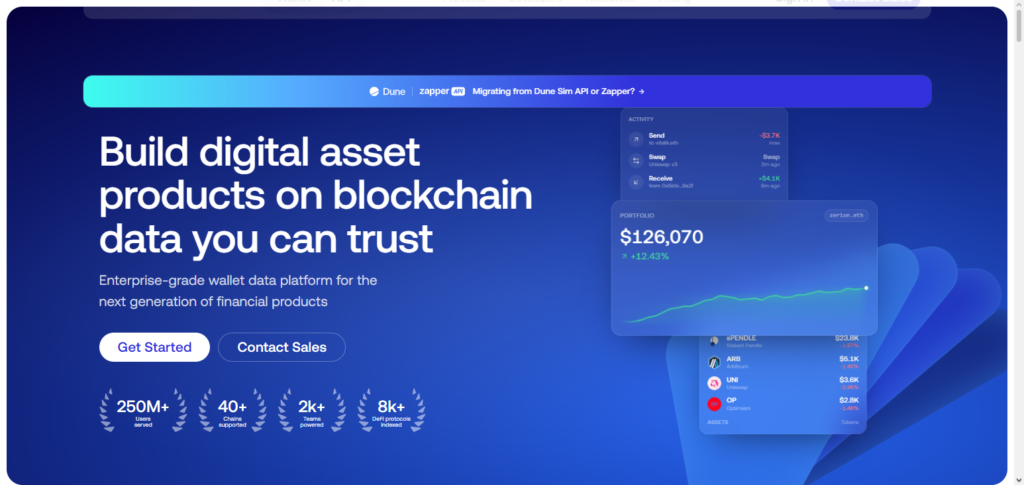
DeFi activity is complex and the Zerion API can assist in providing clarity. This API is multi-chain so activity and analytics can be pulled from multiple networks. Users can access data from Ethereum and Polygon, for example. It is an efficient tool for managing decentralized finance. It is one of the best cryptocurrency portfolio APIs.
Zerion API Traits, Benefits & Drawbacks
Traits:
- Multi-chain wallet and DeFi tracking.
- Blockchain transaction tracking.
- Token balances and asset insights.
- Developer-friendly API.
- NFT and DeFi activity tracking.
Benefits:
- Crypto tracking across wallets.
- On-chain asset visibility.
- Advanced DeFi tool development.
- Multi-chain support.
- Portfolio tracking in real-time.
Drawbacks:
- Emerging blockchains not fully supported.
- Advanced features may be paid.
- Costly at high volumes.
- DeFi and wallet-based assets focused.
- DeFi tools knowledge required.
2. CoinStats API
The CoinStats API combines and tracks data from over 300 exchanges and wallets. This API allows the user to view balances, complete transactions, and analyze the performance of multiple exchanges and wallets in real time.
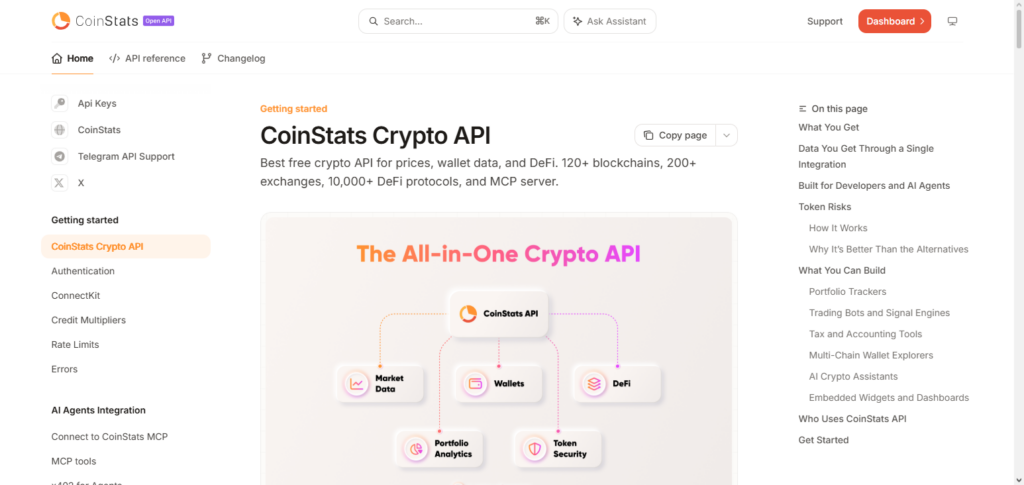
The APIs endpoints also include price feeds, portfolio snapshots, and charts of historical data. Using the CoinStats API, developers can build applications that display transaction data using real time feeds of multiple exchanges and wallets. By combining multiple analyses, the CoinStats API is one of the best cryptocurrency portfolio APIs.
CoinStats API Traits, Benefits & Drawbacks
Traits:
- Crypto portfolio tracking from various wallets and exchanges.
- Live pricing and market data.
- Automated portfolio updates.
- Transaction history with P&L analytics.
Benefits:
- Automated portfolio tracking.
- P&L and trading performance tracking.
- Integrates a variety of exchanges.
- Simple portfolio management.
Drawbacks:
- Premium features.
- API may lack advanced info.
- Limited flexibility.
- Relies on exchange APIs.
- Slower updates to portfolio during trading.
3. Kubera API
Kubera API focuses on secure connections to various exchanges and wallets facilitating the tracking of investments across the crypto and traditional financial spectra. Kubera API offers privacy and reliability and handles sensitive financial information with care.
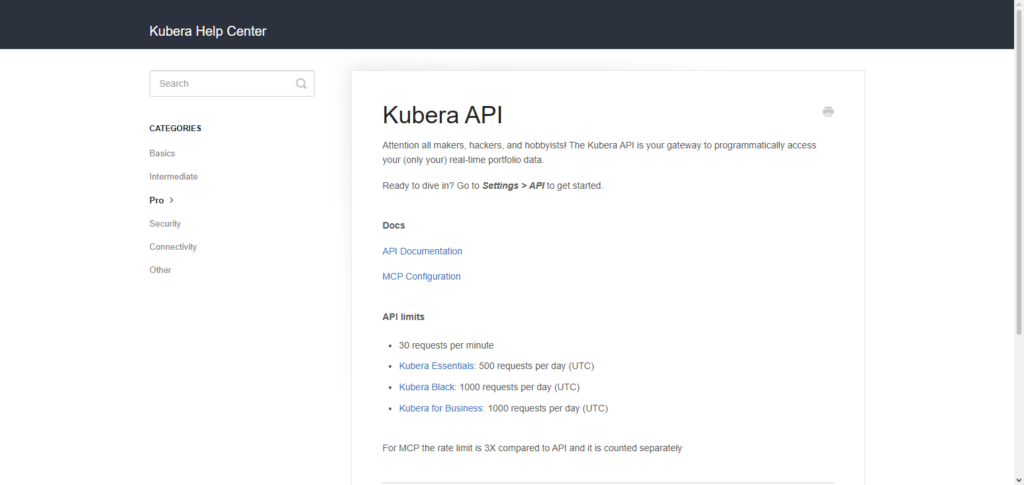
Portfolio APIs track investments across various financial means. Taking a step beyond the traditional API offerings, Kubera API provides the tracking of financial investments across the crypto and traditional financial systems.
Kubera API provides in-depth reporting and performance assessment analytics. Due to this robust feature set, Kubera API captures the attention of users with portfolios that contain a variety of different investments.
Kubera API Traits, Benefits & Drawbacks
Traits:
- Aggregated asset tracking for digital and traditional.
- Multi-source portfolio aggregation.
- Tracking net worth and financial accounts.
- Secure connections for financial data.
- Historical portfolio data.
Benefits:
- Flexibility between crypto and traditional assets.
- Full financial visibility.
- Long-term management capability.
- Clean tracking for personal and professional finances.
Drawbacks:
- Not geared for active trading.
- Limited API support.
- Higher cost compared to simple trackers.
- Less useful for DeFi.
- Limited crypto analytics.
4. Altrady API
Altrady API provides the offers advanced portfolio management features tailored to the needs of active crypto traders. APIs allow the automated pulling and pushing of investment data. Altrady API captures the needs of traders and portfolio managers by integrating trading and portfolio management features.
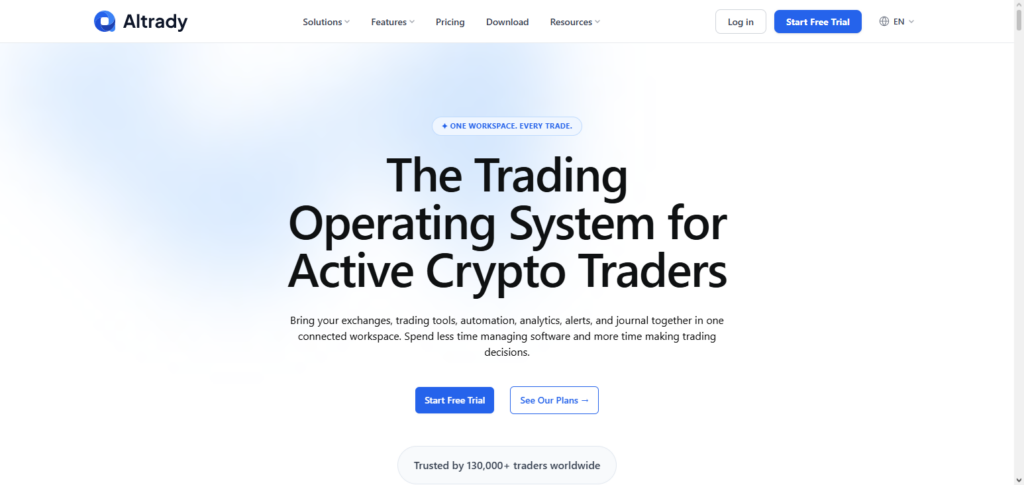
Altrady API provides a full crypto solution to traders and portfolio managers. With sophisticated features that fall under the category of “trading with peace of mind,” Altrady API is labeled one of the best crypto portfolio APIs.
Altrady API Traits, Benefits & Drawbacks
Traits:
- Offers automation of crypto trading.
- Is compatible with many crypto exchanges.
- Offers trading bots and tactics.
- Provides advanced trading analytics.
- Monitors markets in real-time.
Benefits:
- Smooths out the automation of trading.
- Makes managing many exchanges easier.
- Offers a variety of trading tools.
- Supports the consideration of trading risk.
Drawbacks:
- Requires some trading experience.
- Can get expensive.
- Requires some trading experience.
- Limited options for managing portfolios.
- May be too complicated for newer traders.
5. Bitsgap API
Bitsgap API facilitates users with trading automation and portfolio tracking features. It can integrate with various exchanges and let users keep track of their balances, trades, and performance metrics. Developers can utilize the API to design applications which provide trading bots with portfolio data.
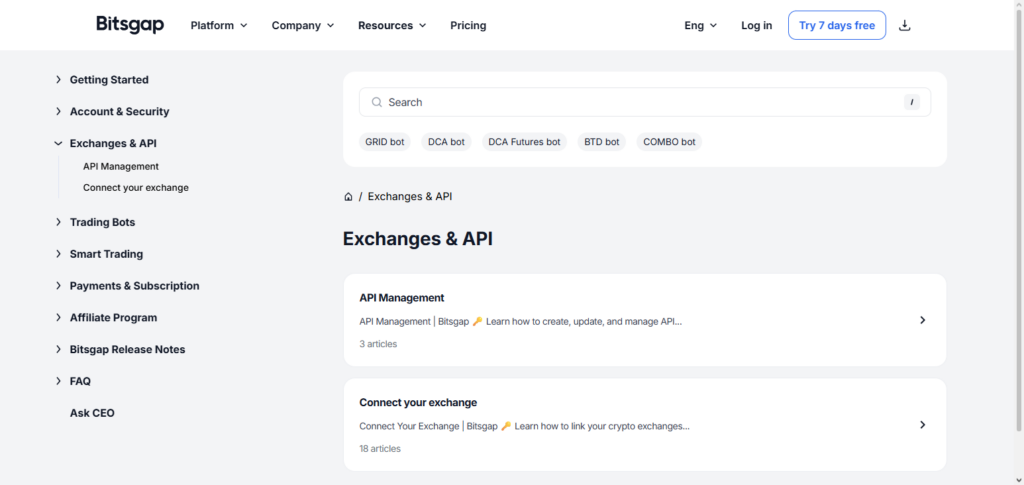
Advanced users are tempted to utilize this API due to its arbitrage and grid trading features. By integrating automated trading with portfolio management, Bitsgap API is the best choice for users who are looking for time saving and efficient ways to deal with their cryptocurrency investments.
Bitsgap API Traits, Benefits & Drawbacks
Traits:
- Automation of crypto trading is its focus.
- Allows for multiple exchange connections.
- Comes with trading bots.
- Has tools for portfolio management.
- Monitors arbitrage.
- Provides access to market data.
Benefits:
- Offers a variety of automated trading options.
- Makes managing many exchanges easier.
- Less manual trading is required.
- Supports a variety of trading choices.
Drawbacks:
- Using trading bots comes with risk.
- Subscription to a service is required.
- Limited options for an expert developer trading bot.
- Performance of the trading bot is up to the crypto market.
- Can be hard for newer traders.
6. CoinTracking API
CoinTracking API focuses on tax reporting and portfolio management. It can import trades and retrieve balances and histories from hundreds of exchanges and wallets. The API can be used to generate tax reports for all countries, thus it is essential for serious investors.
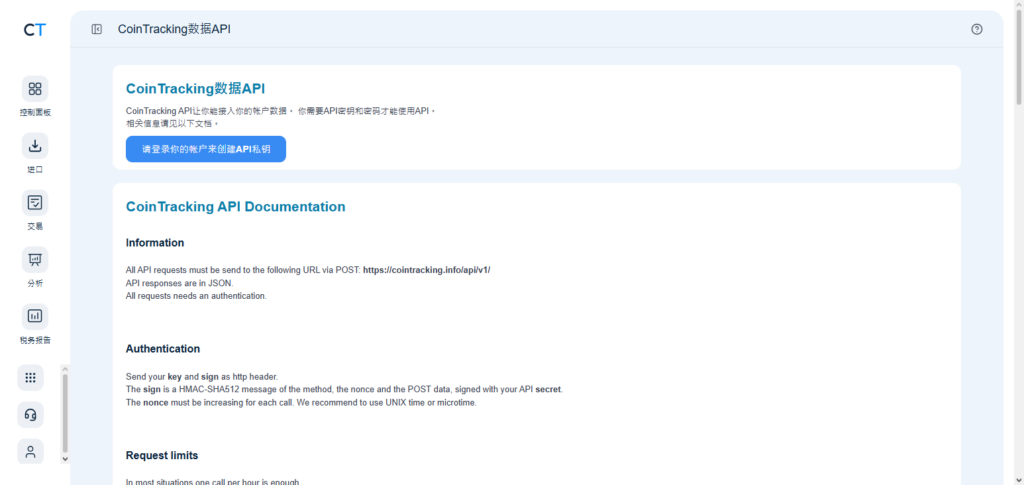
Developers can integrate the API to offer tax ready portfolio appraisal. Due to its analytics and plotting of performance and profit/loss, CoinTracking API is one of the best crypto portfolio APIs for users who want to be compliant when managing their portfolio and dealing with taxes.
CoinTracking API Traits, Benefits & Drawbacks
Traits:
- Specializes in tracking crypto portfolios with a tax reporting feature.
- Supports thousands of cryptos.
- Imports transactions from exchanges and wallets.
- Calculates P/L.
- Gives trading reports.
Benefits:
- Eases the burden of filing crypto taxes.
- Includes the total transaction history.
- Supports exchanges worldwide.
- Gives thorough analysis of investments.
- Supports accurate record keeping.
Drawbacks:
- The UI feels outdated.
- The initial setup is lengthy.
- Advanced features are on a paid plan.
- Less focus on real-time trading.
- Large portfolios require optimization.
7. Nomics Portfolio API
Nomics Portfolio API’s crypto data is clear, normalized, and transparent. It consolidates the balances and transaction histories across various exchanges and wallets and packaged together with pricing information.
Nomics Portfolio API prides itself on being developer friendly, with lightning-fast and reliable endpoints. Nomics Portfolio API’s value proposition includes providing institutional-grade data feeds, assuring accuracy, and thereby, confidence to our users and their clients.
By providing clarity and speed, Nomics Portfolio API is one of the leading crypto portfolio APIs for developers and businesses that demand confidence to build crypto financial dashboards and investment interfaces.
Nomics Portfolio API Traits, Benefits & Drawbacks
Traits:
- Distinguishes by the quality of crypto market data.
- Contains portfolio valuation features.
- Provides historical trading data.
- Contains data on exchanges and assets.
- Made for developer integrations.
Benefits:
- Provides accurate market data.
- A big plus for crypto app development.
- Contains historical data for analysis.
- Useful for professional-grade data.
- Helps build portfolio features.
Drawbacks:
- Some services have gaps.
- Features may be costly to access.
- Limited features for portfolios.
- Requires technical skills.
- Less focus on consumer portfolio tracking.
8. Kaiko Portfolio API
Kaiko Portfolio API is built for the institutional developer/client base with the demand for enterprise-grade market data. It has endpoints for balance and transaction histories, with added analytics for liquidity and order books. The API integrates effortlessly with any trading platform to ensure precise portfolio monitoring.
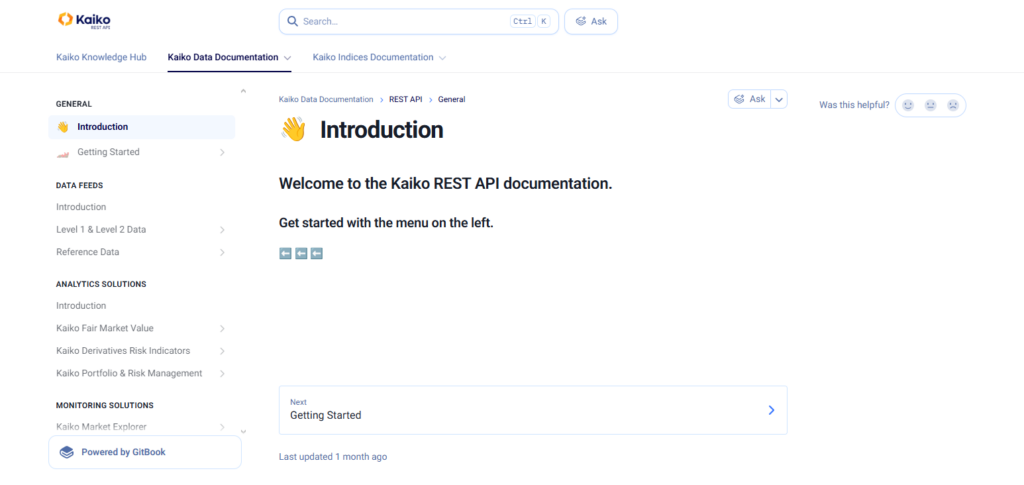
Its main differentiator is professional-grade data and insights, making it perfect to plug and play for hedge funds and other fintech related offerings. Kaiko Portfolio API is one of the leading crypto portfolio APIs for businesses that demand enterprise-grade and robust data and insights.
Kaiko Portfolio API Traits, Benefits & Drawbacks
Traits:
- Higher quality, crypto market data with deep liquidity and trading data.
- Institutional grade data.
- Professional portfolio market analysis.
Benefits:
- Great for institutional investors.
- Provides the highest quality market data.
- Supports advanced trading and market analysis.
- Supports data infrastructure.
Drawbacks:
- Not economically viable for small users.
- Made for institutions.
- Needs skills for technical setup.
- Data centric rather than portfolio centric.
- May be difficult for novices.
9. CoinGecko Portfolio API
Portfolios need data, and CoinGecko Portfolio API integrates one of the most reliable sources. Developers using CoinGecko Portfolio API are able to track balances and prices, in addition to being able to track thousands of coins.
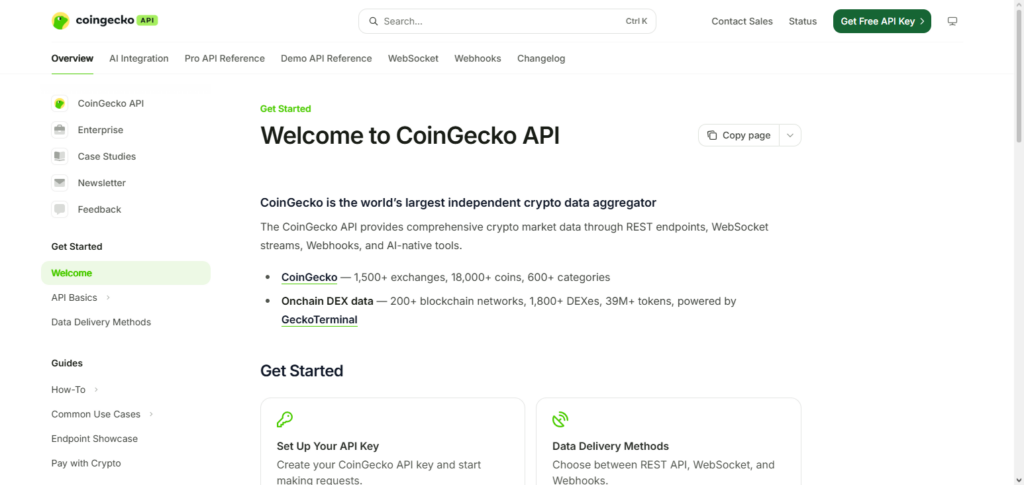
This API provides endpoints to check your balance and perform market analysis, and has both free and paid subscription models. For developers who need an accurate market analysis and portfolio tracking, but don’t want to burn a hole in their pockets, this API is perfect.
CoinGecko Portfolio API Traits, Benefits & Drawbacks
Traits:
- Offers crypto pricing and market data.
- Builds portfolio tracking apps.
- Thousands of crypto data points.
- Historical market data.
- Developer friendly API.
Benefits:
- Comprehensive crypto data set.
- Easy to build apps over API.
- Pricing friendly for devs.
- Multi blockchain data points.
- Great for market research.
Drawbacks:
- Free API has call limits.
- Basic tracking portfolio tools.
- Data from different sources, may not be reliable.
- Heavy users need to pay.
- Missing features for institutions.
10. Zapper API
Zapper API specializes in decentralized finance (DeFi) portfolio tracking, and connects wallets across multiple blockchains. Using the Zapper API, you can track your balances, liquidity pools, and yield farming positions, in addition to your transaction history.
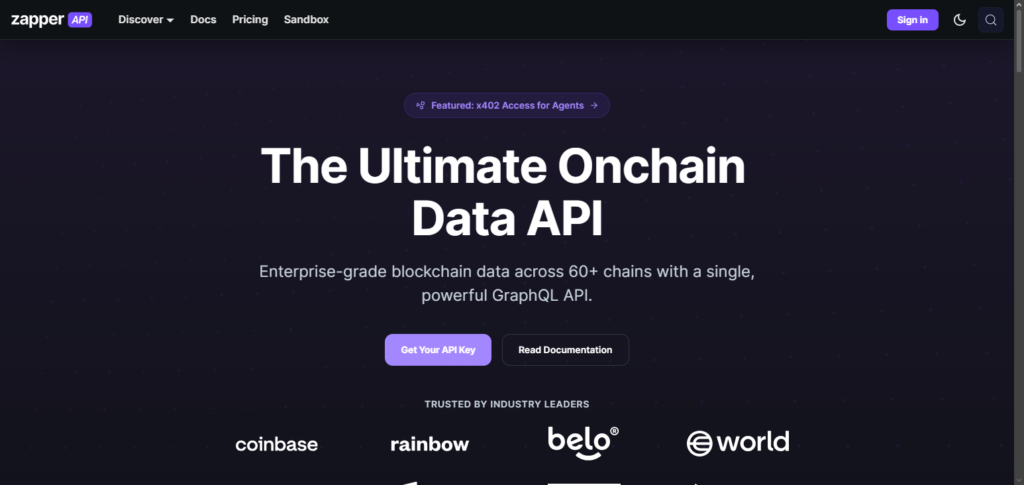
Zapper API creates easy to read Dashboards by organizing the disarrayed data of DeFi, and can be used by Developers to create an app that helps users track their DeFi investments. With its multi chain capabilities, and intelligent design, Zapper API is perfect for DeFi developers who are looking to gain a clearer picture of their decentralized finance.
Zapper API Traits, Benefits & Drawbacks
Traits:
- DeFi portfolio tracking.
- Blockchain wallet analysis.
- Data for DeFi and NFTs.
- Multi-chain data.
- Transaction data.
Benefits:
- Great for DeFi.
- Good wallet analysis.
- Multi blockchain support.
- Good for tracking DeFi.
- Easy access to blockchain data.
Drawbacks:
- Focus is DeFi.
- Missing traditional investing.
- API may be unavailable.
- Needs blockchain dev skills.
- Hard for those without technical skills.
Comparison Table
| API | Traits | Benefits | Drawbacks |
|---|---|---|---|
| Zerion API | Multi‑chain, DeFi‑centric, wallet aggregation, real‑time updates, dApp integration | Simplifies DeFi tracking, supports Ethereum/Polygon, strong analytics, easy developer integration, user‑friendly dashboards | Limited traditional asset coverage, focused mainly on DeFi, premium features may require subscription, less suited for tax reporting, smaller institutional adoption |
| CoinStats API | Connects 300+ exchanges, unified portfolio view, price feeds, historical charts, developer endpoints | Consolidates accounts, real‑time insights, strong analytics, easy app integration, supports multiple wallets | Premium tier needed for advanced features, overwhelming for beginners, limited tax tools, occasional API rate limits, heavy reliance on subscription |
| Kubera API | Tracks crypto + stocks, real estate, bank accounts, secure connections, holistic wealth view | Combines traditional and crypto assets, detailed reporting, privacy‑focused, reliable integrations, strong financial analytics | Higher cost, less trading automation, geared toward wealth management not active trading, limited DeFi focus, fewer free features |
| Altrady API | Exchange integration, smart trading terminal, portfolio + trading, real‑time alerts, automated strategies | Supports bots, advanced analytics, combines monitoring with execution, customizable dashboards, strong trader tools | Complex for casual users, requires trading knowledge, subscription costs, limited traditional asset support, steep learning curve |
| Bitsgap API | Multi‑exchange connectivity, trading bots, arbitrage tools, grid trading, portfolio tracking | Combines automation with monitoring, supports arbitrage, efficient trading strategies, unified portfolio view, strong analytics | Advanced user focus, higher learning curve, subscription required, limited traditional finance integration, complex setup |
| CoinTracking API | Tax reporting, profit/loss analytics, compliance tools, trade imports, historical data | Generates tax reports, supports global regulations, detailed performance charts, imports trades easily, strong compliance features | Focused heavily on tax use cases, less appealing for casual tracking, premium pricing, complex setup for beginners, limited DeFi support |
| Nomics Portfolio API | Transparent crypto data, normalized feeds, institutional‑grade, fast endpoints, reliable uptime | Trustworthy insights, developer‑friendly, scalable, accurate portfolio data, strong reliability | Limited traditional asset integration, geared toward developers, fewer retail features, premium pricing, less user‑friendly for non‑technical users |
| Kaiko Portfolio API | Institutional‑grade analytics, liquidity/order book data, advanced endpoints, scalable solutions, professional focus | Precise portfolio monitoring, hedge fund‑ready, deep market intelligence, reliable integrations, strong enterprise support | Expensive, complex integration, less suited for retail investors, limited free tier, steep learning curve |
| CoinGecko Portfolio API | Access to thousands of coins, free + premium tiers, reliable data, historical charts, price feeds | Widely trusted, easy integration, strong market coverage, free tier available, developer‑friendly | Free tier rate limits, premium needed for advanced features, limited tax tools, less institutional focus, occasional delays in rare coins |
| Zapper API | DeFi portfolio tracking, yield farming insights, liquidity pool monitoring, multi‑chain support, user‑friendly dashboards | Simplifies DeFi data, supports multiple blockchains, strong visualization, easy integration, great for decentralized assets | Limited traditional finance coverage, focused mainly on DeFi, premium features may apply, less suited for tax reporting, smaller institutional adoption |
Conlcusion
The best crypto portfolio APIs allow businesses, developers, and investors to manage and track digital assets and build innovative crypto applications. Zerion API, CoinStats API, CoinGecko Portfolio API, and Zapper API are a few of many crypto portfolio tracking APIs and blockchain analytics tools.
Data accuracy, networks, cost, security, and integration are a few of the various factors to consider when choosing an API. With the right crypto portfolio API, users can optimize the management and tracking of their assets and the automation and analysis of their investments.
FAQ
What are Crypto Portfolio APIs?
Crypto Portfolio APIs provide tools to track, analyze, and manage cryptocurrency assets across wallets and exchanges.
Why use Crypto Portfolio APIs?
They help automate portfolio tracking, monitor prices, calculate profits, and access blockchain data efficiently.
Which is the best Crypto Portfolio API?
The best API depends on your needs. Zerion, CoinGecko, CoinStats, and Zapper are popular choices for different use cases.
Are Crypto Portfolio APIs free?
Many APIs offer free plans with limited requests, while advanced features usually require paid subscriptions.
Can Crypto Portfolio APIs track multiple wallets?
Yes, most APIs support tracking multiple blockchain wallets and exchange accounts in one dashboard.