


This article covers the best Generative Ai NFT Platforms and Storage solutions. These solutions enable creators to generate, mint and store AI-enabled digital assets, as well as manage and preserve digital assets.
I will cover the leading NFT creation platforms, decentralized storage networks and web3 tools which help creators deal with challenges of generative artwork, blockchain ownership, metadata and the preservation of digital assets in the AI NFT ecosystem.
Why Choose Generative AI NFT Platforms & Storage
Design AI Generated Digital Art
- With generative AI nft platforms, artists can use AI to make digital pieces of art.
- NFTs have blockchain technology, and you can control what attributes are unique to that NFT.
- NFTs can have different levels of rarity.
AI Automates NFT Creation
- Generative AI tools let you make NFTs quickly.
- You can make an NFT collection, even a big one, without making each item in the collection.
- It will save time and help you make more ideas.
Blockchain Ensures Digital Ownership
- With blockchain, you can have ownership rights to your NFTs and have proof of your transactions.
- Generative AI nft platforms can ensure your original creativity doesn’t get copied.
- Collectors can easily know who made a digital piece of art.
Preserve NFTs
- Decentralized storage networks (IPFS, Arweave, Filecoin) ensure your digital files and art metadata are preserved.
- Ownership and access to digital files are preserved, unlike online storage.
- It helps keep the digital pieces of art made by artists accessible to future generations.
Sell Digital Art
- AI NFTs help artists sell digital art and generative projects.
- With smart contracts, creators can make a stream of income through the ownership concepts that are built on blockchains.
- Smart contracts enable creators to make an automatic royalty on the sale of their art.
Support Programmable & Interactive NFTs
- There are advanced NFT platforms that allow evolving, changing, and/or responding external data driven NFTs.
- Dynamic NFT experiences can be enjoyed by users through AI-driven NFTs.
- This goes beyond static images and provides users with a digital asset they can interact with.
Provide Better Asset Management
- NFT storage platforms help streamline and organize artwork files, metadata, and blockchain records.
- Developers are able to manage large NFT collections via APIs and decentralized infrastructure.
- This is practical for gaming and enterprise applications within the metaverse and Web3.
Improve Security with Decentralized Storage
- Dependency on a hosting provider is eliminated through decentralized storage.
- Data is logged across multiple peer networks, thus improving reliability and rest time.
- This protects digital assets from getting lost due to unfortunate circumstances of data getting erased or server crashes.
AI + Web3 Innovation
- Within the blockchain, creativity is combined with ownership through the use of Generative AI NFTs.
- This allows for the creation of digital assets, AI Avatars, virtual worlds, continuous art creation, and other use cases.
- This will influence how digital ownership is continued in the future.
Future Proof Digital Creativity
- These tools are purposely built to support minors who are the new generation of artists, developers, and collectors.
- As AI models continue to improve, they will be able to support new sophisticated creative workflows.
- This is an example of creative tools built by combining blockchain, AI, and decentralized storage.
Key Points
| Platform | Best For | Key Features |
|---|---|---|
| Async Art | Programmable NFTs | Generative layers, dynamic art, on‑chain provenance |
| Art Blocks | Generative collections | Curated generative drops, Ethereum on‑chain storage |
| Fxhash (Tezos) | Open generative minting | Tezos‑based generative art, community curation |
| Mintbase AI Studio | Multi‑chain creators | AI NFT minting, NEAR + cross‑chain storage |
| Manifold Studio | Custom smart contracts | AI NFT minting, creator‑owned contracts |
| Zora Protocol | Open NFT marketplace | AI generative drops, on‑chain metadata |
| Objkt.com (Tezos) | Generative art marketplace | AI NFT minting, decentralized storage |
| Pinata + IPFS | On‑chain storage | AI NFT asset hosting, IPFS gateways |
| Arweave Permaweb | Permanent storage | Pay‑once storage, 200‑year guarantee for AI NFTs |
| Filecoin NFT.Storage | Decentralized storage | AI NFT metadata + assets, verifiable permanence |
1. Async Art
Async Art is the first of its kind to use programmable NFTs so creators can make art that can be altered over time as well as NFTs that are modified by external entities. Layered equations can allow artists the ability to work on art collaboratively, where each layer can be owned by a different person.
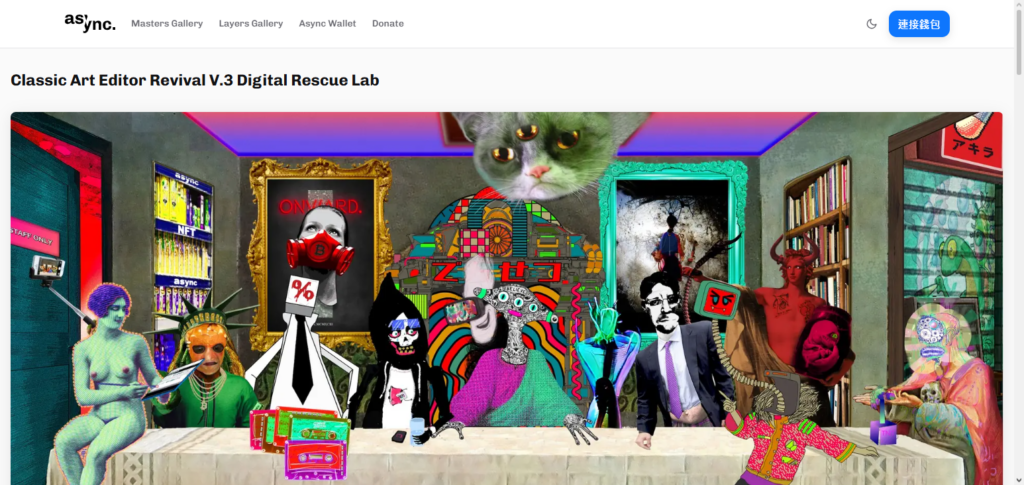
Generative art minting on Async Art’s platform means each person can own their own layer. The platform provides permanently secured storage references as well. For creatives who want to use generative AI NFTs combined with the blockchain, Async Art is one of the best options to utilize.
Features:
- Provides a system for Layer-based NFT creation for creation of programmable digital artworks.
- Allows NFTs to evolve dynamically by updating their individual layers.
- Supports collaborative art creation by multiple creators on a single digital artwork.
- Assures control and ownership of the master artwork and its individual layers.
- Uses blockchain for digital ownership verification and ensures provenance.
Pros:
- Unique and innovative concept for digital NFTs.
- Supports collaborative digital artwork creation.
- Provides a programmable NFT ecosystem for artists.
- Supports new models of digital and interactive art.
- Supports provenance of artwork through transparent ownership.
Cons:
- Smaller userbase than larger NFT marketplaces.
- Difficult to use for beginners.
- Requires demand for NFTs to be functional.
- Ethereum transaction costs are variable and can be expensive.
- Less focus on art collections than major platforms.
2. Art Blocks
Art Blocks uses the Ethereum blockchain and allows artists to use an algorithm to create NFTs. All the creations on Art Blocks are one of a kind and are permanently secured and saved on the blockchain.
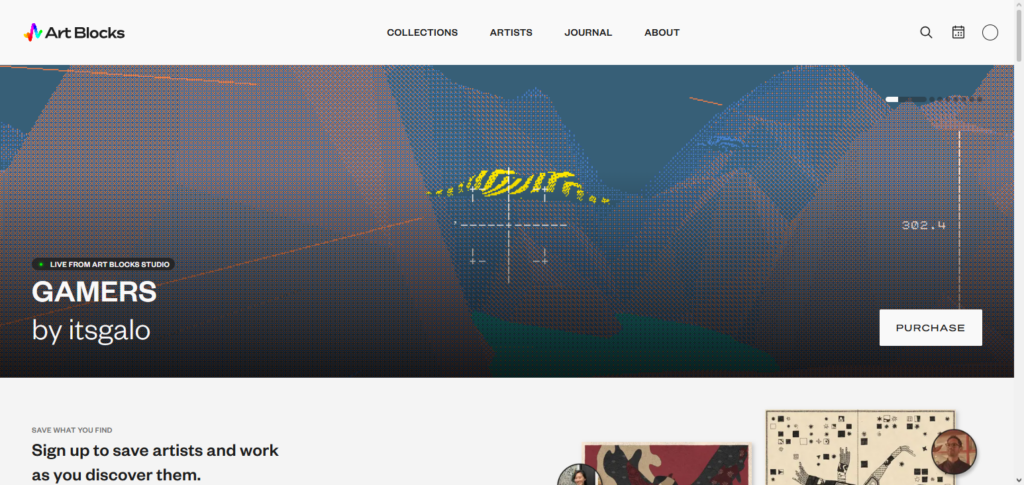
Art Blocks is one of the best generative AI storage platforms because of its emphasis on decentralization. The platform also stores metadata and the pieces’ script directly on the Ethereum blockchain to ensure everything is preserved. From these features, artists are able to make unique permanentalgorithmic pieces of art.
Features:
- Platform for creation of NFT artworks via generative art.
- Execution of smart contracts allows for creation of NFTs with unique art.
- Offers curatorial, playground, and factory NFT collections.
- Provides generative artists with ownership via blockchain.
- Offers collectibles digital art experience.
Pros:
- Highly recognized platform for generative art NFTs.
- Large supportive community of artists and collectors.
- Collection of high quality curated artwork.
- Allows for creation of digital art with verifiable scarcity.
- Supports the preservation of digital art.
Cons:
- High prices of curated collections.
- Primarily focused on the Ethereum blockchain.
- Requires some level of understanding of generative art.
- Price mainly determined by collectors.
- Transaction costs spike during high load periods.
3. Fxhash (Tezos)
Minting and creating on Fxhash is done by their user-made generative scripts. As one of the most accessible methods to create generative AI art pieces, Fxhash has made it possible to create complex pieces with an easy interface. Fxhash was also built to run on top of Tezos meaning the environment and transactions are both low cost and earth-conscious.
Fxhash has positioned itself as a community focused art platform with a goal of decentralized storage and curation. They have proven to be one of the best solutions for sustainability paired with accessibility and permanence of generative AI NFTs.
Features:
- Open generative art platform built on the Tezos blockchain.
- Allows artists to publish algorithm-generated NFT projects.
- Supports real-time minting and generative artwork creation.
- Provides tools for experimental digital artists.
- Uses Tezos for low-cost NFT transactions.
Pros:
- Lower minting and transaction fees.
- Strong generative art community.
- Accessible platform for emerging artists.
- Environment-friendly blockchain infrastructure.
- Supports creative experimentation.
Cons:
- Smaller collector base compared to Ethereum platforms.
- Lower mainstream recognition.
- Tezos ecosystem has limited adoption.
- Fewer high-value sales compared to Ethereum NFTs.
- Less liquidity for collectors.
4. Mintbase AI Studio
Mintbase has a similar standalone studio on the NEAR blockchain where creators can safely store AI generated art and music while minting NFTs. The studio was designed to help creators grow their art while providing a seamless way to distribute it to the growing list of marketplaces that support decentralized storage.
NEAR boasts a scalable network with low costs, making Mintbase a great solution for creators looking to utilize generative AI art NFTs. As one of the best generative AI NFT solutions, Mintbase helps artists leverage AI art with blockchain technology.
Features:
- AI-assisted NFT creation and digital asset management platform.
- Enables creators to mint NFTs without complex coding.
- Supports customizable smart contract creation.
- Provides tools for Web3 applications and marketplaces.
- Uses blockchain-based asset ownership verification.
Pros:
- Simplifies NFT creation for beginners.
- Supports custom NFT applications.
- Flexible marketplace integration.
- Lower technical barriers for creators.
- Useful for brands and Web3 projects.
Cons:
- Smaller ecosystem compared to major NFT platforms.
- Limited AI-specific features compared with dedicated AI tools.
- Requires blockchain knowledge for advanced usage.
- Lower marketplace visibility.
- Adoption depends on Web3 growth.
5. Manifold Studio
Created with the NFT maker in mind, Manifold Studio allows users to make NFTs with custom smart contracts that can be utilized with AI artwork. In an effort to maintain transparency, Manifold Studio takes a decentralized approach by placing all data and proof on-chain.

Since it is integrated with OpenSea, it is straightforward to sell your artwork. One of the best generative AI platforms & storage solutions, Manifold enables creators to have more autonomy, flexibility, and permanence for their generative art projects on the blockchain.
Features:
- Easily create NFTs with smart contracts.
- Compatible with ERC-721 and ERC-1155.
- Offers resources to launch NFTs independently.
- Lets creators preserve contract ownership.
Pros:
- Total control of NFTs.
- Deploys smart contracts without code.
- Excellent reputation with NFT artists.
- Custom royalty frameworks.
- Advanced NFT creator tools.
Cons:
- Some blockchain fundamental understanding.
- Does not offer full marketplace functionality.
- Limited features to promote NFTs.
- High Ethereum gas fees.
- Ideal for advanced NFT creators.
6. Zora Protocol
The Zora Protocol is an open-source NFT protocol for making markets and minting generative art. Using the Protocol is straightforward, needing only the deployment of generative AI scripts and the subsequent minting and trading of NFTs. Zora focuses on on-chain metadata storage for a guarantee of immutability.
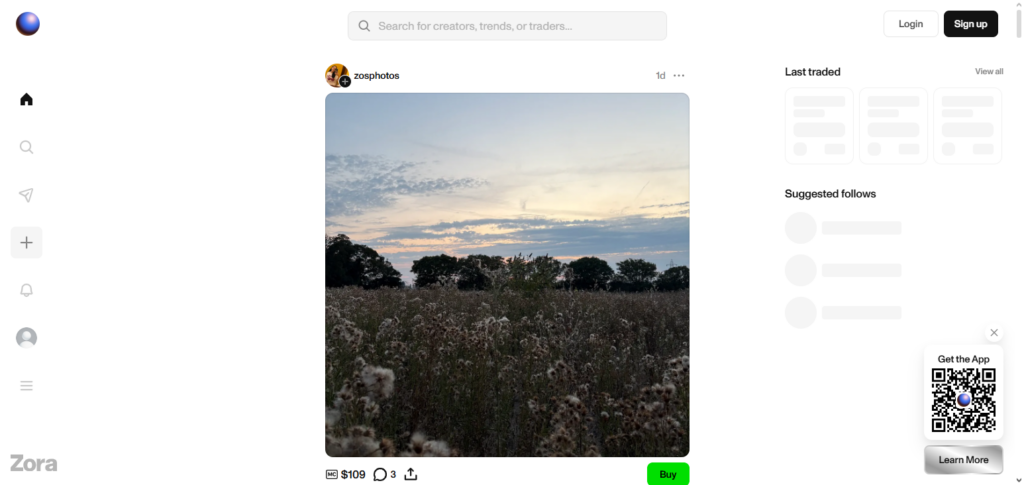
The Protocol also supports dynamic pricing, facilitating the selling of generative art to a wider range of buyers. Along with other best generative AI NFT platforms & storage solutions, Zora combines open source with blockchain immutability and allows creators to experiment with generative AI art.
Features:
- Use of censorship-resistant technologies to create a marketplace for all digital assets.
- Provides creators infrastructure to mint NFTs.
- Builders can create their own NFT marketplaces.
- Users can create applications for NFTs.
- Focuses on digital assets that are owned without permission from third-parties.
Pros:
- Zora is great for developers to build applications on.
- Supports NFTs with a low barrier for creators to mint.
- Focuses on decentralized ownership of assets.
Cons:
- Comparatively to larger marketplaces, Zora has a small user base.
- Limited adoption outside of the developer community.
- The demand of NFTs controls the activity of the platform.
- Competes with older marketplaces.
7. Objkt.com (Tezos)
As the largest Tezos-based NFT marketplace, Objkt.com takes sustainability into consideration when it comes to the minting of NFTs and the cost of transactions on its platform, thanks to Tezos’ eco-friendly blockchain. It also has some of the best tools of any marketplace for creators to sell generative AI-based NFTs.
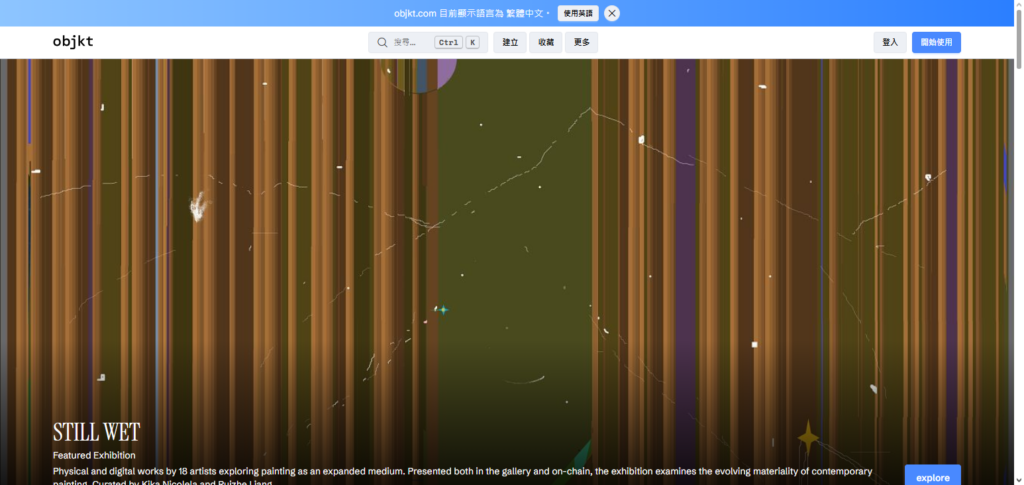
A huge amount of generative AI art can be found at Objkt.com, thanks to Fxhash. Objkt.com is one of the best generative AI NFT platforms & storage solutions thanks to its focus on community driven curation and accessibility for creators.
Features:
- The largest NFT marketplace on the Tezos blockchain.
- NFTs that are art, collectibles, and even NFT generators.
- Lets creators and collectors use marketplace building tools.
- Low-cost minting on the Tezos blockchain.
- Supports smart contracts on Tezos.
Pros:
- Low minting costs.
- Cultivated Tezos NFT Community.
- Great for new artists on the blockchain.
- Supports a variety of art.
- Environmentally friendly blockchain.
Cons:
- Market is smaller than most Ethereum NFT platform markets.
- Less trading volume.
- Limited mainstream visibility.
- Dependent on Tezo’s market.
- Limited institutional collectors.
8. Pinata + IPFS
Pinata uses IPFS to offer decentralized storage to NFTs, including art generated via AI. Creators can now store and make available their image, script, and metadata across all the distributed nodes. For end users, Pinata has created easy to use dashboards and APIs to help in storage management.
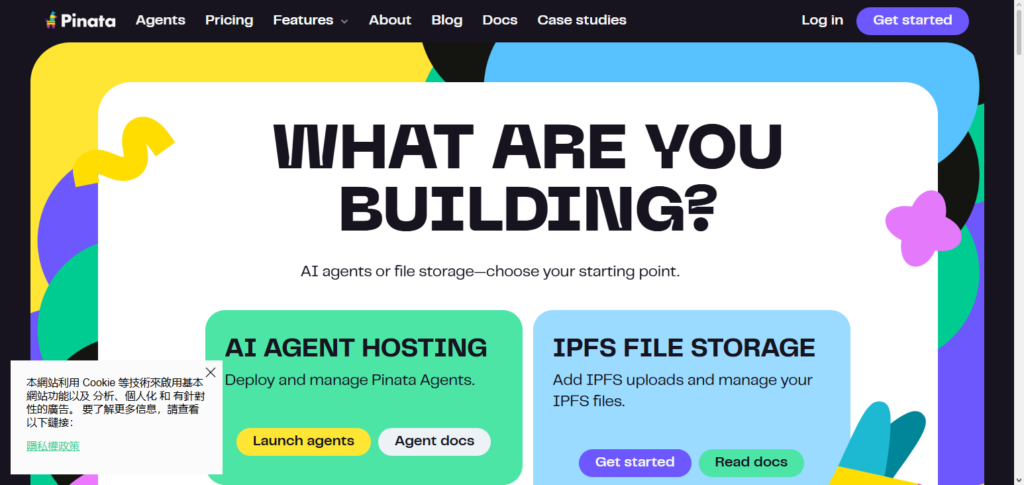
Pinata’s partnership with IPFS helps it to provide permanent storage and resistance to censorship. In the space of generative AI NFT storage, Pinata helps to provide accessibility, verifiability, and decentralization to generative art. This helps minting platforms provide good, reliable storage.
Features:
- Uses IPFS tech for a decentralized storage solution for NFTs.
- Can host NFT metadata and media files.
- Lets creators manage their digital assets safely.
- Works with NFT marketplaces.
- Has tools for Web3 developers.
Pros:
- Better data permanence for NFTs.
- Hosting is decentralized and can be switched.
- Easy management for NFT storage.
- APIs and SDKs for developers.
- Can manage large files.
Cons:
- Depends on IPFS for storage.
- Not a full NFT marketplace.
- Some technical knowledge is needed.
- Storage may become expensive with large files.
- Requires work for metadata management.
9. Arweave Permaweb
Arweave Permaweb has permanent decentralized storage for generative AI NFTs. It provides storage “forever,” unlike others. Data stored in traditional storage will always be at risk of “being erased.” With Arweave, generative scripts, metadata, and assets are preserved forever. It also provides us with a trusted way to make NFTs permanent.
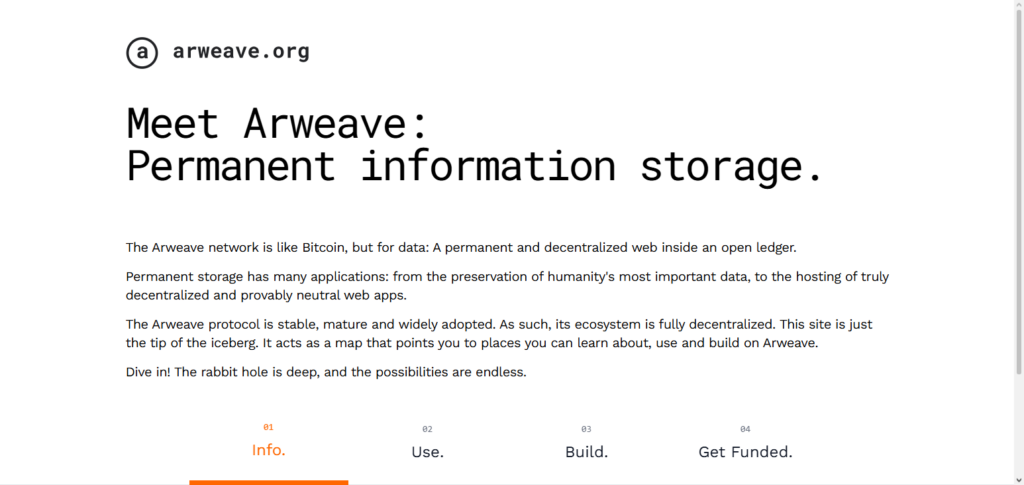
Arweave is one of the top generative AI NFT storage platforms. Generative art platforms are designed to be immutable and permanent storehouses of data, thus ensuring permanence, preservation, and accessibility of generative art for future generations.
Features:
- A network for permanent storage of decentralized data.
- Focused on the permanent storage of NFT assets.
- Can hold artwork and records permanently.
- Provides data permanence with blockchain.
- Works with Web3 and related NFTs.
Pros:
- a permanent storage model.
- Helps retain NFTs with no connections.
- Works well for digital assets.
- Provides a decentralized model.
- Many NFT projects use this.
Cons:
- Storage requires some money first.
- Not for creating NFT marketplaces.
- Some technical integrations are needed.
- Some tools for users are lacking.
- Depends on the adoption of the network.
10. Filecoin NFT.Storage
Filecoin NFT.Storage is a service built on IPFS and Filecoin to provide secure storage for NFTs. Filecoin’s decentralized network provides redundancy, permanence, and verifiability for creators who can securely store AI art assets, metadata, and scripts.
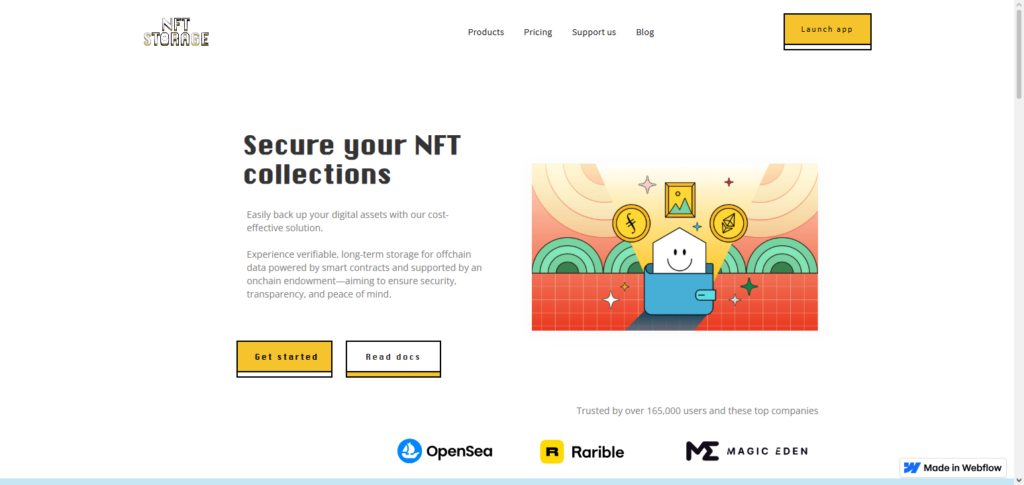
NFT.Storage’s free service makes it accessible to creators for large-scale generative AI projects. Of the best generative AI NFT storage services, Filecoin NFT.Storage supports and enables generative art to be truly decentralized and permanently accessible around the world.
Features:
- Uses Filecoin and IPFS for a decentralized storage solution for NFTs.
- Offers Web3-centric storage solutions.
- Offers support for NFT application developers.
- Strengthens reliable storage for digital assets.
Pros:
- Architecture for decentralized storage.
- Created for the preservation of NFT data.
- Handles different scales of applications.
- Less reliance on traditional storage solutions.
- Excellent support for Web3 infrastructure.
Cons:
- More of a storage solution than an NFT marketplace.
- Requires work from developers to integrate.
- Users must possess some technical ability.
- Retrieval of storage is reliant on the network.
- Many alternatives exist for decentralized storage.
Conclusion
Digital art creation, ownership, and preservation are all impacted by the introduction of Generative AIs and decentralized storage systems, respectively. With Async Art, Art Blocks, and Fxhash, artists gain more freedom to try new creative approaches with built in generative processes, and with Objkt.com and Zora Protocol, artists gain more freedom to sell their work and control the growth of their communities.
To maintain archival permanence, platforms such as Pinata + IPFS, Arweave Permaweb, and Filecoin NFT Storage have been developed. Generative AIs, along with the culmination of the Web3 ecosystem, fundamentally change the roadblock we currently face when trying to navigate the best and safest path for owning and creating in the digital art/NFT space.
FAQ
What are generative AI NFT platforms?
Generative AI NFT platforms like Async Art and Art Blocks allow artists to use algorithms and AI models to create unique, one‑of‑a‑kind digital artworks that are minted as NFTs on blockchain networks.
Which platforms are best for generative AI NFTs?
Top platforms include Fxhash (Tezos), Mintbase AI Studio, Manifold Studio, and Zora Protocol, each offering unique tools for creators and collectors.
Why is on‑chain storage important for NFTs?
On‑chain storage ensures permanence, transparency, and verifiability. Solutions like Pinata + IPFS, Arweave Permaweb, and Filecoin NFT.Storage safeguard generative art assets against loss or tampering.
Which blockchains support generative AI NFTs?
Ethereum powers platforms like Art Blocks, while Tezos supports Fxhash and Objkt.com. NEAR Protocol hosts Mintbase AI Studio, offering eco‑friendly and scalable solutions.