


In this article, we will go over the Best Blockchain Sequencer Infrastructure Providers and compare their sequencing models, supported rollup frameworks, transaction ordering, performance, decentralization, MEV management, security, pricing, and deployment options. This guide is designed to help developers and blockchain teams assess leading sequencer infrastructure providers and select the best provider for their scalability, interoperability, reliability, and transaction processing needs.
What Are Blockchain Sequencer Infrastructure Providers?
Blockchain sequencer infrastructure providers are companies or protocols that provide the technology to collect, order, batch and coordinate transactions for Layer 2 networks, rollups and application-specific blockchains.
Typically, a sequencer receives transactions, orders them, creates batches and pushes transaction data down to the data availability and settlement layers. Providers can offer centralized, decentralized, shared or AVS-based sequencing models.
Their infrastructure may also be built around fast confirmations, MEV management, failover systems, interoperability, monitoring and rollup deployment tools. These providers allow developers to build scalable blockchain networks in 2026 without having to design and operate a whole sequencing system themselves.
Key Points
| Provider | Key Point |
|---|---|
| Espresso Systems | Develops a shared sequencing network that enables decentralized transaction ordering for rollups and appchains. |
| Astria | Provides shared sequencer infrastructure designed for rollups with decentralized ordering and cross-rollup coordination. |
| Radius | Offers shared sequencing technology featuring encrypted mempools and fair transaction ordering mechanisms. |
| NodeKit | Delivers shared sequencer infrastructure focused on rollup interoperability and decentralized transaction ordering. |
| AltLayer | Provides rollup infrastructure and sequencing solutions through its restaked rollup and decentralized infrastructure ecosystem. |
| Caldera | Offers Rollup-as-a-Service infrastructure that includes sequencer management for custom blockchain deployments. |
| Conduit | Delivers managed rollup infrastructure with integrated sequencer operations and chain management tools. |
| Gelato | Provides appchain and rollup infrastructure with sequencer support alongside automation and Web3 cloud services. |
| Tanssi | Focuses on decentralized sequencer networks and shared infrastructure for appchains and rollups. |
| EigenLayer AVS-Based Sequencer Networks | Enable decentralized sequencing models secured through Ethereum restaking infrastructure. |
1. Espresso Systems
Founded: 2022 Headquarters: United States Sequencing model: Decentralized/shared Espresso offers shared sequencing and fast finality with its HotShot BFT consensus, and it lets integrated rollups keep their own execution environments. It powers ecosystems like ** Arbitrum Orbit, OP Stack, and app-specific chains .
The network doesn’t run rollup transactions, it provides consensus on transaction ordering and data availability. Espresso can seal ordered rollup blocks in under 1 sec., thus decreasing sequencer-equivocation and increasing cross-chain composability.
Pricing: Usually custom, for infrastructure integrations, not just a public monthly plan. Its architecture is best suited for rollups that require decentralized ordering, fast finality and shared cross-chain state visibility.
| Characteristic | Details |
|---|---|
| Core Type | Decentralized base layer and shared sequencing infrastructure |
| Consensus | HotShot BFT consensus |
| Sequencing | Can provide decentralized sequencing while preserving rollup sovereignty |
| Finality | Sub-second finality |
| Rollup Support | Arbitrum Nitro/Orbit, Cartesi and other integrated rollups |
| Data Availability | Native DA with compatibility for external DA such as Celestia, EigenDA and Avail |
| Interoperability | Designed for fast communication between integrated chains |
| Transaction Ordering | Provides consensus around ordering and can support decentralized sequencing |
| Performance | High-throughput architecture with rapid confirmations |
| Deployment | Modular integration with existing rollup stacks |
| Security Focus | BFT consensus and decentralized validator network |
| Best For | Rollups seeking fast finality, shared infrastructure and cross-chain interoperability |
2. Astria
Founded: 2023 | Headquarters: United States | Sequencing model: Shared/decentralized Instead of each rollup running their own isolated centralized sequencers, Astria was designed as a sequencing layer for many rollups to share a common sequencer network.

Its network based on CometBFT orders rollup transactions without executing the rollup state machine, while Celestia is used for data availability. Astria also supports more sophisticated order flow including transaction bundles and configurable ordering preferences. Pricing: no fixed public enterprise price is typically available.
Transaction ordering: Ordering is done by decentralized proposer rotation and consensus, and its Composer abstracts sequencing fees for ordinary users. The strongest use case is for modular rollups that want shared ordering and cross-rollup composability.
| Characteristic | Details |
|---|---|
| Core Type | Decentralized shared sequencing network |
| Consensus | CometBFT-based consensus |
| Sequencing | Shared sequencing separated from execution |
| Execution | Sequencer orders transactions but does not execute rollup state |
| Data Availability | Designed around modular DA, including Celestia |
| Transaction Ordering | Common ordering layer for participating rollups |
| Rollup Sovereignty | Rollups retain control over their execution environments |
| Composability | Designed to improve coordination between connected rollups |
| Architecture | Modular sequencing, execution and DA components |
| MEV Focus | Supports configurable transaction-ordering approaches |
| Deployment | Designed for modular rollup ecosystems |
| Best For | Developers wanting shared ordering while retaining execution flexibility |
3. Radius
Founded: 2023 Headquarters: Singapore Sequencing model: Shared sequencing with encrypted transaction ordering. Radius has a strong focus on reducing harmful MEV by keeping transactions encrypted until after they are ordered. Users submit encrypted transactions with cryptographic proofs and the sequencer generates an order commitment before the transactions can be read.
Its architecture is designed for rollups that want more protection against transaction reordering, front-running and MEV manipulation. Supported chains: designed as a modular shared sequencing layer, not a single execution chain, with demos including Polygon CDK environments.
Pricing: pricing for enterprise/integration is not standardized and is not available publicly. The main differentiator is the transaction ordering: encrypted ordering, and time-lock mechanisms.
| Characteristic | Details |
|---|---|
| Core Type | Decentralized shared sequencer |
| Main Focus | MEV protection and fair transaction ordering |
| Sequencing | Shared sequencing for rollups |
| Transaction Ordering | Designed to prevent sequencer-based transaction manipulation |
| Encryption | Uses encrypted transaction-ordering mechanisms |
| MEV Protection | Strong focus on reducing front-running and harmful MEV |
| Censorship Resistance | Cryptographic ordering mechanisms improve resistance |
| Rollup Support | Designed as modular sequencing infrastructure |
| Architecture | Sequencing separated from rollup execution |
| Performance Focus | Fast pre-confirmation and fair ordering |
| Pricing | Custom/integration-based rather than a universal public plan |
| Best For | DeFi, exchanges and applications where transaction-order fairness is critical |
4- NodeKit
Founded: 2024 | Based: US | Sequencing model: Shared sequencing system built on an Avalanche-based architecture. NodeKit SEQ is meant to offer sequencing services for multiple rollups and appchains, decoupling transaction ordering from application execution.
Its stack uses Avalanche HyperSDK technology to build a dedicated sequencing network, providing a framework for high-throughput ordering and coordination for developers. Chains supported: Focuses primarily on modular rollups and application specific chains, not a single L2 ecosystem.
** Transaction ordering: the ordering is performed by the dedicated network and the connected chains use ordered transaction data. Pricing: public fixed pricing is not generally disclosed, so integrations are typically done on a network-specific or customized basis.
| Characteristic | Details |
|---|---|
| Core Type | Shared sequencing infrastructure |
| Main Technology | Avalanche HyperSDK-based architecture |
| Sequencing | Dedicated sequencing network for multiple chains |
| Transaction Ordering | Specialized network orders transactions before execution |
| Supported Environment | Modular rollups and application-specific chains |
| Throughput Focus | Designed for high-performance transaction processing |
| Architecture | Separates sequencing from application execution |
| Interoperability | Designed to coordinate multiple connected chains |
| Deployment | Infrastructure-oriented integration |
| Security | Relies on the underlying sequencing network and validator architecture |
| Pricing | Generally customized for infrastructure deployments |
| Best For | High-throughput appchains and modular blockchain developers |
5. AltLayer
Founded: 2022 | Headquarters: Singapore | Sequencing model: RaaS and decentralized sequencing via AVSs. AltLayer provides rollup infrastructure for OP Stack, Arbitrum Orbit and zkSync ZK Stack and its Restaked Rollups architecture uses three AVSs: Squad for decentralized sequencing, Mach for fast finality and Vital for verification.
Its infrastructure also integrates with DA systems like EigenDA, Celestia and Avail. Transaction Ordering: Rather than relying on a single operator to order transactions, Squad offers decentralized sequencing.
Pricing: Custom, based on how you plan to deploy; not a one-size-fits-all public flat rate, but managed RaaS infrastructure. AltLayer is particularly well suited for teams looking for a modular rollup stack that combines sequencing, verification and finality.
| Characteristic | Details |
|---|---|
| Core Type | Rollup-as-a-Service plus decentralized sequencing |
| Supported Frameworks | OP Stack, Arbitrum Orbit, ZK Stack, Polygon CDK and others |
| Sequencing | Decentralized sequencer network |
| Sequencer Network | Beacon Layer |
| AVS Components | SQUAD, MACH and VITAL |
| SQUAD | Provides decentralized sequencing |
| MACH | Provides fast finality |
| VITAL | Provides decentralized rollup verification |
| Sequencer Selection | Validators selected based on stake and randomness |
| Recommended Sequencers | At least five sequencers per rollup |
| DA Options | Multiple modular DA integrations |
| Best For | Teams wanting configurable rollups with decentralized sequencing, verification and fast finality |
6. Caldera
Founded: 2022 | Headquarters: United States | Type: Rollup-as-a-Service infrastructure. Caldera allows teams to deploy custom L2 and L3 networks with frameworks like OP Stack, Arbitrum Orbit and Polygon CDK. Its managed infrastructure can provision and run sequencers, full nodes, bridges, and monitoring and data availability integrations.

Transaction ordering: ** Caldera operated sequencers gather, sequence and batch transactions before publishing data to the selected DA and settlement environment. Price: Customarily tailored to chain configuration, throughput, redundancy and support requirements on a per project basis, not a single universal public price.
Caldera is especially useful for gaming, DeFi and application specific chains that want managed sequencing without having to run the full infrastructure stack themselves.
| Characteristic | Details |
|---|---|
| Core Type | Rollup-as-a-Service infrastructure |
| Supported Frameworks | OP Stack, Arbitrum Orbit, Polygon CDK |
| Sequencer | Managed rollup sequencer infrastructure |
| Transaction Ordering | Sequencer collects, orders and batches transactions |
| DA Options | Ethereum blobs, Celestia, EigenDA and AnyTrust |
| Cross-Chain Layer | Caldera Metalayer |
| Interoperability | Native interoperability through Metalayer |
| Deployment | Managed rollup deployment |
| Infrastructure | Sequencer, nodes, monitoring and supporting services |
| Pricing | Generally customized by deployment requirements |
| Customization | Gas token, DA and rollup configuration options |
| Best For | Teams wanting managed rollups and integrated cross-chain infrastructure |
7. Conduit
Founded: 2023 | HQ: United States | Type: Rollup-as-a-Service. Conduit is a tool that simplifies the deployment and operation of production rollups, especially within the OP Stack and Arbitrum Orbit framework. Its infrastructure is responsible for key operational components such as sequencer deployment, nodes, monitoring and data availability configuration.

Transaction Ordering: The managed sequencer handles the ordering of transactions for the rollup and batches and submits the resulting data based on the rollup architecture chosen.
Environments supported: Mostly Ethereum-aligned rollups and appchains. Pricing: Customizable to the chain’s needs, not a set rate that is advertized everyplace. Conduit is best for teams who care about simple rollup deployment, operational reliability, and deeper OP Stack oriented infrastructure.
| Characteristic | Details |
|---|---|
| Core Type | Rollup-as-a-Service |
| Supported Frameworks | OP Stack and Arbitrum Orbit |
| Sequencer | Managed sequencer infrastructure |
| Transaction Ordering | Sequencer orders and batches rollup transactions |
| DA Options | Ethereum blobs, Celestia and EigenDA |
| Deployment | Managed cloud-based rollup infrastructure |
| Superchain Focus | Strong OP Stack and Optimism ecosystem alignment |
| Customization | Chain configuration, DA and infrastructure options |
| Monitoring | Managed operational infrastructure |
| Pricing | Typically customized according to chain requirements |
| Interoperability | Uses third-party bridging/interoperability solutions |
| Best For | OP Stack and Arbitrum-based production rollups |
8. Gelato
Founded 2019 | Headquarters Berlin, Germany | Type Web3 infrastructure & RaaS Gelato is more than just a sequencer, combining rollup deployment with services such as automation, relaying and infrastructure support.

Its RaaS solution supports environments such as OP Stack, Arbitrum Orbit, Polygon CDK and zkSync-based architectures offering flexibility for developers when choosing execution and data-availability components.
Transaction ordering: Infrastructure for transaction ordering is run as part of the managed rollup stack, but developers are able to configure their chain with the framework of their choice.
Pricing: Typically tailored based on infrastructure and deployment needs, not a public universal fee. Gelato is a great option for teams that want sequencing and broader Web3 operational services.
| Characteristic | Details |
|---|---|
| Core Type | Web3 infrastructure and Rollup-as-a-Service |
| Supported Frameworks | OP Stack, Arbitrum Orbit, Polygon CDK, ZKsync Elastic Chain |
| Sequencer | Managed and high-performance sequencing infrastructure |
| Turbo Sequencer | High-performance sequencing product |
| Block Time | Turbo advertises 5 ms block times |
| Throughput | Advertises up to 1 Gigagas/s |
| DA Options | Ethereum, Celestia, EigenDA and Avail |
| Additional Services | Automation, relayers and Web3 infrastructure |
| Deployment | Managed rollup infrastructure |
| Pricing | Generally customized |
| Performance Focus | Very low latency and high throughput |
| Best For | High-performance rollups requiring broader infrastructure services |
9. Tanssi
Founded: 2023 Headquarters: Gibraltar Sequencing Model: Sequencing-as-a-Service. Tanssi gives appchains decentralized block production through incentivized group of sequencers.
The infrastructure supports EVM-compatible and Substrate-based appchains, enabling developers to customize runtime logic and outsource block production. Transaction ordering: Tanssi-assigned sequencers run transactions, produce blocks and provide block production for registered appchains with sequencers rotated between networks between sessions.
Pricing: the protocol has registration deposits, sequencer-assignment fees, and per-block production fees rather than a simple SaaS subscription. Tanssi is especially well suited for teams building sovereign application-specific chains that require managed decentralized sequencing and configurable execution.
| Characteristic | Details |
|---|---|
| Core Type | Appchain infrastructure and Sequencing-as-a-Service |
| Primary Focus | Managed decentralized block production |
| Supported Chains | EVM-compatible and Substrate-based appchains |
| Sequencing | Decentralized appchain sequencing |
| Transaction Ordering | Assigned sequencers produce and order application-chain blocks |
| Validator Model | Sequencers are selected and rotated through the network |
| Architecture | Application-specific chain infrastructure |
| Customization | Supports configurable appchain environments |
| Security | Uses its network-level sequencing and security architecture |
| Deployment | Managed appchain launch infrastructure |
| Pricing | Protocol/network-based economics rather than standard SaaS pricing |
| Best For | Teams launching dedicated application-specific chains“ |
10. EigenLayer AVS-Based Sequencer Networks
Founded: 2021 | Headquarters: United States | Type: Restaking-based security and AVS infrastructure. EigenLayer is not itself a single sequencer provider, but its Actively Validated Services framework enables specialized networks to access Ethereum restaking for economic security.
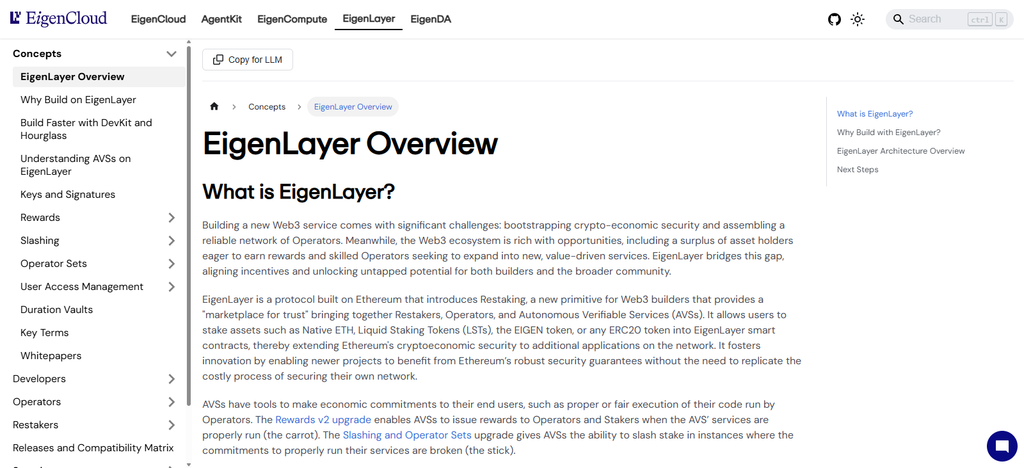
Sequencer networks may therefore use AVSs to coordinate operators offering ordering, verification, or fast-finality services. Supported environments: modular rollups, appchains and infrastructure services interacting with EigenLayer-based AVSs. Transaction ordering: This depends on the particular AVS.
There is no general EigenLayer ordering mechanism. Pricing: AVS operators and services may have their own pricing models and fees. This makes EigenLayer particularly relevant for a project that wants Ethereum-restaked security around a customized sequencing service rather than a single turnkey sequencer product.
| Characteristic | Details |
|---|---|
| Core Type | Restaking-based decentralized infrastructure |
| Main Technology | EigenLayer Actively Validated Services |
| Sequencing Model | Depends on the individual AVS |
| Security Model | Ethereum-restaked economic security |
| Operators | EigenLayer operators can provide services to AVSs |
| Transaction Ordering | Determined by the specific sequencing AVS |
| Finality | Depends on the AVS architecture |
| Rollup Compatibility | Modular rollups and application-specific blockchain infrastructure |
| MEV | Depends on the individual AVS design |
| Pricing | AVS-specific economics and service fees |
| Customization | Developers can design specialized sequencing services |
| Best For | Projects requiring customizable sequencing with restaked economic security |
Blockchain Sequencer Infrastructure Providers Comparison
| Provider | Founded | Headquarters | Sequencing Model | Supported Chains / Frameworks | Transaction Ordering | MEV / Ordering Focus | Finality / Performance | Pricing Model | Best For |
|---|---|---|---|---|---|---|---|---|---|
| Espresso Systems | 2022 | United States | Decentralized / Shared | Arbitrum Orbit, Cartesi and integrated rollups | Shared consensus-based ordering | Fair ordering and decentralized sequencing | Sub-second finality | Custom / infrastructure-based | Fast, decentralized rollup sequencing |
| Astria | 2023 | United States | Shared / Decentralized | Modular rollups and Celestia-based environments | Common sequencing layer | Configurable transaction ordering | Fast shared sequencing | Custom / protocol-based | Multi-rollup shared ordering |
| Radius | 2023 | Singapore | Shared / Decentralized | Modular rollup environments | Encrypted transaction ordering | Strong MEV and front-running protection | Fast ordering and pre-confirmation focus | Custom | DeFi and MEV-sensitive applications |
| NodeKit | 2024 | United States | Shared Sequencing | Modular rollups and appchains | Dedicated sequencing network | Ordering-focused infrastructure | High-throughput architecture | Custom | High-performance appchains |
| AltLayer | 2022 | Singapore | Decentralized / AVS-based | OP Stack, Arbitrum Orbit, ZK Stack, Polygon CDK | SQUAD decentralized sequencing | Decentralized ordering | Fast finality through MACH | Custom / RaaS | Restaked rollups and modular infrastructure |
| Caldera | 2022 | United States | Managed Sequencing | OP Stack, Arbitrum Orbit, Polygon CDK | Managed sequencer orders and batches transactions | Depends on rollup configuration | Production-oriented managed infrastructure | Custom | Managed L2/L3 deployment |
| Conduit | 2023 | United States | Managed / Rollup Sequencer | OP Stack, Arbitrum Orbit | Managed sequencer ordering | Framework-dependent | Production rollup infrastructure | Custom | OP Stack and Arbitrum rollups |
| Gelato | 2019 | Berlin, Germany | Managed / High-performance | OP Stack, Arbitrum Orbit, Polygon CDK, ZKsync | Managed sequencing | Configurable by deployment | Turbo Sequencer targets very low latency | Custom | High-performance rollups |
| Tanssi | 2023 | Gibraltar | Decentralized Sequencing-as-a-Service | EVM and Substrate-based appchains | Assigned sequencers produce blocks | Network-level sequencing | Rotating sequencer model | Protocol-based fees | Application-specific chains |
| EigenLayer AVS-Based Sequencer Networks | 2021* | United States | AVS / Restaking-based | Modular rollups and custom services | Depends on individual AVS | AVS-specific | Depends on AVS design | AVS-specific | Custom decentralized sequencing |
Quick Take
| Category | Strongest Options |
|---|---|
| Shared Sequencing | Espresso Systems, Astria, Radius, NodeKit |
| Decentralized Sequencing | Espresso Systems, Astria, Tanssi |
| MEV-Focused Ordering | Radius |
| RaaS + Sequencing | AltLayer, Caldera, Conduit, Gelato |
| AVS-Based Security | AltLayer, EigenLayer AVS ecosystem |
| Appchain Sequencing | Tanssi, NodeKit |
| High-Performance Sequencing | Gelato, NodeKit |
| Cross-Rollup Coordination | Espresso Systems, Astria |
| Custom Sequencing Infrastructure | EigenLayer AVS-based networks |
| Managed Rollup Deployment | Caldera, Conduit, Gelato, AltLayer |
Conclusion
The blockchain sequencer infrastructure has become an important piece of the modern rollup and appchain stack, with providers taking different approaches to transaction ordering, decentralization, MEV management, finality and scalability.
Espresso Systems, Astria, Radius and NodeKit are more directly focused on shared or specialized sequencing, while AltLayer, Caldera, Conduit, Gelato, Tanssi and EigenLayer-based solutions provide broader infrastructure or decentralized security models. The optimal choice depends on the required rollup framework, sequencing architecture, performance, security assumptions, pricing model and degree of decentralization.
By 2026, projects should be evaluating not only throughput and latency, but also censorship resistance, failover, cross-rollup interoperability, MEV handling, and long-term operational flexibility.
FAQ
What is blockchain sequencer infrastructure?
Blockchain sequencer infrastructure is the technology used by rollups and Layer 2 networks to collect, order, and batch transactions before they are processed and settled on an underlying blockchain. It can be centralized, decentralized, shared, or based, depending on the network architecture.
Why are sequencers important for Layer 2 networks?
Sequencers help Layer 2 networks process transactions efficiently by determining transaction order and creating batches. They can improve throughput, reduce confirmation times, manage transaction fees, and support a smoother user experience while transactions are eventually settled on the underlying blockchain.
What is shared sequencing?
Shared sequencing allows multiple rollups or appchains to use a common sequencing network instead of operating completely independent sequencers. This can improve cross-rollup coordination, composability, and decentralized transaction ordering while potentially reducing duplicated infrastructure costs.
What is the difference between a centralized and decentralized sequencer?
A centralized sequencer typically relies on one operator to receive and order transactions, which can provide fast performance but introduces additional trust and censorship considerations. A decentralized sequencer distributes sequencing responsibilities across multiple operators or validators to improve resilience and reduce dependence on a single entity.
How do sequencers handle MEV?
Sequencers can influence the order in which transactions are processed, making MEV management an important consideration. Different infrastructure providers use approaches such as encrypted transactions, fair ordering, auctions, transaction batching, or decentralized ordering to reduce harmful front-running and other forms of transaction-order manipulation.