


In this article, I will talk about the Best ZK-Proof Infrastructure Providers for developers, blockchain projects and Web3 businesses. We will compare leading platforms by their ZK technology, proving performance, supported chains, developer tools, scalability, security, pricing, strengths and limitations. This guide will assist you to understand which ZK infrastructure provider is most suited for various blockchain applications and uses.
What Are ZK-Proof Infrastructure Providers?
ZK-proof infrastructure providers are companies, protocols and technology platforms that provide the underlying tools to generate, verify, aggregate and deploy zero-knowledge proofs for blockchain applications.
They can offer ZKVMs, ZK rollup frameworks, proving networks, recursive proof systems, data coprocessors and verification infrastructure. Providers such as Succinct and RISC Zero focus on general-purpose ZK computation, while StarkWare, zkSync and Scroll focus heavily on blockchain scaling.
Others, such as Aztec, Mina, Axiom and Brevis, focus on privacy, lightweight verification and verifiable blockchain data; These infrastructure layers together allow developers to build applications that can do computations off-chain, while still providing cryptographic proof that the computation is correct.
Key Points
| ZK-Proof Infrastructure Provider | Core Focus |
|---|---|
| Succinct | zkVM & Prover Infrastructure |
| RISC Zero | zkVM Infrastructure |
| StarkWare | ZK-STARK Infrastructure |
| Polygon Zero | ZK Proving Infrastructure |
| zkSync | ZK Rollup Infrastructure |
| Aztec Network | Private ZK Infrastructure |
| Mina Protocol | Recursive Proof Infrastructure |
| Scroll | zkEVM Infrastructure |
| Axiom | ZK Coprocessor Infrastructure |
| Brevis | ZK Coprocessor Infrastructure |
1. Succinct
Succinct, founded in 2022, builds zk infrastructure focused on SP1, a high-performance RISC-V zkVM and its decentralized Prover Network. SP1 allows developers to create ZK proofs for general-purpose programs, and the Prover Network connects proof requests to distributed provers.
Its infrastructure is deeply integrated with Ethereum and Ethereum-based chains for applications including rollups, bridges and verifiable computation. Pricing is market-based: Instead of a simple subscription, proving costs are discovered through the competitive marketplace of the Prover Network.
Key Strengths Succinct
- SP1 zkVM: General purpose verifiable computation RISC-V based zkVM.
High Performance: Engineered to generate ZK proofs efficiently and on a large scale. - Prover Network: A decentralized infrastructure for outsourcing proof generation.
- Ethereum-Centric: Heavy support for Ethereum & ZK ecosystem app integrations.
- Developer Friendly: Supports well-known programming workflows and enables easy development of ZK applications.
Succinct Limitations
- Costs of Proving: ZK proving can be costly for computation-heavy workloads.
Technical Complexity: Building optimized applications with SP1 still requires knowledge of ZK and systems. - Hardware Requirements: Extensive proving may require significant compute resources.
- Ecosystem Maturity: Some parts of the larger Succinct ecosystem are under development.
- Workload Optimization: The performance of the prover is highly dependent on the program being proved.
2 RISC Zero
Founded in 2021, RISC Zero is a general purpose zkVM built on RISC-V and zk-STARKs. Developers are able to run programs written for supported RISC-V toolchains and generate cryptographic receipts that prove correct execution.
Its infrastructure can integrate with Ethereum, where proofs can enable smart-contract applications and computational coprocessing.
RISC Zero provides the ability to do both self-hosted proving and delegated proving via its infrastructure; there isn’t one-size-fits-all subscription, rather pricing is based on the manner of proving and the resources needed. It is particularly well suited for verifiable computation and zkVM applications.
Key Strengths RISC Zero
- General-Purpose zkVM: Checks execution of any RISC-V program.
- RISC-V Compatible: Uses a widely-used instruction-set architecture.
- STARK-Based Security: Open proof generation, with no need for traditional trusted setup.
Flexible Applications: Works with verifiable computation, AI, gaming, and blockchain workloads. - Rust Ecosystem: Works well with Rust-based development workflows.
RISC Zero Limitations
- Proving Overhead: Generating proofs for complex programs can be computationally expensive.
- Hardware Requirements: High-performance proving may require powerful CPUs, GPUs or other special infrastructure.
- Learning Curve: Developers will need to learn zkVM-specific concepts and limitations.
- Performance Variability: The proof generation performance is very sensitive to program complexity.
Production Optimization: You may need to carefully optimize for large scale applications to control proving resources.
3. StarkWare
StarkWare was founded in 2018 and specializes in STARK-based ZK infrastructure, powering both Starknet and StarkEx. Starknet is an Ethereum Layer-2 validity rollup and StarkEx is application-specific scaling infrastructure.
Its technology is based on the Cairo programming language and STARK proofs allowing for off-chain computation and on-chain verification.
StarkWare’s primary blockchain ecosystem is Ethereum, with development underway for broader settlement capabilities. Pricing isn’t tied to a single public subscription plan, but varies by product and deployment model, making it more infrastructure-oriented than consumer SaaS.
Key Strengths StarkWare
- STARK Technology: Employs scalable and transparent STARK proofs.
- Ethereum Scaling: Provides infrastructure to scale Ethereum apps.
Starknet ecosystem: It supports a specialized ZK Layer-2 blockchain. - Cairo Language: A custom-built programming language for ZK apps.
High Scalability: Designed to efficiently manage computationally intensive blockchain workloads.
Starkware Limitations
- Cairo Learning Curve: Developers who are not familiar with Cairo may take a while before they can become productive.
- EVM Differences: Development in Cairo is different than development in Solidity/EVM.
Architecture Complexity: More sophisticated applications might require deeper understanding of STARK based systems. - Migration Issues: Migration from EVM environments may require adapting existing Ethereum apps.
Ecosystem Fragmentation: Stark-based infrastructure is different than other ZK ecosystems, which can add to integration complexity.
4. Polygon Zero
Polygon Zero is Polygon’s ZK proving and research initiative, most notably home to Plonky2, a recursive SNARK optimized for fast proof generation and lightweight verification. In 2022, Polygon launched Plonky2, a project for scalable ZK computation and Ethereum compatibility.
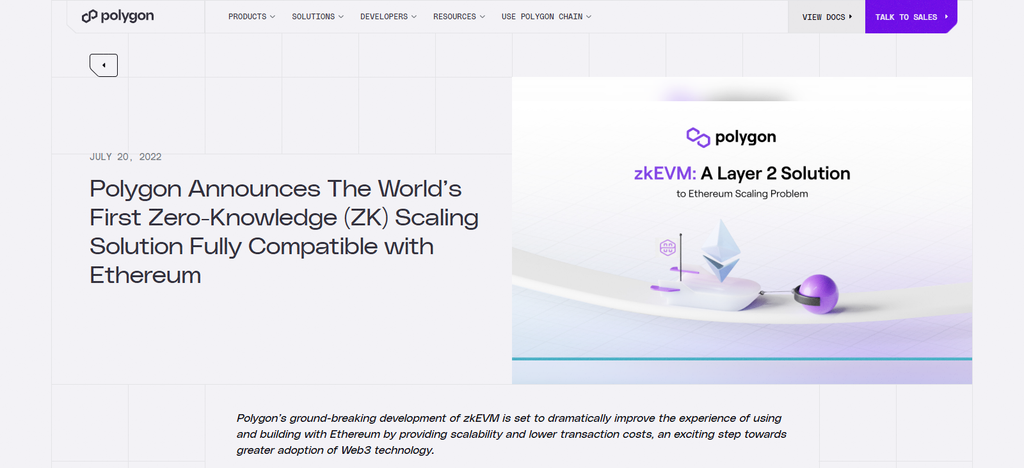
The technology combines PLONK and FRI, and supports recursion without the need of a trusted setup.
The ecosystem targeted by this project is primarily Ethereum and Ethereum compatible infrastructure, especially applications that need recursive proofs and efficient verification. Polygon Zero is less of a traditional paid cloud provider, and more of an open-source stack, so the cost depends on how you deploy and use the infrastructure.
Key Strengths Polygono Zero
- Plonky2: Fast recursive proof system optimized for fast proving.
Recursive Proofs: Allows proofs to verify other proofs efficiently. - Low Proof Overhead: Optimized for small and efficient proofs.
Ethereum Compatibility: Designed with Ethereum scaling and verification use cases in mind.
Open-Source Technology: Provides publicly accessible ZK research and proving technology.
Zero Polygon Limitations
- Integration Complexity: Advanced proving technology may be more complex to integrate than a standard managed service.
- Limited General Awareness: Polygon Zero technologies are less known to many developers than mainstream Ethereum tooling.
- Infrastructure Requirements: Proving at scale can be computationally expensive.
- Specific Use Cases: Depending on the application’s architecture, its proving technology might require additional infrastructure.
5. zkSync
zkSync was developed by Matter Labs and got started in 2019, and has evolved into a larger ZK chain ecosystem built on Ethereum. It uses ZK technology to secure scalable chains and allows familiar Ethereum development through **EVM-compatible environments.
The ecosystem now has multiple ZK-powered chains and infrastructure for launching public or private networks. Ethereum is the base settlement layer, the wider network that connects multiple ZK chains. Pricing is mostly driven by transaction and infrastructure, not a single fixed provider subscription, and is influenced by network usage, proving and data availability.
Key Strengths zkSync
- ZK-based Scaling: Uses validity proofs to scale Ethereum transactions
- EVM Compatibility: Developers are able to utilize popular Ethereum development tools.
- ZK Stack: It provides the infrastructure for building customizable ZK-powered chains.
Ethereum Security: Powered by Ethereum settlement & interoperability. - Developer Ecosystem: Good tooling and compatibility for Solidity based apps.
zkSync Limitations
- Differences to EVM: EVM compatible, but some applications may experience differences from Ethereum mainnet behavior.
- Ecosystem Dependency: Developers remain closely tied to the zkSync ecosystem and tooling.
Migration complexity: large applications may need to be tested and tinkered with before deployment.
Infrastructure to Prove: High-scale ZK proving requires infrastructure and operational requirements. - Technological Development: Developers need to keep up because the ZK Stack and ecosystem moves fast and changes often.
6. Aztec Network
Founded in 2017, Aztec is a privacy-first ZK blockchain infrastructure project built for private programmable applications. It is designed using zero-knowledge proofs and the Noir programming language that enables developers to build applications with private computation and information of their choice.
Aztec is built as a Ethereum Layer-2, inheriting security and settlement from Ethereum, with privacy-centric execution. Its fee model is based on mana and Fee Juice. Transaction costs are a function of data availability, execution, and proving costs. This makes Aztec especially relevant for privacy-preserving applications.
Key Strengths Aztec Network
- Programmable Privacy: Allows apps to perform private computation.
ZK-Powered Architecture: Uses zero-knowledge proofs as a core part of its network. - Noir Language: Developer language for writing privacy preserving ZK applications.
- Ethereum Compatibility: Built as a privacy network on Ethereum Layer-2.
- **Private Smart Contracts: ** Allows for applications where confidentiality of transaction data or computation is necessary.
Aztec Network Limitations
- Performance Tradeoffs: Private computation can impose added proving and computational overhead.
- Privacy Complexity: Building secure private apps is usually much more complicated than building regular dApps.
- Learning Curve: Developers may need to learn Noir and privacy-specific programming concepts.
Maturity of the Ecosystem: The privacy-focused ecosystem is less mature than the existing Ethereum development environments. - Debugging Challenge: Debugging and fixing issues in private ZK apps may be more difficult.
7. Mina Protocol
Mina Protocol is a Layer-1 blockchain with a small blockchain state and recursive proofs, founded in 2017 with a ZK focus. Its architecture maintains a roughly 22KB blockchain, allowing participants to verify the network with recursive zero-knowledge proofs, instead of downloading an ever-growing chain history.
Developers are building zkApps using TypeScript and o1js. The economic model of the network uses MINA. Mina is its own blockchain, not built on Ethereum-based ZK infrastructure, so it is especially well-suited for lightweight verification, privacy and ZK-native applications.
Key Strengths Mina Protocol
- Succinct Blockchain: Uses recursive proofs to maintain a very small blockchain state.
- Recursive ZK Proofs: Efficiently represent and verify the state of the blockchain with proofs.
- zkApps: Allows developers to develop ZK-powered decentralized applications.
- Lightweight Verification – Enables blockchain verification with minimal data requirements.
ZK-Native Layer-1: Integrates zero-knowledge technology into the blockchain’s architecture.
Mina Protocol Limitations
- Development Learning Curve: Developers building zkApps have to learn ZK-specific development concepts.
- Resource Constraints: The protocol’s ZK-centric design may be limiting for complex applications.
- Limited Liquidity: Available liquidity and integrations can be more limited than major smart-contract ecosystems.
- Specialized Architecture: Mina’s unique recursive-proof design may require developers to rethink how they develop for blockchains.
8. Scroll
Founded in ** 2021 , Scroll developed a zkEVM Layer-2 for Ethereum ** with a focus on compatibility with Ethereum’s existing development environment. Its infrastructure employs zero-knowledge proofs to perform transactions off-chain and validate on Ethereum, allowing developers to leverage familiar EVM tools and smart contract technology.

Scroll Mainnet launched in 2023, and its primary supported settlement blockchain is Ethereum. Scroll doesn’t work around a traditional fixed infrastructure subscription. The pricing of transactions is dynamic and combines L2 execution costs with L1 data costs, both paid in ETH.
Key Strengths Scroll
- zkEVM Architecture: Offers ZK rollup infrastructure compatible with Ethereum.
- EVM Compatibility: Allows existing Ethereum smart contract protocols and tools to run with minimal modification.
Ethereum Settlement: Utilizes Ethereum for security and final settlement. - ZK Scaling: Lowers the cost and computational intensity of executing transactions directly on Ethereum.
- Developer Friendly: Migration to the familiar EVM environment will be a breeze for Solidity developers.
Scroll Limitations
- Proof Cost: Proof generation for validation is computationally expensive.
- EVM Compatibility Limitations: Certain applications might continue to experience discrepancies relative to the Ethereum mainnet.
- Ecosystem Size: It has a smaller ecosystem than the full application ecosystem of Ethereum.
- Complexity of Infrastructure: Advanced ZK infrastructure may require some specific know-how to be built or deployed.
Transaction Economics: Ethereum L1 data and settlement costs may still be a factor.
9. Axiom
Axiom is a ZK-powered blockchain data and computation infrastructure platform to allow applications to query historical on-chain data and perform computations with cryptographic verification.
The infrastructure is specifically designed for Ethereum data, enabling intelligent contracts to reach information that would be costly or challenging to compute on-chain themselves.
Instead of being primarily an independent blockchain, Axiom serves as a ZK coprocessor for blockchain applications. Pricing is usage-based, usually based on the computation or query requested, which is more like programmable infrastructure than a fixed SaaS subscription.
Key Strengths Axiom
- Historical Blockchain Data: Enable applications to query historical data on-chain.
- ZK Coprocessor: allows intelligent contracts to do verifiable off-chain computation.
- Cryptographic verification: Computations can be verified using zero-knowledge proofs.
- Ethereum focused Infrastructure: Aimed at boosting the computational horsepower of blockchain applications.
Data-Driven Applications: Useful for DeFi, analytics, governance, rewards and applications that need historical blockchain data.
Axiom Limitations
- Computation Costs: Queries on historical data can be complicated and require substantial ZK computation.
- Ethereum Focus: Apps targeting other ecosystems might require additional integration work.
Query Complexity: Advanced data queries might require developers to be aware of Axiom’s specific architecture.
Proof Latency: Complex computations can sometimes take time to produce results. - Smart-Contract Integration: Integration with verifiable off-chain computation requires additional application level development.
10. Brevis.
Founded in 2023, Brevis offers a ZK data coprocessor and proving infrastructure that allows smart contract technology to query and verify historical blockchain data. Its ecosystem consists of Brevis ProverNet, which orchestrates distributed proof generation for ZK computation, data queries and recursive aggregation.
Brevis has supported workloads across ecosystems including Ethereum compatible networks such as Base, Linea, Arbitrum and others. Pricing model: Its pricing model is based on BREV. Proof generation and associated fees will be set by a dynamic market between proof requesters and provers, and will not be fixed monthly pricing.
Key Strengths Brevis
- ZK Data Coprocessor: Enables intelligent contracts to access and validate historical data from the blockchain.
Verifiable Computation: Off-chain data processing with cryptographically verifiable results. - Multi-Chain: Built to work with multiple blockchain ecosystems.
- Proof Aggregation: Combines multiple computations and proofs to achieve more efficient verification.
- Prover Infrastructure: Infrastructure for scalable ZK proof generation and data driven Web3 applications.
Brevis Limitations
- Proof-Generation Overhead: It can be costly to generate proofs with complex computations over blockchain data.
- Integration Difficulty: Developers need to understand coprocessor and proof-verification workflow *
- Data Availability Considerations: Historical data from the blockchain and the processing of it can create additional infrastructure requirements.
Performance variability: Performance of query and proof depends on complexity of computation and network conditions. - Building Ecosystem: APIs, tooling, and economic models might evolve as the ZK coprocessor infrastructure develops.
Conclusion
The ZK-proof infrastructure landscape in 2026 is diverse, featuring general-purpose zkVMs like Succinct and RISC Zero, and Ethereum scaling solutions like StarkWare, zkSync, Polygon Zero, and Scroll. Aztec and Mina’s ZK-native blockchain technology are privacy-centric infrastructures that serve different needs; Axiom and Brevis are concerned with verifiable blockchain data and computation.
Ultimately, the right provider will come down to your use case, supported blockchain, proving requirements, developer experience, scalability, security and pricing model. Collectively, these providers illustrate the evolution of ZK technology into a more general infrastructure layer for scalable, private, and verifiable blockchain applications.
FAQ
What is ZK-proof infrastructure?
ZK-proof infrastructure provides the tools, proving systems, verification networks, and developer frameworks required to generate and verify zero-knowledge proofs. It allows blockchain applications to prove that a computation or transaction is valid without revealing all underlying information.
Which are the best ZK-proof infrastructure providers in 2026?
Some of the leading providers include Succinct, RISC Zero, StarkWare, Polygon Zero, zkSync, Aztec Network, Mina Protocol, Scroll, Axiom, and Brevis. Each focuses on different areas such as zkVMs, Ethereum scaling, privacy, recursive proofs, or verifiable blockchain data.
What is the difference between a zkVM and a ZK rollup?
A zkVM generates proofs that a program executed correctly, making it suitable for general-purpose verifiable computation. A ZK rollup executes blockchain transactions off-chain and uses validity proofs to demonstrate that the resulting state is correct, typically settling on an underlying Layer-1 such as Ethereum.
Which ZK provider is best for general-purpose computation?
Succinct and RISC Zero are strong choices for general-purpose ZK computation because their zkVM-based infrastructure allows developers to prove the execution of programs rather than building application-specific circuits for every workload.
Which ZK infrastructure is best for Ethereum scaling?
StarkWare, zkSync, Polygon Zero, and Scroll are particularly relevant to Ethereum scaling. Their approaches differ in proving technology, virtual-machine compatibility, architecture, and developer tooling, so the best option depends on the application’s technical requirements.