

In this article, I will discuss how AI agents could change crypto payments. First, let’s consider how AI changes finance. Financial transactions depend on trust. Banks, brokers, exchanges, and other intermediaries facilitate transactions and earn a living by charging a fee. AI agents can interpret financial data and apply legal regulations to perform various tasks including transactions.
Using AI agents may reduce the number of financial intermediaries and make transactions cheaper. Because agents can perform transactions instantly, they can be used to make small payments which were previously unprofitable. These characteristics will revolutionize cross border financial transactions and change the global financial system.
What Are AI Agents in Crypto Payments?
AI agents for crypto payments are computer programs that can carry out financial transactions on their own. Using blockchain and smart contracts, these programs can carry out transactions and maintain the security and integrity of financial transactions.
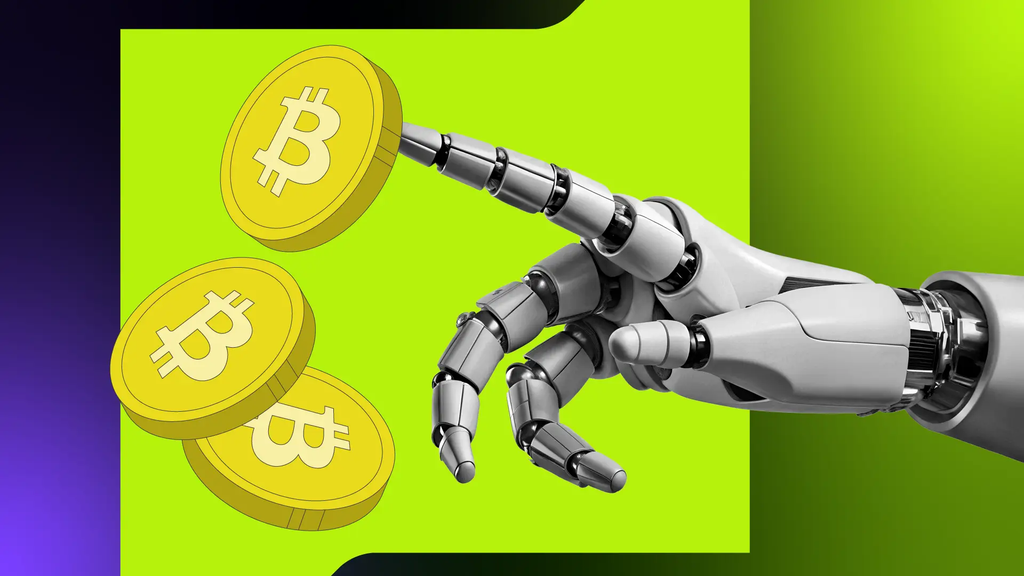
Because of this, they are able to execute very small transactions. Because of the nature of blockchain technology, these programs are able to transmit money quickly and efficiently across borders. These programs provide transparency in financial transactions.
Unlike other programs, these can make financial decisions without relying on banks or other financial institutions. Because of blockchain technology, the transactions are secure and virtually impossible to alter. The use of AI agents in financial transactions provides security and speed.
How AI Agents Could Transform Crypto Payments

Here’s a clear step‑by‑step breakdown of how AI agents could transform crypto payments:
Autonomous Execution
AI agents initiate and complete transactions without human intervention, enabling true machine‑to‑machine commerce.
Smart Contract Integration
They use programmable contracts to trigger automatic payments once predefined conditions are met.
Real‑Time Data Analysis
Agents analyze live data streams to decide when and how to process payments efficiently.
Microtransactions Handling
They support tiny, instant payments ideal for IoT devices, cloud services, and digital marketplaces.
Global Accessibility
AI agents bypass currency conversion barriers, enabling seamless cross‑border transactions.
Enhanced Security
Blockchain ensures tamper‑proof records, reducing fraud and increasing trust in autonomous systems.
Scalability
Capable of handling billions of transactions, AI agents make crypto payments viable for large‑scale digital economies.
Innovation Enablement
They open new business models like decentralized marketplaces and autonomous service providers.
Benefits of AI Agents for Crypto Payments
Agent 2038: AI software can make payments on their own, leading to 24/7/365 uninterrupted operations.
Instant Payment: Settlement is done instantly, hence, payments can be made any time of the day.
Less Intermediaries: Leads to a significant reduction in the fees charged and costs incurred by a financial institution.
International Money Transfers: Allows users to make payments to beneficiaries in other countries.
Trivial Payments: Enables payments to be made for services or things that costs a few cents, or even less.
Smart Contracts: Elimination of a trusted third party, leads to a significant reduction in payments processing time and costs.
Transparency: All records are stored on the blockchain.
Flexibility: Supports thousands of transactions per second.
New Business: Creates a platform where businesses can provide services without the need for human intervention.
Key Use Cases for AI-Powered Crypto Payments
Payments for services by connected devices
Devices can make payments for services (e.g. energy, Internet, maintenance, repairs, etc.) as and when required.
International Money Transfers
AI can be used for money transfers, and can eliminate the need to wait for bank transfers to be processed.
Recurring Payments
AI can be used to make recurring payments for, for example, software, online videos, or music.
Cryptocurrency Payments
AI can be used to make payments in crypto-currencies.
Virtual Items and Services
AI can be used to pay for virtual items and services, for example, in video games.
Supply and Chain Payments
Payments can be made automatically when goods reach a particular location.
Energy and Electricity Payments
Real-time payments can be made for energy and electricity.
Other Payments
Automated payments can be made for example for transportation and other services.
Digital Media
AI can be used to pay for online articles, for example.
Health Services Payments
Payments can be made to health care service providers, for example, for remote medical services.
Role of Stablecoins in Agentic Payments

Price Stability: Stablecoins eliminate price uncertainty in digital asset transactions, and help AI agents engage in reliable transactions.
Dependable Medium of Exchange: Stablecoins function as a medium of exchange for AI agents, and are generally better alternatives than unstable cryptocurrencies.
International Payments: Stablecoins promote easy and quick cross border payments.
Automated Payments: Stablecoins are well integrated to function in payments automation.
Cash Equivalents: Stablecoins are fully liquid, and can be quickly transacted.
Price-Protected Transactions: Transactions done using stablecoins, shield the Counter-parties from price risks.
Large Transaction Capability: Stablecoins facilitate huge transaction volumes.
Regulatory Frameworks: Numerous stablecoins have been created to work within the confines of the law, boosting confidence in agentic financial systems.
AI Agents + Crypto Wallets
| AI Agents | Crypto Wallets |
|---|---|
| Autonomous Execution – Initiate and complete payments without human input. | Secure Storage – Hold private keys and digital assets safely. |
| Smart Contract Interaction – Trigger payments when conditions are met. | Transaction Interface – Provide the user interface for sending/receiving crypto. |
| Data Analysis – Decide optimal timing for payments using real‑time data. | Identity Verification – Authenticate ownership of funds and authorize transactions. |
| Microtransactions – Handle tiny, frequent payments for IoT and digital services. | Multi‑Currency Support – Store and manage multiple tokens including stablecoins. |
| Scalability – Manage billions of transactions autonomously. | Accessibility – Allow users to access funds via mobile, desktop, or hardware wallets. |
| Global Reach – Enable seamless cross‑border transactions. | Compliance Tools – Integrate with KYC/AML frameworks for regulatory alignment. |
Security Risks and Challenges
Smart Contracts: A number of bugs and issues in smart contract code can result in financial losses.
Data: Manipulation of data streams can result in invalid transactions being completed.
Wallets: Loss of the private key of a crypto-wallet results in the inability of the owner to control the funds.
Agent Behavior: Agents can be programmed to control funds, and in extreme cases, be manipulated to engage in illicit financial transactions.
International Transactions: Transactions that are settled across national boundaries can violate the laws of other countries.
Attacks and Defenses: Threats to the security of a payment network can be countered by denial of service attacks.
Other Issues: There are numerous other issues that include, trust and confidence in an AI to complete financial transactions, and the exposure of transaction data.
Stablecoins: If a stablecoin is used to maintain peg against a fiat currency, the payment system would also be pegged.
No Human Control: Could result in fraudulent or illegal transactions going unchecked.
AI Agent Crypto Payments vs Traditional Crypto Payments
| AI Agent Crypto Payments | Traditional Crypto Payments |
|---|---|
| Autonomous Execution – Agents initiate and complete payments without human input. | Manual Execution – Users must authorize and send transactions themselves. |
| Smart Contract Driven – Automated triggers handle payments based on conditions. | User‑Triggered – Relies on manual wallet interaction and approvals. |
| Real‑Time Data Analysis – Agents decide optimal timing for transactions. | Static Decisions – Users choose when to send, often without data insights. |
| Microtransactions Support – Handles tiny, frequent payments for IoT and digital services. | Limited Microtransactions – High fees make small payments inefficient. |
| Global Reach – Seamless cross‑border transactions without currency conversion. | Conversion Required – Users often need exchanges for cross‑border transfers. |
| Scalability – Capable of billions of autonomous transactions. | Scalability Limits – Manual processes slow down high‑volume payments. |
| Transparency & Security – Blockchain ensures tamper‑proof, auditable records. | Security Dependent on User – Relies on wallet safety and user practices. |
| Innovation Enablement – Unlocks decentralized marketplaces and autonomous commerce. | Conventional Use – Primarily peer‑to‑peer transfers and trading. |
Regulatory and Compliance Considerations
KYC/ AML: AI systems must be developed to integrate mechanisms to perform customer due diligence and other AML controls and tests.
International Legal Frameworks: Transacting in a multilevel and international environment creates challenges in ensuring compliance to a myriad of prevailing legal and regulatory frameworks.
Licensing: Financial service licenses may be required to legally render the service.
Stablecoins: Regulatory concerns are supported by the nature of stablecoins and their connection to the financial system.
Data Privacy: Transacting across borders raises issues of data privacy and protection.
Regulatory Audits: Systems must be designed and developed to create and retain automated records of their activities, transactions and service.
Agency: Controls and mechanisms are required to address consumer protection and to prevent harm to a user by the system or an agent acting on the user’s behalf.
Tax: Comply with the tax and reporting obligations.
Cybersecurity: Controls and mechanisms are required to secure user data.
Future of AI Agents and Crypto Payments

The integration of AI agents and cryptocurrency payments is going to change the financial landscape. With smart contracts and blockchain, payment processing will become even faster and more secure. AI agents will be able to execute payment transactions.
The processing power of AI agents will revolutionize transaction processing, allowing for the IoT to flourish. Stablecoins will let the global market complete financial transactions, and at the same time, provide price stability.
With the integration of AI agents, transaction costs will decreases and financial accessibility will increase. Incorporating AI to facilitate and process financial transactions will allow the global financial system to function without the need for a centralized banking system.
Pros & Cons
| Pros | Cons |
|---|---|
| Autonomy – Agents execute payments without human input. | Oversight Risks – Lack of human monitoring may lead to unintended actions. |
| Speed – Instant settlement compared to traditional systems. | Smart Contract Bugs – Vulnerabilities in code can be exploited. |
| Cost Efficiency – Eliminates intermediaries, lowering fees. | Regulatory Uncertainty – Global compliance frameworks remain unclear. |
| Global Reach – Seamless cross‑border transactions. | Data Manipulation – Agents relying on tampered data may trigger fraud. |
| Microtransactions – Supports tiny, frequent payments for IoT. | Scalability Attacks – High‑volume systems may face denial‑of‑service risks. |
| Transparency & Security – Blockchain ensures tamper‑proof records. | Privacy Concerns – Transaction data could expose user information. |
| Innovation Enablement – Unlocks decentralized marketplaces and autonomous commerce. | Stablecoin Dependence – Peg instability can disrupt agentic payments. |
Key Takeaways
The integration of AI agents in cryptocurrency payments brings a revolution in the finance and banking industry. With these agents, transactions become faster, cheaper, and more efficient, with less dependence on intermediaries.
Because of their intelligence, autonomy, and speed, they can perform payments across borders and reform the way money is transferred in the world, especially with the help of IoT. The use of stable coins enables the agents to perform payments with absolute precision.
Although several challenges concerning regulation and oversight are yet to be resolved, the integration of AI in finance and banking is bound to change the way the business is done. In the future, transactions between persons and businesses will be done by intelligent agents on behalf of their principals.
FAQs
What are AI agents in crypto payments?
AI agents are autonomous software programs that execute blockchain transactions without human intervention, using smart contracts and real‑time data.
How do AI agents improve crypto payments?
They enhance speed, reduce costs, enable microtransactions, and streamline cross‑border transfers by eliminating intermediaries.
Are AI agent payments secure?
Yes, they rely on blockchain’s tamper‑proof records, but risks like smart contract bugs and wallet exploits remain.
What role do stablecoins play?
Stablecoins provide price stability, making agentic payments reliable for global commerce.
What industries benefit most?
IoT, gaming, supply chain, healthcare, and autonomous vehicles are key sectors adopting AI‑powered crypto payments.