


In this article, I discuss the best Bridging Protocols for NFTs. These protocols make it possible to transfer NFTs across different blockchain networks without losing ownership and metadata.
These protocols increase liquidity, usability, and interoperability, providing creators and collectors access to multiple markets and DeFi systems. Learning about these top options is best to help users unlock the value of their NFTs in the most secure and optimal way possible.
What is Bridging Protocols?
Bridging protocols in blockchain technology allow the transfer of digital assets and information across multiple blockchain networks.
Bridging protocols act as intermediaries enabling interoperability because blockchains work in silos with differing consensus mechanisms, token standards, and security protocols.
Bridging protocols improve liquidity and facilitate cross-chain DeFi applications while preserving security and reducing the friction of transferring assets across blockchains.
These protocols extend the utility of dApps and allow users to extend the use of their tokens to other ecosystems as assets are frozen on the source chain and representations are minted on the target chain.
Why Use Bridging Protocols For Nfts
Cross-Chain Ownership: NFTs can be transferred to and from various blockchains for more access and use.
Increased Liquidity: NFTs can be used and traded on more marketplaces which increases their value.
Interoperability with dApps: NFTs can be used on different decentralized applications, games, and marketplaces.
Cost Efficiency: NFTs can be transferred to blockchains with cheaper minting, trading, and smart contract execution.
Enhanced Utility: NFTs can acquire new functionalities, engage in cross-chain activities, and earn extra rewards on other blockchains.
Key Point & Top Bridging Protocols For Nfts
| Bridging Protocol | Key Point / Feature |
|---|---|
| XP.Network | Focuses on cross-chain NFT and token transfers with fast and secure bridging. |
| Celer cBridge | High-speed, low-cost bridge for tokens and assets across multiple chains. |
| Router Protocol | Enables cross-chain liquidity routing and multi-chain DeFi integrations. |
| deBridge | Decentralized interoperability for tokens and NFTs with governance controls. |
| ChainPort | Secure and simple cross-chain token transfers with minimal user friction. |
| Rango Exchange | Aggregates multiple bridges to optimize fees and transaction speed. |
| LI.FI Protocol | Cross-chain router for seamless asset swaps and DeFi interactions. |
| Allbridge | Bridges both tokens and NFTs across chains with easy integration for dApps. |
| Orbiter Finance | Optimized for low-fee and fast token transfers between Layer 2 networks. |
| Synapse Protocol | Multi-chain liquidity protocol enabling tokens and stablecoins transfers. |
1. XP.Network
XP.Network is one of the most recognized NFT bridging protocols with advanced cross-chain functionality and unmatched security. Unlike conventional bridges, bridging XP.Network allows NFT transfers without networks overriding ownership and metadata.
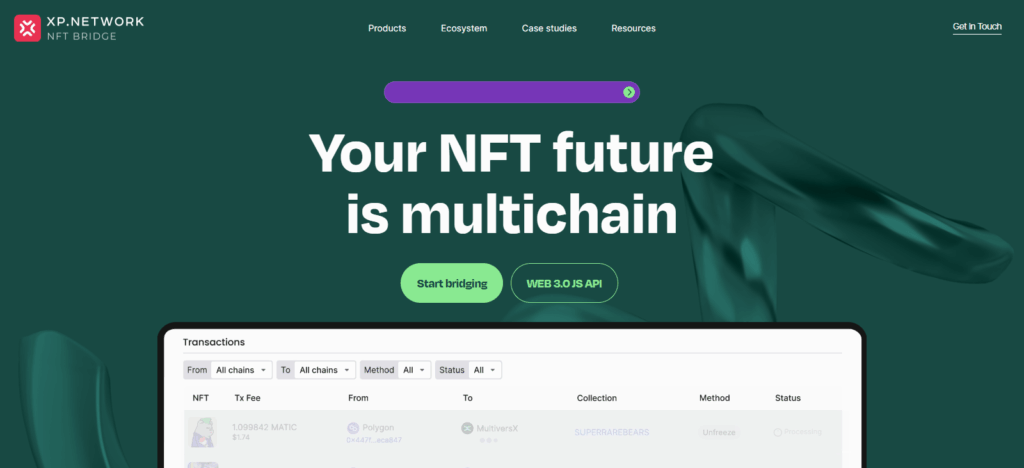
Data under-reports XP.Network’s cross-chain NFT architecture of multi-chain networks. NFT’s utility and functionality transfer with the NFT and multi-chain NFT holders can access expanded NFT ecosystems.
XP.Network’s rapid transaction processing, low transfer costs, and support of Layer 2 networks combine to optimize NFT liquidity. XP.Network combines interoperability and advanced security with NFT bridging efficiency making it the preferred NFT bridging protocol.
| Feature | Details |
|---|---|
| Protocol Name | XP.Network |
| Focus | NFT bridging across multiple blockchains |
| KYC Requirement | Minimal / Not required for basic NFT transfers |
| Supported Chains | Ethereum, Polygon, Binance Smart Chain, Avalanche, Fantom, Solana |
| Transaction Speed | Fast cross-chain transfers |
| Fees | Low to moderate depending on network |
| Security | Uses secure smart contracts and decentralized validators |
| NFT Metadata | Preserved during transfers |
| Use Cases | NFT marketplaces, games, DeFi integrations |
| Unique Point | Optimized multi-chain NFT interoperability with minimal friction |
2. Celer cBridge
Celer cBridge stands out as one of the best bridging solutions for cross-chain NFTs, renowned for its rapid and affordable cross-chain transfers.
NFTs can shift between various blockchains and layers of ownership, preserving authenticity, metadata integrity, and copyright, thanks to proprietary layer-2 scaling technology.
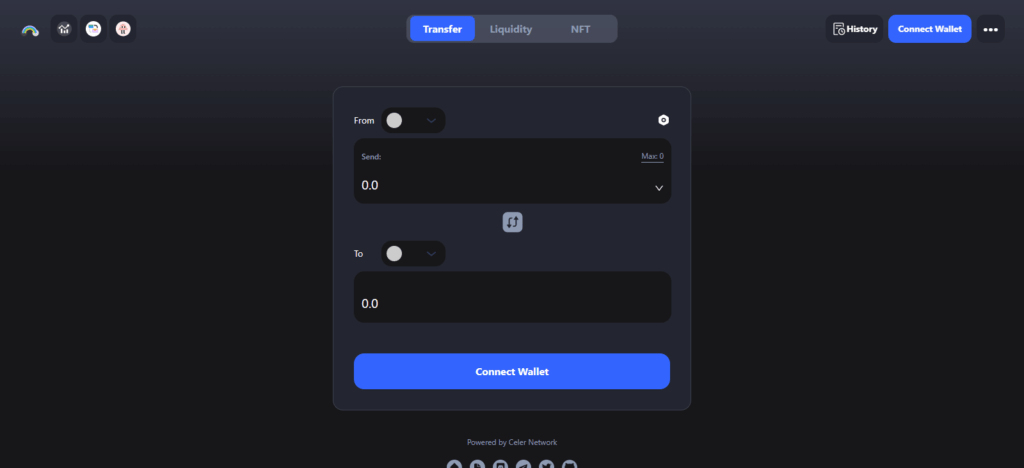
cBridge is perfect for creators and collectors alike due to the combination of state-channel-constructed off-chain efficient liquidity and gas fee reduction that streamlines and quickens transactions.
Additionally, cBridge’s versatile blockchains enables NFT’s participation in various marketplaces and DeFi systems. The combination of fast, cost-effective, and dependable cross-chain NFT interoperability makes cBridge one of the best NFTs available today.
| Feature | Details |
|---|---|
| Protocol Name | Celer cBridge |
| Focus | High-speed cross-chain NFT and token transfers |
| KYC Requirement | Minimal / Not required for standard NFT transfers |
| Supported Chains | Ethereum, Binance Smart Chain, Polygon, Avalanche, Fantom, Arbitrum |
| Transaction Speed | Very fast, optimized via layer-2 technology |
| Fees | Low, especially on Layer 2 networks |
| Security | Uses off-chain state channels and secure smart contracts |
| NFT Metadata | Fully preserved during transfers |
| Use Cases | NFT marketplaces, DeFi platforms, cross-chain gaming |
| Unique Point | Combines speed, low cost, and reliable cross-chain NFT transfers |
3. Router Protocol
Router Protocol is a top bridging solution for NFTs for its pioneering multi-chain routing for cross-chain transfers.
It is optimized for cross-chain liquidity with preservation of NFT metadata and ownership for unrestricted access across multiple NFT markets and DeFi platforms.
Its protocol crossing bridges NFT wrappers metadata to choose the optimized crossing bridges route to save on crossing bridge fees and crossing bridge time.
Also, Router Protocol expanded bridge access to more chains and Layer 2 bridge solutions. Combined, these features explain why Router Protocol is the go to NFT cross bridge solutions for creators, collectors and developers.
| Feature | Details |
|---|---|
| Protocol Name | Router Protocol |
| Focus | Cross-chain NFT and token routing with optimized liquidity |
| KYC Requirement | Minimal / Not required for standard NFT transfers |
| Supported Chains | Ethereum, Binance Smart Chain, Polygon, Avalanche, Fantom, Arbitrum |
| Transaction Speed | Fast, with intelligent routing for efficiency |
| Fees | Low, depends on network and routing path |
| Security | Secure smart contracts and decentralized routing |
| NFT Metadata | Preserved during cross-chain transfers |
| Use Cases | NFT marketplaces, DeFi integrations, multi-chain gaming |
| Unique Point | Optimizes cross-chain NFT liquidity with minimal friction |
4. deBridge
deBridge is a leading bridging protocol for NFTs, known for its completely decentralized and safe system for cross-chain transfers.
Its distinctive feature is combining multi-chain interoperability with governance-enabled controls, ensuring NFTs keep their metadata and ownership authenticity while crossing blockchain networks.
Apart from transfers, deBridge also supports NFTs, allowing creators and collectors to access various marketplaces and DeFi ecosystems. DeBridge prioritizes trust and security by deploying self-serving decentralized validators and automated processes to mitigate dependence on centralized entities.
Outstanding decentralization features, cross-chain capabilities, and governance adaptability place deBridge at the forefront of NFT bridging.
| Feature | Details |
|---|---|
| Protocol Name | deBridge |
| Focus | Decentralized cross-chain NFT and token transfers |
| KYC Requirement | Minimal / Not required for standard NFT transfers |
| Supported Chains | Ethereum, Binance Smart Chain, Polygon, Avalanche, Fantom, Solana |
| Transaction Speed | Fast, depending on network conditions |
| Fees | Low to moderate depending on blockchain |
| Security | Uses decentralized validators and secure smart contracts |
| NFT Metadata | Fully preserved during cross-chain transfers |
| Use Cases | NFT marketplaces, gaming, DeFi integrations |
| Unique Point | Decentralized governance ensures secure and trustless NFT bridging |
5. ChainPort
ChainPort is the first bridging protocol for NFTs, gaining recognition for its safe and user-friendly solutions for cross-chain transfers.
Its specific focus is on blockchain interoperability for NFTs and the preservation of ownership, collection metadata, and utility rights.
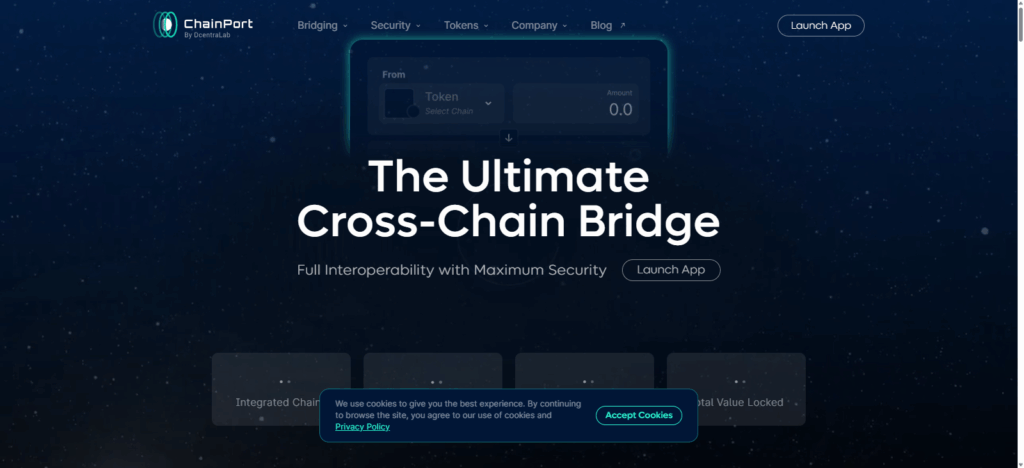
ChainPort lowers the friction involved in creator, collector, and developer asset bridging by removing excessive technical and financial burdens. Users can seamlessly bridge NFTs across several decentralized apps.
The protocol is designed to work with several popular blockchains. ChainPort is one of the most popular protocols for NFT cross-chain transfers because of its exceptional security, user-oriented design, and interoperability with various systems.
| Feature | Details |
|---|---|
| Protocol Name | ChainPort |
| Focus | Secure and user-friendly NFT cross-chain transfers |
| KYC Requirement | Minimal / Not required for standard NFT transfers |
| Supported Chains | Ethereum, Binance Smart Chain, Polygon, Avalanche, Fantom, Solana |
| Transaction Speed | Fast, optimized for simplicity and efficiency |
| Fees | Low to moderate, depending on network |
| Security | Secure smart contracts and reliable bridging mechanisms |
| NFT Metadata | Preserved during transfers |
| Use Cases | NFT marketplaces, gaming, DeFi integrations |
| Unique Point | Simple, secure, and accessible bridging with minimal user friction |
6. Rango Exchange
Rango Exchange is a leading bridging protocol for NFTs. It integrates multiple cross-chain bridges into one convenient service.
Users can migrate NFTs between different blockchains while the system chooses the quickest and cheapest option. Creators and collectors appreciate the low prices and rapid transfers.
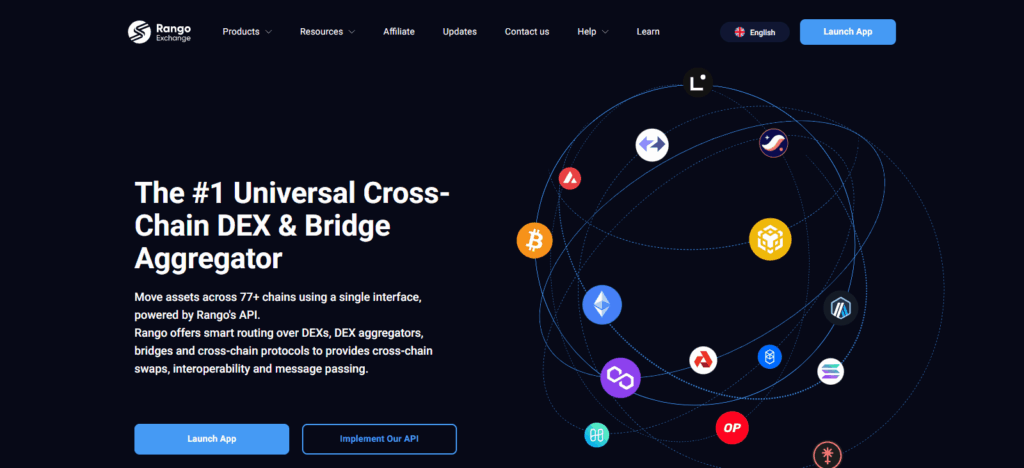
As a result of the service’s low gas prices, collectors and creators are guaranteed pleasant and economical transfers.
The compatibility with multiple blockchains makes integration with DeFi and NFT marketplaces for liquidity and usability highly advantageous for the spread of NFTs. The excellence of Rango Exchange for NFT bridging is defined by the gas prices, speed of service and compatibility with multiple bridges.
| Feature | Details |
|---|---|
| Protocol Name | Rango Exchange |
| Focus | Aggregates multiple bridges for optimized NFT cross-chain transfers |
| KYC Requirement | Minimal / Not required for standard NFT transfers |
| Supported Chains | Ethereum, Binance Smart Chain, Polygon, Avalanche, Fantom, Arbitrum |
| Transaction Speed | Fast, with optimized routing to reduce delays |
| Fees | Low, depending on chosen bridge and network conditions |
| Security | Secure smart contracts and integrated bridge selection |
| NFT Metadata | Fully preserved during transfers |
| Use Cases | NFT marketplaces, gaming, DeFi integrations |
| Unique Point | Automatically selects the most efficient bridging path for NFTs |
7. LI.FI Protocol
As one of the foremost bridging solutions for NFTs, LI.FI Protocol boasts impressive cross-chain routing and multi-chain swaps.
The protocol’s fusion of bridging and DEX exchange features stands out, allowing NFTs and tokens to cross and bridge numerous chains while preserving metadata and ownership integrity.
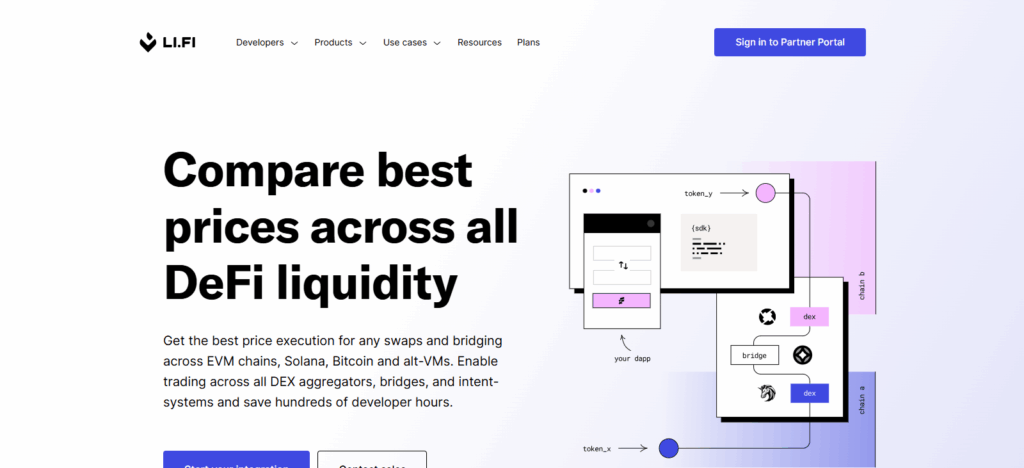
Moreover, LI.FI Protocol streamlines the routing process, reducing transaction time and cost. LI.FI bridges the gap to support Layer 1 and Layer 2 networks, boosting interoperability of NFTs across secondary markets and chained DeFi services.
LI.FI’s reliability, speed, and cost-efficiency are unmatched, and they are the best Protocol LI.FI offers to secure and flexible NFT bridging.
| Feature | Details |
|---|---|
| Protocol Name | LI.FI Protocol |
| Focus | Cross-chain NFT and token transfers with integrated swap functionality |
| KYC Requirement | Minimal / Not required for standard NFT transfers |
| Supported Chains | Ethereum, Binance Smart Chain, Polygon, Avalanche, Fantom, Arbitrum |
| Transaction Speed | Fast, with optimized routing across chains |
| Fees | Low, depending on network and swap path |
| Security | Secure smart contracts and decentralized routing |
| NFT Metadata | Fully preserved during cross-chain transfers |
| Use Cases | NFT marketplaces, gaming, DeFi integrations |
| Unique Point | Combines bridging and swapping for seamless cross-chain NFT transfers |
8. Allbridge
Allbridge is an outstanding bridging protocol for NFTs. The robust multi-chain infrastructure supports safe and seamless crossing transfers and interactions with different blockchains.
Allbridge supports tokens and NFTs, and while crossing NFTs, maintaining full ownership and metadata is a rarity among bridging protocols.
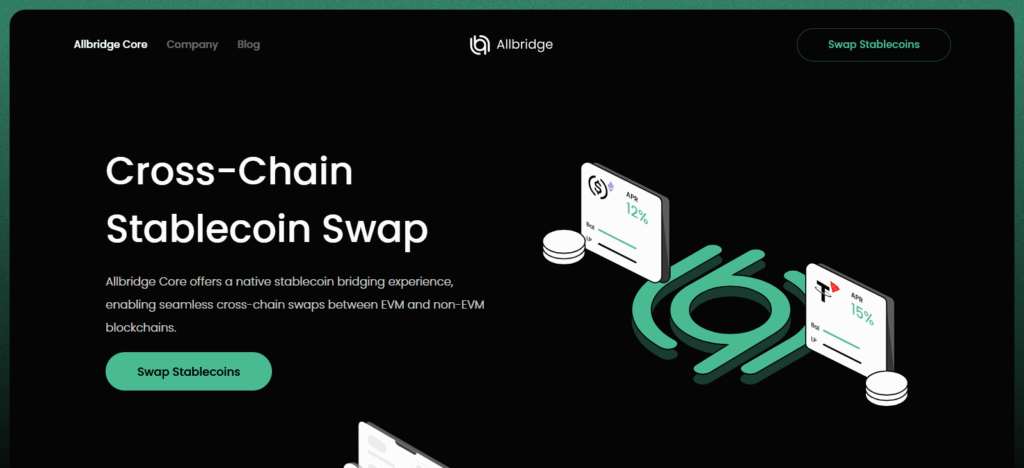
Allbridge’s clientele is diverse, ranging from creators and collectors to developers. Allbridge provides reliance and ease of entrance to different DeFi services and market NFTs.
Allbridge provides a protocol where interface, fees, and blockchain variations. The Allbridge solution to NFT bridging functionality is notable for its emphasis on utility, safe and seamless transfers, and ease of crossing different blockchains.
| Feature | Details |
|---|---|
| Protocol Name | Allbridge |
| Focus | Multi-chain NFT and token bridging with broad blockchain support |
| KYC Requirement | Minimal / Not required for standard NFT transfers |
| Supported Chains | Ethereum, Binance Smart Chain, Polygon, Avalanche, Fantom, Solana |
| Transaction Speed | Fast, depending on network conditions |
| Fees | Low to moderate, varies by chain |
| Security | Secure smart contracts and reliable bridging mechanisms |
| NFT Metadata | Preserved during cross-chain transfers |
| Use Cases | NFT marketplaces, gaming, DeFi integrations |
| Unique Point | Broad multi-chain compatibility with minimal friction for NFT bridging |
9. Orbiter Finance
Orbiter Finance excels as a bridging protocol for NFTs, emphasizing rapid, cost-efficient, and effective cross-chain transfers.
They stand apart through optimizing interactions with Layer 2 networks which permits rapid shifting of NFTs across chains while preserving ownership and metadata.
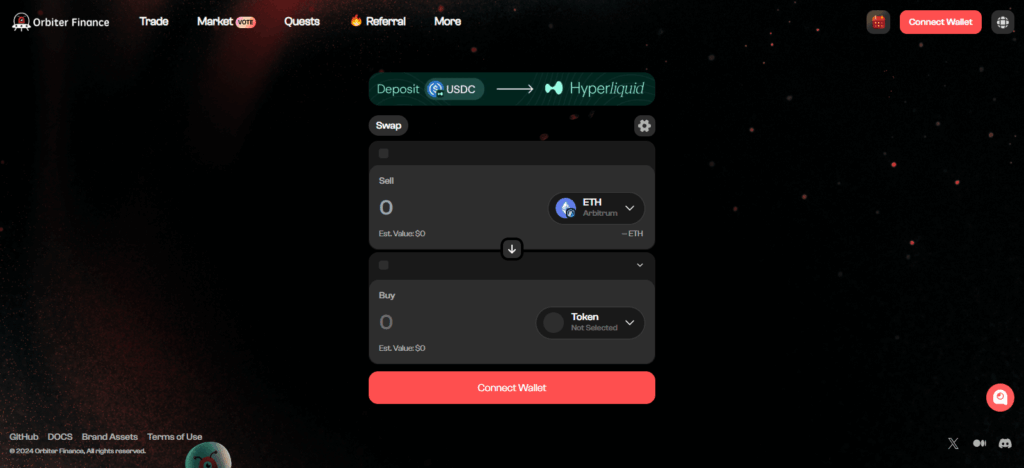
The decrease in transaction fees and time for Orbiter Finance makes NFT bridging economically viable for creators and collectors, encouraging engagement across various marketplaces.
Orbiter Finance also diversifies NFT usability and liquidity due to their extensive interoperability with major blockchains and DeFi applications. A combination of these attributes makes Orbiter Finance NFT bridging service a market leader.
| Feature | Details |
|---|---|
| Protocol Name | Orbiter Finance |
| Focus | Fast and low-cost NFT cross-chain transfers |
| KYC Requirement | Minimal / Not required for standard NFT transfers |
| Supported Chains | Ethereum, Polygon, Arbitrum, Optimism, Binance Smart Chain |
| Transaction Speed | Very fast, optimized for Layer 2 networks |
| Fees | Low, especially on Layer 2 chains |
| Security | Secure smart contracts and optimized bridging mechanisms |
| NFT Metadata | Preserved during transfers |
| Use Cases | NFT marketplaces, gaming, DeFi integrations |
| Unique Point | Optimized for speed and cost-efficiency on Layer 2 networks |
10. Synapse Protocol
Synapse Protocol is a premier bridging solution for NFTs. It is notable for its safe and scalable cross-chain transfer functionalities.
Synapse’s greatest strength is preserving metadata and keeping intact the authentic ownership, smart contracts, and functionality NFTs during the transfer process.
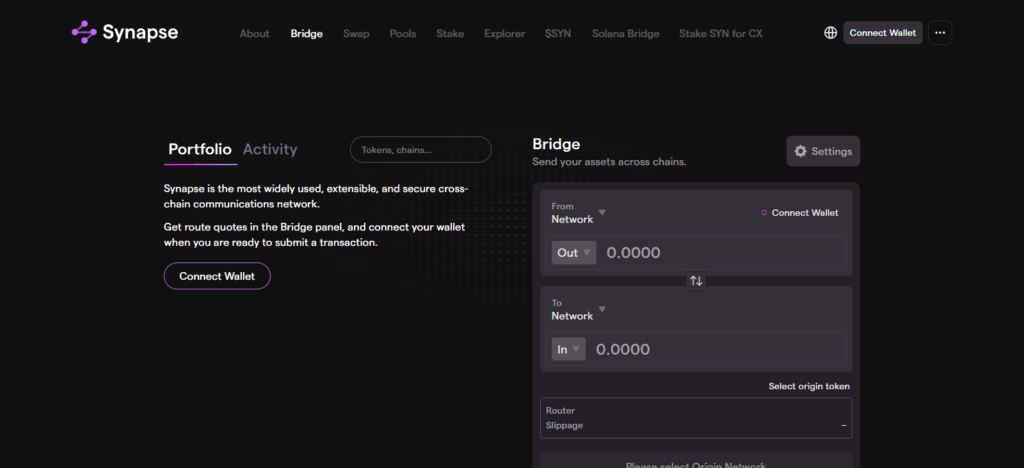
It utilizes a decentralized network of validators for trustless transfers Synapse, bridges the gap between decentralized and over-reliant centralized systems for NFTs with enhanced security.
It supports layer 1 and layer 2 networks. NFTs can be efficiently integrated into various marketplaces and DeFi networks. The unique combination of interoperability, speed, and security makes Synapse Protocol a no-brainer for NFT creators, collectors, and developers.
| Feature | Details |
|---|---|
| Protocol Name | Synapse Protocol |
| Focus | Secure and scalable cross-chain NFT and token transfers |
| KYC Requirement | Minimal / Not required for standard NFT transfers |
| Supported Chains | Ethereum, Binance Smart Chain, Polygon, Avalanche, Fantom, Solana |
| Transaction Speed | Fast, with decentralized validation |
| Fees | Low to moderate, depending on network |
| Security | Uses decentralized validators and secure smart contracts |
| NFT Metadata | Fully preserved during transfers |
| Use Cases | NFT marketplaces, gaming, DeFi integrations |
| Unique Point | Combines decentralization, security, and scalability for cross-chain NFT bridging |
Risk & Consider
Smart Contract Risks: Bridges are built using smart contracts which may contain bugs and exploits. This could result in the loss of assets.
Centralization Risks: Some bridges use centralized validators which can create single points of failure and censorship.
Issues with Cross-Chain Compatibility: Not all blockchains and NFT standards are fully compatible which could limit transfer options.
Chains with High Fees: Costs associated with bridging can increase dramatically when a blockchain is congested or gas fees are high.
Stuck and Delayed Transactions: Problems with protocols and high congestion in networks may cause transfers to fail.
Security Problems with Wrapped Assets: Wrapped NFTs are more vulnerable to hacks when crossing to other blockchains.
Possible Regulatory Issues: Depending on the jurisdiction, cross-border transfers may come with legal or compliance issues.
Conclusion
To sum up, the best bridging protocols for NFTs improve the interoperability, liquidity, and usability of NFTs within and across different blockchain networks. XP.Network, Celer cBridge, Router Protocol, deBridge, ChainPort, Rango Exchange,
LI.FI Protocol, Allbridge, Orbiter Finance, and Synapse Protocol are foundational for the wide range of interoperability features they provide—swift and cheap transfers, decentralized conscription, multi-chain inclusions, and a range of other features.
NFT interoperability allows the transfer, ownership, and rich metadata of NFTs to remain intact as they exchange blockchains.
This accessibility opens various market and DeFi opportunities to creators and developers and enhances the ecosystem for collectors. These bridging protocols are important as they help NFTs interoperate across blockchains and reach other valuable digital assets.
FAQ
Why are bridging protocols important for NFTs?
They increase liquidity, expand usability, reduce transaction costs, and allow NFTs to participate in multiple ecosystems without being limited to a single blockchain.
Are NFT bridges safe to use?
Most top bridges use secure smart contracts and decentralized validators, but risks like smart contract bugs, network congestion, or centralization exist. Users should choose reputable protocols and verify transaction details.
Which are the top NFT bridging protocols?
Top protocols include XP.Network, Celer cBridge, Router Protocol, deBridge, ChainPort, Rango Exchange, LI.FI Protocol, Allbridge, Orbiter Finance, and Synapse Protocol.