


In this article, I will talk about the best threshold signature platforms for crypto custody. I will focus on the solutions aimed at improving digital asset security, distributed key management, transaction approvals, recovery and institutional control. We’ll examine the top platforms based on TSS/MPC architecture, supported networks, custody models, automation features, pricing, security and overall fit for businesses holding crypto assets.
What Are Threshold Signature Platforms?
Threshold Signature Platforms are crypto-security solutions that use Threshold Signature Schemes (TSS) to share control of a private key between multiple participants or secure environments. The signing authority is split into a number of cryptographic shares, rather than a single full private key stored in one location, and a set number of shares must collaborate to authorize a transaction.
This helps reduce single points of failure, limit risks of key-exposure and strengthen transaction governance. TSS platforms can offer businesses secure custody infrastructure, multi-party approvals, policy controls, recovery mechanisms, blockchain support, and automated transaction signing.
Advantages of Threshold Signature Platforms for Crypto Custody
No Full Private Key Reconstruction: Transactions can be signed without ever generating the entire private key in one place, shrinking the attack surface of traditional key management.
Enhanced Insider-Risk Protection: Distributed signing makes it more difficult for a single employee or administrator to move assets, facilitating better segregation of duties.
Flexible Custody Options: TSS technology supports self-custody, institutional custody, or hybrid models, allowing companies to decide the level of asset management that works for them.
Improved Recovery: Key-share distribution can assist backup and recovery strategies that reduce reliance on a single device, location or administrator.
Multi Blockchain: Many TSS platforms also offer signing infrastructure across multiple blockchain networks, useful for businesses managing diversified digital-asset portfolios.
Automated Treasury Operations: APIs and programmable signing policies allow for automation of recurring transfers, treasury movements, withdrawals, and other approved transactions while enforcing security controls.
Detailed Policy Controls: Organizations can define spend limits, whitelists, approval thresholds, transaction restrictions and role-based permissions for improved governance.
Improved Institutional Scalability: TSS platforms can accommodate a large number of wallets, users, transactions and blockchain assets without requiring the management of each transaction through individual private keys.
Reduced Key Exposure: Since the signing authority is distributed, attackers usually have to compromise multiple protected components rather than a single private key .
Improved Operational Governance: TSS can embed security into approval workflows, audit trails, access management and compliance processes, which is especially helpful when it comes to institutional crypto custody.
Key Points
| Platform | Key Point 1 | Key Point 2 |
|---|---|---|
| Safeheron | MPC-TSS + TEE security | Self-custody infrastructure |
| BitGo | MPC and multisig wallets | Qualified institutional custody |
| Coinbase Prime | Regulated qualified custody | Institutional trading platform |
| Anchorage Digital | Regulated digital-asset custody | Institutional security controls |
| Fordefi | Institutional MPC wallets | Self-custody model |
| Cobo | MPC + TEE architecture | Wallet-as-a-Service |
| Cregis | TSS/MPC with HSM & TEE | Enterprise self-custody |
| Dfns | Programmable MPC wallets | Non-custodial infrastructure |
| Turnkey | Programmable wallet infrastructure | Non-custodial architecture |
| Copper | Institutional MPC custody | Qualified custody infrastructure |
1. Safeheron
Safeheron — Founded: 2021 | Overall Score: 9.2/10 Safeheron is an institutional self-custody infrastructure provider for MPC and TEE-based wallet security. The TSS/MPC architecture shares out the key material so a full private key is never stored in one place, and policy controls determine how transactions are authorized.
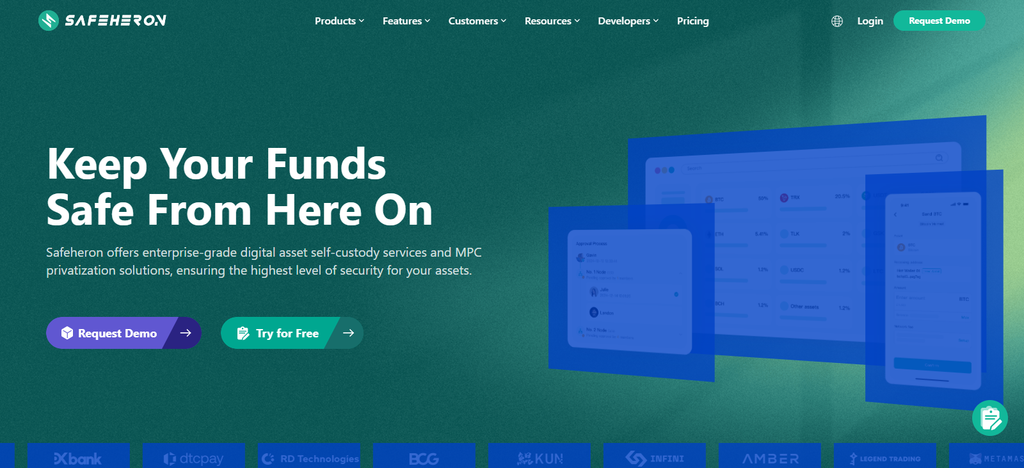
The custody model is primarily self-custodial, providing enterprises control over assets. It supports Bitcoin, Ethereum, and hundreds of assets with extensive EVM coverage.
Recovery includes offline recovery of private keys. API/automation APIs, SDKs, API Co-Signer, automated gas fueling and sweeping support Pricing starts at $5,750/year on its published annual plan with custom enterprise pricing available.
Safeheron Attributes
- MPC-TSS Security: Leverages MPC-TSS and TEE technology to distribute key control and minimize single points of failure.
Self-custody: Customers retain control of their assets and private key infrastructure. - Policy Engine: Flexible approval rules, transaction permissions and multi-party authorization.
- Web3 & DeFi Support: Built for institutional wallets, DeFi, NFTs, intelligent contracts, and EVM compatible chains.
- API & Automation: APIs, API Co-Signer, auto gas fueling, sweeping and infrastructure for large scale MPC wallet management.
| Advantages | Disadvantages |
|---|---|
| MPC-TSS architecture reduces dependence on a single private key. | Primarily suited to businesses already comfortable with self-custody infrastructure. |
| Combines MPC with TEE-based security for additional protection. | Advanced configuration can require technical expertise. |
| Strong transaction policies and multi-party approval controls. | Less focused on traditional regulated custody than bank-based custodians. |
| Supports institutional wallets, Web3, DeFi, and automated operations. | Pricing can be less straightforward for smaller organizations. |
| API, SDK, and automation capabilities support scalable wallet management. | Enterprise-oriented features may be excessive for simple custody requirements. |
2. BitGo
BitGo – Founded: 2013 | Overall Rating: 9.5/10. BitGo: Institutional custody + MPC/TSS and multi-signature wallet infrastructure. Its MPC wallets are based on a 2-of-3 TSS architecture with user, backup and BitGo key shares. Two shares collaborate to produce a signature without reconstructing the full private key.
It has a custody model that supports both qualified custody and self-custody options. TSS can be deployed on blockchains that do not have native multisig support, such as Bitcoin, Solana, NEAR, Polkadot, Algorand and Sui.
Recovery uses the backup key. Automation via APIs, policies, whitelists and approval workflows. Pricing Pricing for institutional services is often quote-based.
BitGo Attributes
- Qualified Custody: Qualified custody, including regulated and segregated asset structures and cold-storage options.
- MPC & Multi-Sig: Offers configurable MPC and multisignature wallet infrastructure for institutional asset management.
- Institutional Security: Offline custody, governance controls, operational procedures and insurance coverage.
- Trading & Settlement: Links custody to trading, financing, collateral management, and settlement services.
API & Automation: REST, FIX, WebSocket APIs and integrations for institutional trading and treasury workflows.
| Advantages | Disadvantages |
|---|---|
| Established institutional custody provider with MPC and multisig options. | Its broad product ecosystem can make the platform complex for new users. |
| Provides regulated qualified custody and cold-storage infrastructure. | Qualified custody can create greater dependence on BitGo as custodian. |
| Strong governance, policy, and approval controls for institutional transactions. | Institutional pricing is generally customized rather than simple retail pricing. |
| Supports trading, settlement, financing, staking, and DeFi workflows. | Some advanced services may require additional onboarding or integration. |
| Strong API and institutional connectivity for trading and operations. | Businesses seeking completely independent self-custody may prefer infrastructure-first providers. |
3. Coinbase Prime
Coinbase Prime — Founded: 2012 | Overall Score: 9.6/10. Coinbase Prime is not a pure TSS provider, rather it is a full institutional platform that offers trading, financing, settlement and custody. For the Prime Onchain Wallet, its MPC architecture is used, delivering non-custodial wallet functionality, whereas Prime Custody is operated as a regulated qualified custodian through Coinbase Custody Trust Company.
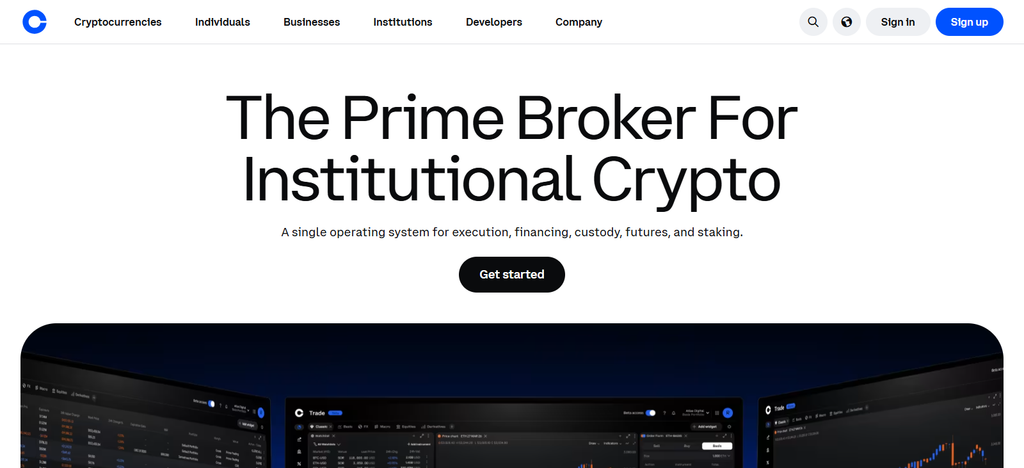
It supports infrastructure for 470+ custody assets across 52 chains, while the Onchain Wallet currently supports Solana and the major EVM chains including Ethereum, Arbitrum, Avalanche C-Chain, Base, BNB Chain, Gnosis, Optimism and Polygon.
The Recovery depends on the respective wallet / custody architecture. APIs and institutional automation support automated trading and operational workflows. Pricing is usually tailored.
Coinbase Prime Attributes
- Institutional Custody: Qualified custody through Coinbase Custody Trust Company, a regulated trust company.
- Extensive Asset Coverage: Institutional custody platform supports over 470 assets.
- Security Controls: Cold storage, consensus computation, physical security, process controls, configurable permissions.
- Onchain Wallet: A non-custodial institutional wallet to interact with supported networks and smart-contract applications.
Trading & Automation: Custody integrated with trading, financing, settlement, staking, APIs and institutional policy controls.
| Advantages | Disadvantages |
|---|---|
| Combines custody, trading, financing, and institutional operations in one platform. | The platform can be broader and more complex than a dedicated wallet-infrastructure provider. |
| Uses a regulated qualified custodian for Prime Custody. | Qualified custody means Coinbase remains central to the custody relationship. |
| Supports 470+ custodied assets and extensive institutional infrastructure. | Not every supported asset has identical custody or operational availability. |
| Strong security controls, cold storage, consensus computation, and auditing. | Businesses seeking pure self-custody infrastructure may find it less flexible. |
| Provides institutional onchain wallet and policy-management capabilities. | Pricing and institutional arrangements are generally customized. |
4. Anchorage Digital
Anchorage Digital — Established: 2017 | Overall Score: 9.4/10. Anchorage Digital is built primarily for regulated institutional digital-asset custody, staking, governance and settlement. Its custody model is based on qualified, federally regulated custody through Anchorage Digital Bank with segregated and bankruptcy-remote asset structures.
The platform does not just present itself as an open TSS wallet API but employs institutional key-management and security architecture. **Eligibility for custody and availability of products are subject to supported networks and assets.
Recovery relies on institutional controls for operations and regulated custody processes. Anchorage also offers 24/7 transaction authorization, governance and operational workflows. API/automation capabilities support institutional operations and pricing is generally quote-based rather than publicly standardized.
Anchorage Digital Attributes
- Regulated Infrastructure: Built on institutional grade digital asset custody and regulated financial infrastructure.
- Qualified Custody: Custody via regulated entities with institutional asset protection systems.
- Security Architecture: Multi-layered controls for private-key protection, transaction authorization, and operational security.
Institutional Services: Offers a suite of custody, staking, governance, settlement and other digital-asset services.
Enterprise Focus: Built primarily for enterprises needing robust compliance, governance, security, and operational controls.
| Advantages | Disadvantages |
|---|---|
| Strong regulatory positioning for institutional digital-asset custody. | Its regulated custody model can provide less flexibility than self-custody infrastructure. |
| Combines custody with staking and other institutional digital-asset services. | Custody is closely tied to Anchorage’s regulated entities. |
| Designed around institutional governance and security requirements. | May be more suitable for larger institutions than small crypto businesses. |
| Strong focus on compliance and institutional asset protection. | Technical wallet customization can be less developer-centric than WaaS providers. |
| Suitable for institutions prioritizing regulated custody over wallet flexibility. | Enterprise onboarding and compliance requirements can increase setup complexity. |
5. Fordefi
Fordefi | Founded: 2021 | Overall Score: 9.3/10.Fordefi is a MPC wallet and Web3 security platform for institutions that is focused on self-custody, DeFi and transaction control. The MPC architecture secures institutional wallet keys, and granular policies, transaction simulation, and approval workflows increase operational security.
The custody model is non-custodial, making it especially suitable for trading firms, funds and Web3 businesses that need direct onchain access. Fordefi supports among others, Ethereum, Solana, SVM networks, Cosmos ecosystems and customizable EVM chains.
Recovery is built around institutional wallet/key-management controls. Powerful automation through its REST API and MPC SDK. Pricing is mostly customized by Sales.
Fordefi Attributes
- Transaction Policies: Provides detailed controls for policies, approvals and transaction security mechanisms.
- Institutional MPC Wallet: MPC technology secures wallet keys and enables institutional onchain activity.
- Self-Custody enables organizations to directly control their assets instead of a traditional third party custodian.
Web3 Connectivity DeFi, intelligent contracts, exchanges, protocols and other Web3 apps are built for.
Developer Infrastructure: Provides APIs and SDK-based infrastructure to integrate secure wallet functionalities into institutional applications.
| Advantages | Disadvantages |
|---|---|
| Institutional MPC wallet architecture is designed for secure onchain activity. | More specialized toward Web3 and onchain workflows than traditional qualified custody. |
| Self-custody model gives organizations direct asset control. | Requires organizations to manage more of their own operational responsibilities. |
| Strong transaction policies and approval controls. | Advanced policy configuration can require technical knowledge. |
| Useful for DeFi, smart contracts, protocols, and institutional Web3 activity. | May not be the first choice for institutions wanting conventional bank-style custody. |
| API and SDK capabilities support programmable wallet operations. | Pricing is generally geared toward business and institutional requirements. |
6. Cobo
Cobo — Founded: 2017 | Overall Score: 9.4/10 Cobo offers institutional wallet and digital-asset infrastructure, including custodial, MPC and smart-contract wallets. The MPC architecture is composed of distributed TSS nodes that run in Trusted Execution Environments, providing hardware-based protection for distributed signing.
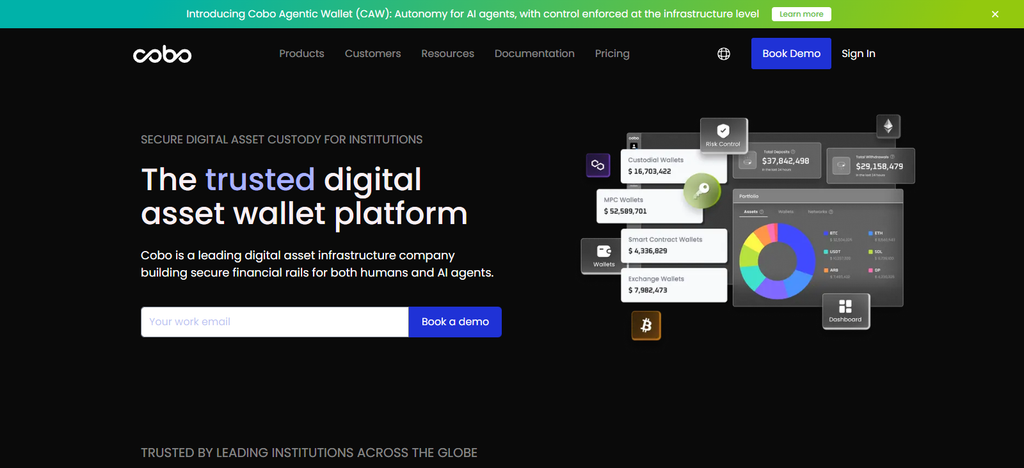
The custody model can include custodial wallets and MPC-based self-management depending on the product. Cobo supports more than 80 blockchain networks and more than 3,000 tokens, including Bitcoin, Ethereum, Aptos, Arbitrum, Avalanche and BNB Chain.
Recovery and operational controls are wallet architecture dependent. APIs power Wallet-as-a-Service and transaction automation. WaaS pricing is on the public website, starting at $299/month with more available at higher tiers and enterprise quotes.
Cobo Attributes
- MPC Wallet Infrastructure: Offers MPC based wallet technology for institutional digital asset management.
TEE Security: combines Trusted Execution Environment technology with MPC to add another layer of security to the key operations. - Multiple Wallet Models: Multiple types of custody and wallet configurations for institutional and enterprise use cases.
- Wide Blockchain Support: It is designed to work with multiple blockchain networks and digital assets of any kind.
WaaS & APIs Provides Wallet-as-a-Service infrastructure, APIs and programmable wallet features for businesses.
| Advantages | Disadvantages |
|---|---|
| Supports multiple wallet architectures, including MPC and TEE-based approaches. | The broad product range can make choosing the right architecture more difficult. |
| Strong blockchain and token coverage for institutional operations. | Advanced infrastructure may require specialized technical teams. |
| Offers WaaS, custody, settlement, and DeFi infrastructure. | Some enterprise features may be unnecessary for businesses with basic custody needs. |
| Flexible infrastructure can support exchanges, fintechs, and Web3 businesses. | Pricing can vary substantially depending on the selected products and usage. |
| Provides APIs and programmable wallet infrastructure for automation. | Organizations must carefully evaluate which custody model best matches their requirements. |
7. Cregis
Cregis – Established: 2017 | Total Score: 9.1/10.Cregis is an enterprise digital-asset infrastructure platform that offers wallet infrastructure, payment operations and custody capabilities. It employs a TSS/MPC architecture based on the GG18 protocol with distributed key shards, as well as HSM and TEE technologies via the Trust Vault framework.
The custody model allows MPC self-custody with 2-of-2 and M-of-N signing configurations. Its network coverage includes Bitcoin, Ethereum, Tron, Solana, Polygon, Dogecoin, BNB Chain, Sui, TON, Base, Arbitrum, Avalanche, XRP, Aptos and more networks. Recovery uses its institutional key management architecture. WaaS is powered by payment and fund-flow automation APIs. Pricing is primarily custom/enterprise quote based.
Cregis Attributes
- Multi-Party Authorization: Flexible signing and approval structures for enterprise transaction governance.
- TSS/MPC Technology: Leverages threshold signature and MPC technologies for distributed private key management.
- Institutional Custody: Infrastructure for businesses that manage digital assets as well as payments and treasury functions.
- Multi-Chain Infrastructure: Supporting major networks across Bitcoin, Ethereum, Tron, Solana, EVMs and more.
- API Automation: Offers wallet APIs and infrastructure built for automated transfers, payments, treasury management, and digital-asset operations.
| Advantages | Disadvantages |
|---|---|
| Combines MPC, HSM, and TEE technologies for layered wallet security. | Its broad infrastructure offering can require more implementation planning. |
| Provides self-custody and enterprise wallet infrastructure. | Less suitable for users looking only for simple retail custody. |
| Supports granular permissions and multi-level approval workflows. | Advanced enterprise controls may increase configuration complexity. |
| Strong blockchain coverage and Wallet-as-a-Service capabilities. | Pricing can depend heavily on transaction volume and business requirements. |
| Useful for payments, treasury management, exchanges, and fintech applications. | International businesses may need to evaluate regional compliance and support carefully. |
8. Dfns
Dfns Founded: 2020 | Overall Score: 9.3 out of 10.DFNS is a Wallet-as-a-Service and digital asset infrastructure platform, not a traditional custodian. Its MPC/TSS architecture splits key shares across different protected environments and enables programmable transaction governance.
The custody model is custody agnostic: institutions can retain control, while leveraging Dfns as infrastructure with SaaS, hybrid and on-premise deployment options. Dfns supports 100+ networks including Bitcoin, Ethereum, Solana, Polygon, Base, Tron and Stellar.
Recovery includes key repair, refresh, rotation and disaster-recovery integrations based on plan. Its APIs, SDKs, policies and webhooks provide a very high level of automation. Pricing is very transparent with Pro at $35,000/year, Enterprise custom, at $800/year.
Dfns Attributes
- MPC Wallet Infrastructure: Provides programmable wallet infrastructure with distributed key-management technology.
- Non-Custodial Model: Businesses can create wallets without giving up control of their digital possessions.
- Policy-Based Security: Programmable transaction policies, permissions and approval workflows.
Multi-Chain Support: Powers Bitcoin, Ethereum, Solana, Polygon, Base, Tron and other blockchain ecosystems.
Developer APIs: Dfns’ robust API and SDK capabilities are ideal for fintechs, exchanges, Web3 applications and embedded-wallet products.
| Advantages | Disadvantages |
|---|---|
| API-first wallet infrastructure is highly suitable for developers. | Less appropriate for organizations wanting a traditional full-service custodian. |
| Programmable wallets can be embedded directly into applications. | Integration requires development resources and technical expertise. |
| Supports granular policies and automated transaction workflows. | Businesses must design their own application-level operational processes. |
| Non-custodial approach provides greater control over assets and wallet infrastructure. | Self-managed responsibility can increase operational complexity. |
| Useful for fintechs, Web3 applications, exchanges, and embedded wallets. | Enterprise features and usage-based costs can become significant at scale. |
9. Turnkey
Turnkey Founded: 2022 | Overall Score: 9.2/10** Turnkey is developing programmable, non-custodial wallet infrastructure for developers, fintechs, payments, stablecoin applications and AI agents.
Instead of a traditional institutional custodian, its security architecture leverages secure enclaves/ TEE technology for key generation, encryption and signing, featuring verifiable infrastructure and programmable policies. The custody model is a full non-custodial.
Turnkey offers chain agnostic signing across EVM, Solana, Bitcoin and other networks. Recovery is based on a secure key infrastructure and application-controlled wallet model. REST APIs, SDKs, webhooks and transaction automation deliver powerful API/automation capabilities. Pricing Transaction based and designed to scale Enterprise plans available through sales.
Turnkey Attributes
- Programmable Wallets: Wallet infrastructure for developers that can be embedded in applications.
- Non-Custodial Architecture: Built to enable apps to retain control of wallet assets and operations.
Secure Key Infrastructure Protects sensitive wallet operations using secure hardware and enclave-based technology.
Multi-Chain Signing: Infrastructure for signing across blockchains like EVM networks, Solana, and Bitcoin. - API-First Design: Offers APIs, SDKs and programmable infrastructure for fintech, payments, stablecoins, AI agents and Web3 apps.
| Advantages | Disadvantages |
|---|---|
| Developer-first wallet infrastructure makes integration highly flexible. | More technically oriented than traditional custody platforms. |
| Non-custodial architecture gives applications greater control. | Businesses need development resources to build the desired user experience. |
| Strong APIs, SDKs, and programmable wallet capabilities. | Organizations wanting regulated qualified custody may need another provider. |
| Suitable for fintech, stablecoins, payments, Web3, and AI-agent applications. | Advanced infrastructure concepts may have a learning curve. |
| Supports programmable transaction and wallet workflows. | Total costs can vary with transaction volume and application scale. |
10. Copper
Copper Founded: 2018 | Score: 9.3/10.Copper offers institutions a digital-asset infrastructure that includes qualified custody, trading connectivity, settlement and collateral management. Its MPC architecture means that no full private key is ever created, reducing single points of failure, while governance controls enforce segregation of duties and multi-layer approvals.
The custody model is qualified custody based MPC with legal and on-chain asset segregation. Supported assets include Bitcoin, Ethereum, Solana, Avalanche, BNB Chain, Cardano, Cosmos, Dogecoin, TON and many more.
Recovery is baked into its institutional custody architecture and operational controls. Automation & settlement connectivity great APIs & ClearLoop . Pricing largely bespoke for institutional customers not publicly standardized.
Copper Attributes
- Qualified Custody: Institutional custody infrastructure for regulated asset management.
- Institutional MPC: Leverages MPC-based technology to distribute critical control and decrease reliance on a single location for a private key.
- Trading Connectivity: Integrates custody with institutional trading, settlement, collateral and liquidity workflows.
- Asset Segregation: Employs institutional custody arrangements that segregate client assets from corporate assets.
- API & Settlement: Infrastructure to enable automated institutional workflows including trading connectivity, settlement, collateral management and digital-asset operations.
| Advantages | Disadvantages |
|---|---|
| Institutional MPC architecture reduces reliance on a single private key. | Primarily designed for institutional and professional users. |
| Strong combination of custody, trading, settlement, and collateral infrastructure. | Enterprise implementation can be more complex than standalone wallet products. |
| ClearLoop provides connectivity between custody and trading venues. | Businesses may face greater platform dependency when using multiple Copper services. |
| Designed for institutional asset segregation and operational governance. | Pricing is generally customized rather than transparent for smaller users. |
| Strong fit for funds, exchanges, asset managers, and trading firms. | May offer more infrastructure than a company needs for simple long-term asset storage. |
Conclusion
Threshold signature platforms are important in modern crypto custody as they help businesses mitigate single-key risks, whilst enhancing transaction control, recovery, and operational security.
The ten platforms we evaluated—Safeheron, BitGo, Coinbase Prime, Anchorage Digital, Fordefi, Cobo, Cregis, Dfns, Turnkey and Copper—address a broad spectrum of institutional requirements including regulated custody and treasury management, self-custody, Web3 use cases and API-only wallet infrastructure.
When choosing a provider, businesses should not only look at brand image but also TSS/MPC architecture, custody model, networks supported, recovery options, policy controls, automation, compliance and total cost. Ultimately, the right platform will depend on your security needs, operational model, blockchain needs, and level of custody control.
FAQ
What is a threshold signature platform?
A threshold signature platform uses cryptographic techniques such as TSS or MPC to distribute signing authority across multiple parties or secure environments. A transaction can be signed only when the required threshold of participants or key shares authorizes it, reducing the risk associated with a single private key.
What should businesses consider when choosing a TSS platform?
Businesses should compare TSS/MPC architecture, custody model, supported networks, recovery procedures, transaction policies, compliance, API capabilities, automation, security controls, pricing, and vendor lock-in. The best platform depends on the organization’s operational and custody requirements.
Which threshold signature platform is best for institutions?
There is no single best platform for every institution. BitGo, Coinbase Prime, Anchorage Digital, Copper, and Cobo are particularly relevant for institutional custody, while Dfns, Turnkey, Fordefi, and Safeheron can be attractive for organizations seeking programmable or self-custodial wallet infrastructure.
How does recovery work with TSS wallets?
Recovery varies by provider and architecture. It may involve backup key shares, key-share replacement, secure recovery procedures, or disaster-recovery environments. Businesses should understand the recovery process before deployment, including what happens if a signing participant, employee, device, or service provider becomes unavailable.